
Deep Dive Series
Quantum Computing Modalities
There is no single “quantum computer.” There are superconducting circuits cooled to millikelvins, ions suspended in electromagnetic traps, single photons routed through waveguides, neutral atoms pinned by laser tweezers, silicon quantum dots borrowing from classical fab lines, topological states that may not yet exist in usable form, and a growing catalogue of exotic approaches from phononic qubits to neuromorphic quantum architectures. Each encodes and manipulates quantum information differently, each comes with its own engineering trade-offs, and each defines a different bet on how we get to fault-tolerant, useful quantum computing.
This Deep Dive series is a field guide to that landscape. Across dedicated articles for each modality, I examine the physics, the engineering realities, the state of the art, the companies and labs pursuing it, and the honest path toward scale — or the reasons one may not exist. The full taxonomy overview provides the structural map; the individual articles go deeper on each approach.

-
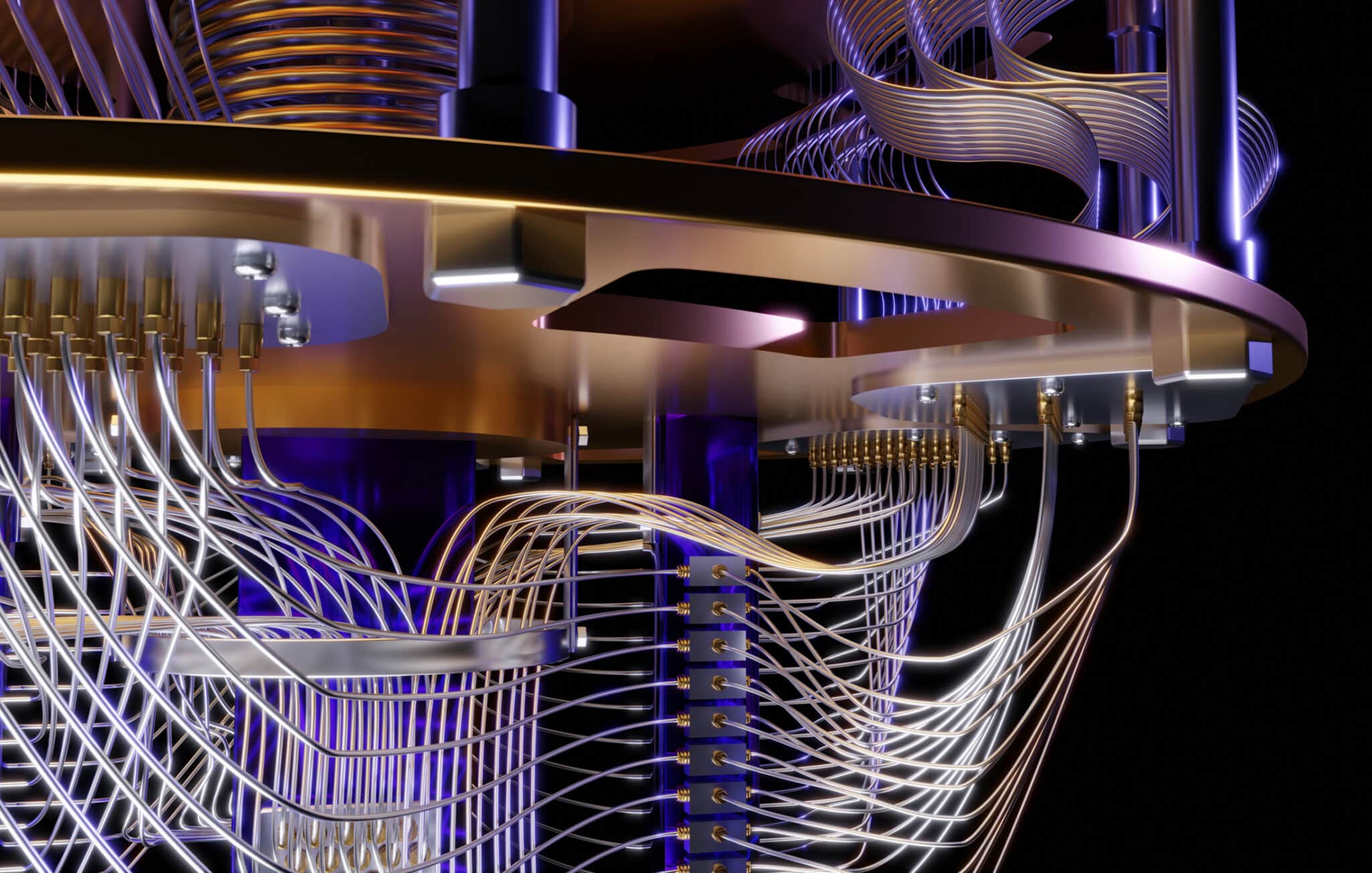
A comprehensive field guide to every way humanity is trying to build a quantum computer — and why it matters that there isn't just one. This Deep Dive series surveys the full landscape of quantum computing modalities and architectures: from the leading gate-based approaches (superconducting, trapped-ion, photonic, neutral atom, silicon) through measurement-based and topological paradigms, to quantum annealing and the exotic frontier of phononic, biological, and neuromorphic quantum computing. Each article examines a modality on its own terms — the physics, the engineering trade-offs, the current state of the art, the companies and labs behind it, and the realistic path (or lack of one) toward fault tolerance and scale. The taxonomy article at the heart of this series provides the structural overview; the individual deep dives go further on each approach. Whether you're a strategist evaluating hardware bets, a systems integrator planning for a multi-modality future, or simply trying to cut through vendor marketing, this series gives you the technical grounding to compare approaches honestly and understand what each one can — and cannot — deliver.
Read More »

-
Quantum Computing Modalities

Quantum Computing Modalities: Superconducting Cat Qubits
Cat qubits encode quantum information in Schrödinger's cat states inside superconducting resonators. Bit-flip errors are suppressed by the physics, not by error correction. Alice & Bob and AWS are betting this approach could cut the path to fault tolerance by 200×.
Read More » -
Quantum Computing Modalities
Quantum Computing Modalities: Photonic Cluster-State
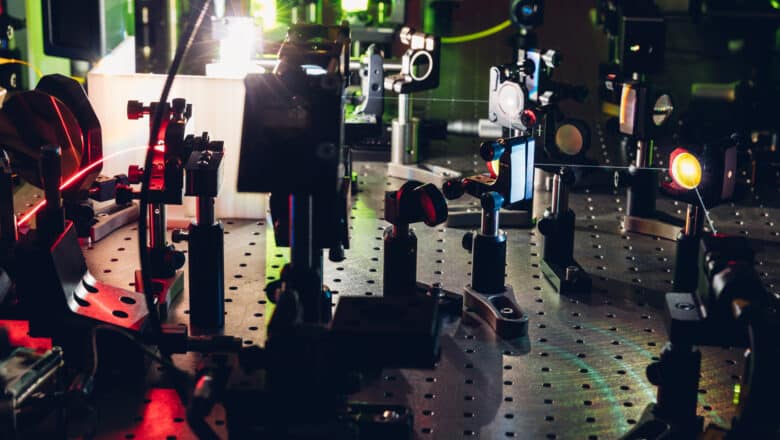
Photonic Cluster-State Computing is a form of quantum computing in which information is processed using photons (particles of light) that have been prepared in a highly entangled state known as a cluster state. It falls under the paradigm of measurement-based quantum computing (MBQC), often called the one-way quantum computer. In this scheme, a large entangled resource state (the photonic cluster state) is generated first, and…
Read More » -
Quantum Computing Modalities

Quantum Computing Modalities: Ion Trap and Neutral Atom MBQC
Ion Trap and Neutral Atom implementations of MBQC leverage two leading “matter-qubit” platforms – trapped ions and ultracold neutral atoms – to realize this model. In a trapped-ion MBQC, a string of ions (charged atoms) is confined and entangled via electromagnetic fields and laser pulses. The ions’ internal states serve as qubits that can be entangled pairwise or globally using multi-ion gate operations, preparing a…
Read More » -
Quantum Computing Modalities
Quantum Computing Modalities: Superconducting Qubits
Superconducting qubits dominate quantum hardware today. This guide covers how they work, who builds them, what "good" looks like in 2026, and why the path they're on matters for the security of everything you encrypt.
Read More » -
Quantum Computing Modalities
Quantum Computing Modalities: Holonomic (Geometric Phase) QC
Holonomic quantum computing (also known as geometric quantum computing) is a paradigm that uses geometric phase effects to perform quantum logic operations. In a holonomic gate, the quantum state is manipulated by adiabatically (or sometimes non-adiabatically) moving the system’s parameters along a closed loop in parameter space, causing the state to acquire a geometric phase or holonomy.
Read More » -
Quantum Computing Modalities
Quantum Computing Modalities: Photonic QC
Photonic quantum computers encode information in particles of light, fabricated on the same semiconductor lines that produce classical chips. Here's the technology, the vendors, and why photonic architectures take a fundamentally different path to fault tolerance.
Read More » -
Quantum Computing Modalities
Quantum Computing Modalities: Trapped-Ion QC
Trapped ions hold the record for qubit fidelity and the most efficient physical-to-logical qubit ratio demonstrated on real hardware. Here's how the technology works, who's building it, and why it matters for the path to a CRQC.
Read More » -
Quantum Computing Modalities
Quantum Computing Modalities: Adiabatic Topological QC (ATQC)
Adiabatic Topological Quantum Computing (ATQC) is a hybrid paradigm that combines adiabatic quantum computing with topological quantum computing. In essence, ATQC uses slow, continuous changes in a quantum system’s Hamiltonian (an adiabatic evolution) to perform computations, while encoding information in topologically protected states for inherent error resistance.
Read More » -
Quantum Computing Modalities
Quantum Computing Modalities: Neuromorphic QC (NQC)
Neuromorphic quantum computing (NQC) is a cutting-edge paradigm that merges two revolutionary approaches to computing: neuromorphic computing and quantum computing. Neuromorphic computing is inspired by the architecture of the human brain – it uses networks of artificial neurons and synapses (often implemented in specialized hardware) to process information in a highly parallel and energy-efficient way, much like brains do.
Read More » -
Quantum Computing Modalities
Quantum Computing Modalities: Topological Quantum Computing
Topological quantum computing promises hardware-level error protection that could eliminate most QEC overhead. But Majorana 1 hasn't demonstrated a topological qubit, the physics community is skeptical, and Microsoft is hedging with neutral atoms. Here's where the approach actually stands.
Read More » -
Quantum Computing Modalities
Quantum Computing Modalities: Adiabatic QC (AQC)
Adiabatic Quantum Computing (AQC) is a universal paradigm of quantum computing based on the adiabatic theorem of quantum mechanics. It generalizes the idea of quantum annealing beyond just optimization. In AQC, one encodes the solution of an arbitrary computation in the ground state of some problem Hamiltonian $H_{\text{problem}}$. Instead of applying discrete gates, one evolves the quantum state continuously under a time-dependent Hamiltonian $H(t)$ from…
Read More » -
Quantum Computing Modalities
Quantum Computing Modalities: Spin Qubits in Other Semiconductors & Defects
In addition to silicon, spin qubits can be realized in other solid-state systems. One well-known example is the nitrogen-vacancy (NV) center in diamond, which is a point defect where a nitrogen atom next to a vacancy in the carbon lattice creates an electronic spin-1 system that can be used as qubit.
Read More » -
Quantum Computing Modalities
Quantum Computing Modalities: Silicon-Spin
Silicon spin qubits bring quantum computing onto the same fabrication lines that produce every classical processor on Earth. The first logical operations arrived in 2026. Here's the technology, the vendors, the CMOS thesis, and what it means for the path to a CRQC.
Read More » -
Quantum Computing Modalities
Quantum Computing Modalities: Measurement-Based Quantum Computing (MBQC)
Measurement-Based Quantum Computing (MBQC), also known as the one-way quantum computer, is a paradigm where quantum computation is driven entirely by measurements on an entangled resource state. Instead of applying a sequence of unitary gates to a register of qubits, MBQC starts with a highly entangled state of many qubits (typically a cluster state) and then performs single-qubit measurements in a carefully chosen order and…
Read More » -
Quantum Computing Modalities
Quantum Computing Modalities: Neutral Atom (Rydberg)
Neutral-atom quantum computers operate at room temperature, scale to thousands of qubits, and hold the record for verified logical qubits. Here's the technology, the vendors, and why this modality is closing the gap on superconducting hardware faster than anyone expected.
Read More »


