
Deep Dive Series
Quantum Computing Modalities
There is no single “quantum computer.” There are superconducting circuits cooled to millikelvins, ions suspended in electromagnetic traps, single photons routed through waveguides, neutral atoms pinned by laser tweezers, silicon quantum dots borrowing from classical fab lines, topological states that may not yet exist in usable form, and a growing catalogue of exotic approaches from phononic qubits to neuromorphic quantum architectures. Each encodes and manipulates quantum information differently, each comes with its own engineering trade-offs, and each defines a different bet on how we get to fault-tolerant, useful quantum computing.
This Deep Dive series is a field guide to that landscape. Across dedicated articles for each modality, I examine the physics, the engineering realities, the state of the art, the companies and labs pursuing it, and the honest path toward scale — or the reasons one may not exist. The full taxonomy overview provides the structural map; the individual articles go deeper on each approach.

-
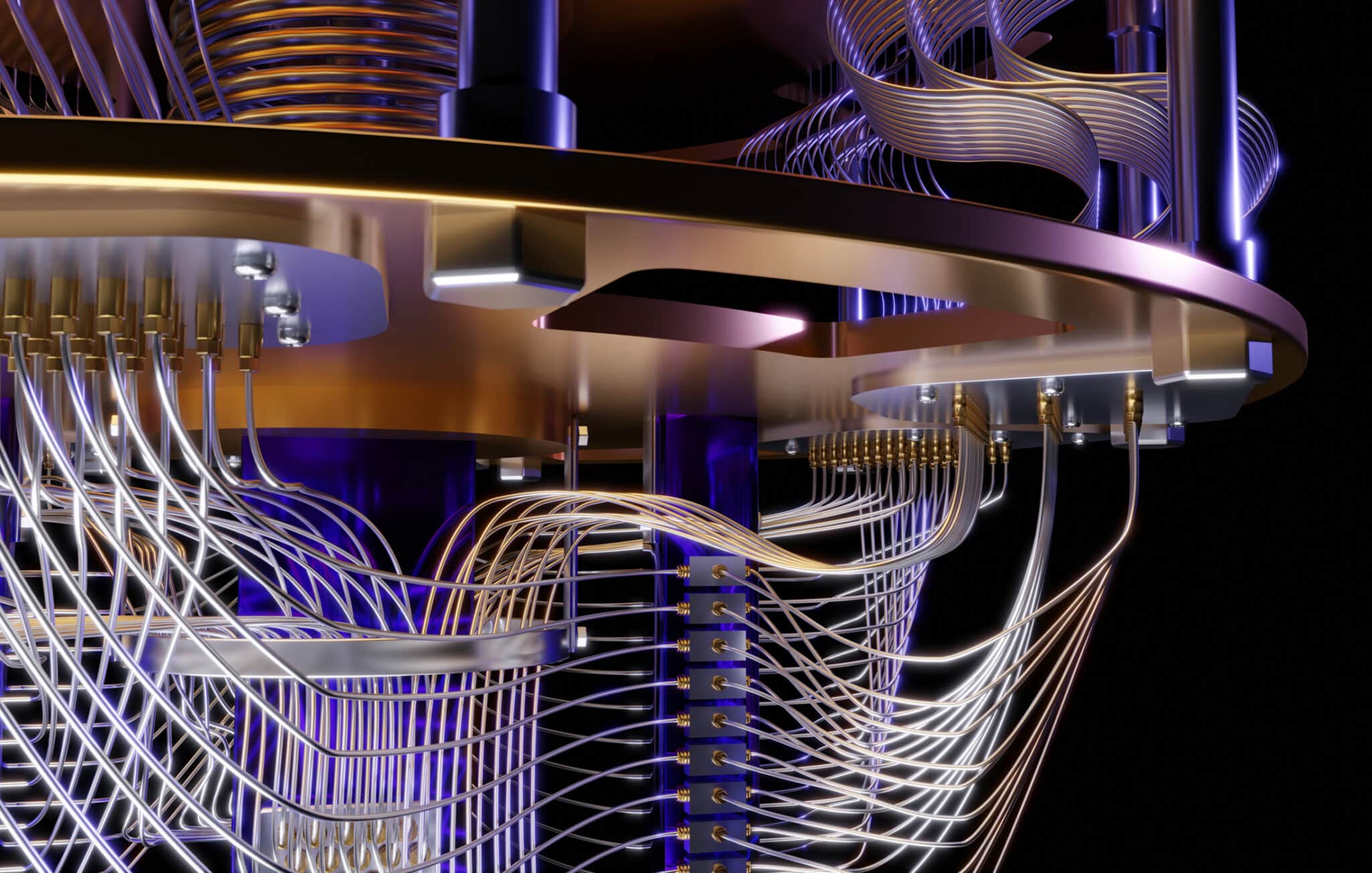
A comprehensive field guide to every way humanity is trying to build a quantum computer — and why it matters that there isn't just one. This Deep Dive series surveys the full landscape of quantum computing modalities and architectures: from the leading gate-based approaches (superconducting, trapped-ion, photonic, neutral atom, silicon) through measurement-based and topological paradigms, to quantum annealing and the exotic frontier of phononic, biological, and neuromorphic quantum computing. Each article examines a modality on its own terms — the physics, the engineering trade-offs, the current state of the art, the companies and labs behind it, and the realistic path (or lack of one) toward fault tolerance and scale. The taxonomy article at the heart of this series provides the structural overview; the individual deep dives go further on each approach. Whether you're a strategist evaluating hardware bets, a systems integrator planning for a multi-modality future, or simply trying to cut through vendor marketing, this series gives you the technical grounding to compare approaches honestly and understand what each one can — and cannot — deliver.
Read More »

-
Quantum Computing Modalities
Quantum Computing Modalities: Quantum Annealing (QA)
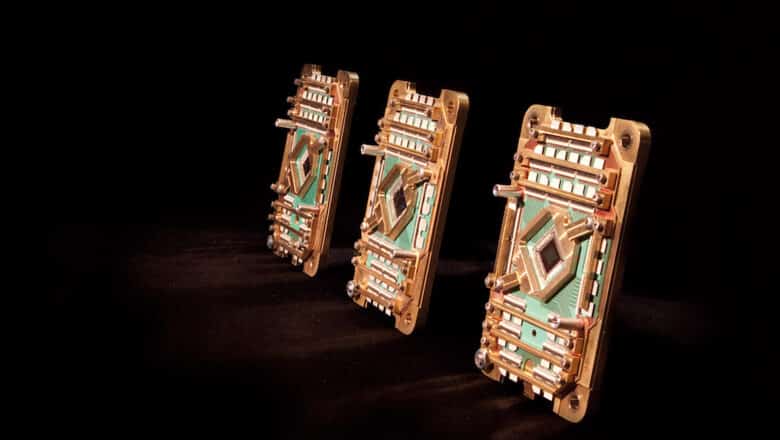
Quantum annealing (QA) is a special-purpose quantum computing paradigm designed to solve optimization problems by exploiting quantum tunneling and the adiabatic principle. It's a special case of Adiabatic Quantum Computing (AQC). The idea is to encode a problem (typically an NP-hard optimization) into an energy landscape, where the lowest energy (ground) state corresponds to the optimal solution. A quantum annealer starts in the easily prepared…
Read More » -
Quantum Computing Modalities
Quantum Computing Modalities: Quantum Walk QC
Quantum walks are the quantum-mechanical counterparts of classical random walks. In a classical random walk, a "walker" (such as a particle or an agent) moves step by step in a certain space (like a line or a graph) with some probability distribution. In a quantum walk, the walker instead evolves in a superposition of positions, following the rules of quantum mechanics.
Read More » -
Quantum Computing Modalities

Quantum Computing Modalities: Fibonacci Anyons
Fibonacci anyons are a type of non-Abelian anyon – exotic quasiparticles that can exist in two-dimensional systems and have exchange statistics beyond bosons or fermions. When two non-Abelian anyons like Fibonacci anyons are exchanged (braided) in space, the quantum state of the system undergoes a unitary transformation (not just a phase change as with Abelian anyons).
Read More » -
Quantum Computing Modalities
Quantum Computing Modalities: QA With Digital Boost (“Bang-Bang” Annealing)
Digital Boost (“Bang-Bang” Annealing) refers to augmenting or replacing the continuous, gradual annealing schedule with discrete pulses or abrupt changes in the control parameters – essentially applying bang–bang control to quantum annealing. In control theory, a bang–bang controller is one that switches sharply between extreme values (on/off) rather than varying smoothly.
Read More » -
Quantum Computing Modalities
Quantum Computing Modalities: Dissipative QC (DQC)
Dissipative Quantum Computing (DQC) is a model of quantum computation that leverages open quantum system dynamics – in other words, it uses controlled dissipation (interaction with an environment and irreversible processes) as a resource for computing.
Read More » -
Quantum Computing Modalities
Quantum Computing Modalities: Majorana Qubits
Majorana qubits promise hardware-level error protection through topological physics. Microsoft has spent over a decade and billions of dollars pursuing them. Here's the physics of how they're supposed to work, the full experimental history, and why the evidence remains contested.
Read More » -
Quantum Computing Modalities
Quantum Computing Modalities: Biological QC
Biological Quantum Computing refers to speculative ideas that biological systems might perform quantum computations or that we could harness biological processes to implement quantum computing. This paradigm is highly exploratory and not yet realized in any form, lying at the intersection of quantum physics, biology, and computer science.
Read More » -
Quantum Computing Modalities
Quantum Computing Modalities: Boson Sampling QC (Gaussian & Non-Gaussian)
Boson Sampling is a specialized, non-universal model of quantum computation where the goal is to sample from the output distribution of indistinguishable bosons (typically photons) that have passed through a passive linear interferometer. In simpler terms, one prepares multiple photons, sends them through a network of beam splitters and phase shifters (a linear optical circuit), and then measures how many photons exit in each output…
Read More » -
Quantum Computing Modalities
Quantum Computing Modalities: Quantum Cellular Automata (QCA)
Quantum Cellular Automata are an abstract paradigm of quantum computing where space and time are discrete and quantum information processing happens in many parallel identical cells interacting with neighbors under a uniform rule. It’s a quantum counterpart to classical cellular automata (like Conway’s Game of Life, but quantum).
Read More » -
Quantum Computing Modalities
Quantum Computing Modalities: Time Crystals’ Potential QC Use
Time crystals are an exotic state of matter that spontaneously breaks time-translation symmetry, meaning the system’s lowest-energy state exhibits periodic motion in time. This is analogous to how ordinary crystals break spatial translation symmetry by arranging atoms in a repeating lattice pattern in space. In a time crystal, the system’s constituents oscillate in a regular pattern without drifting toward thermal equilibrium.
Read More » -
Quantum Computing Modalities
Quantum Computing Modalities: DNA-Based QIP
DNA-based quantum information processing envisions using DNA – the molecule of life – in roles within a quantum computer. This could mean DNA acting as qubits, facilitating quantum interactions, or serving as a structural scaffold for other qubits. It's an intersection of quantum technology with biotechnology and nanotechnology.
Read More » -
Quantum Computing Modalities
Quantum Computing Modalities: One-Clean-Qubit Model (DQC1)
The One-Clean-Qubit model, also known as Deterministic Quantum Computation with One Qubit (DQC1), is a restricted quantum computing paradigm where only a single qubit starts in a pure (or “clean”) state while all other qubits are in a completely mixed state.
Read More » -
Quantum Computing Modalities
Quantum Computing Modalities: Exotic and Emerging QC
Overview of “exotic and emerging” quantum computing paradigms and discuss why they exist, what common themes link them, how they compare to mainstream quantum computers, and what implications they might hold for the future. We also introduce each paradigm in turn – from quantum cellular automata and biological quantum computing to holonomic gates and time crystals – explaining each in high-level, non-technical terms.
Read More » -
Quantum Computing Modalities
Quantum Computing Modalities: Photonic Continuous-Variable QC (CVQC)
Photonic continuous-variable quantum computing (CVQC) is an approach to quantum computation that uses quantum states with continuously varying quantities (like the amplitude or phase of an electromagnetic field) instead of discrete two-level systems (qubits).
Read More » -
Quantum Computing Modalities
Quantum Computing Modalities: Hybrid QC Architectures
Hybrid quantum computing architectures refer to combining different types of quantum systems or integrating quantum subsystems with one another (and often with classical systems) to create a more powerful or versatile computer. This can mean hybridizing physical qubit modalities (e.g., using both superconducting qubits and photonic qubits together), or mixing analog and digital quantum methods, or even quantum-classical hybrids where a quantum processor works in…
Read More »


