
Deep Dive Series
Quantum Computing Modalities
There is no single “quantum computer.” There are superconducting circuits cooled to millikelvins, ions suspended in electromagnetic traps, single photons routed through waveguides, neutral atoms pinned by laser tweezers, silicon quantum dots borrowing from classical fab lines, topological states that may not yet exist in usable form, and a growing catalogue of exotic approaches from phononic qubits to neuromorphic quantum architectures. Each encodes and manipulates quantum information differently, each comes with its own engineering trade-offs, and each defines a different bet on how we get to fault-tolerant, useful quantum computing.
This Deep Dive series is a field guide to that landscape. Across dedicated articles for each modality, I examine the physics, the engineering realities, the state of the art, the companies and labs pursuing it, and the honest path toward scale — or the reasons one may not exist. The full taxonomy overview provides the structural map; the individual articles go deeper on each approach.

-
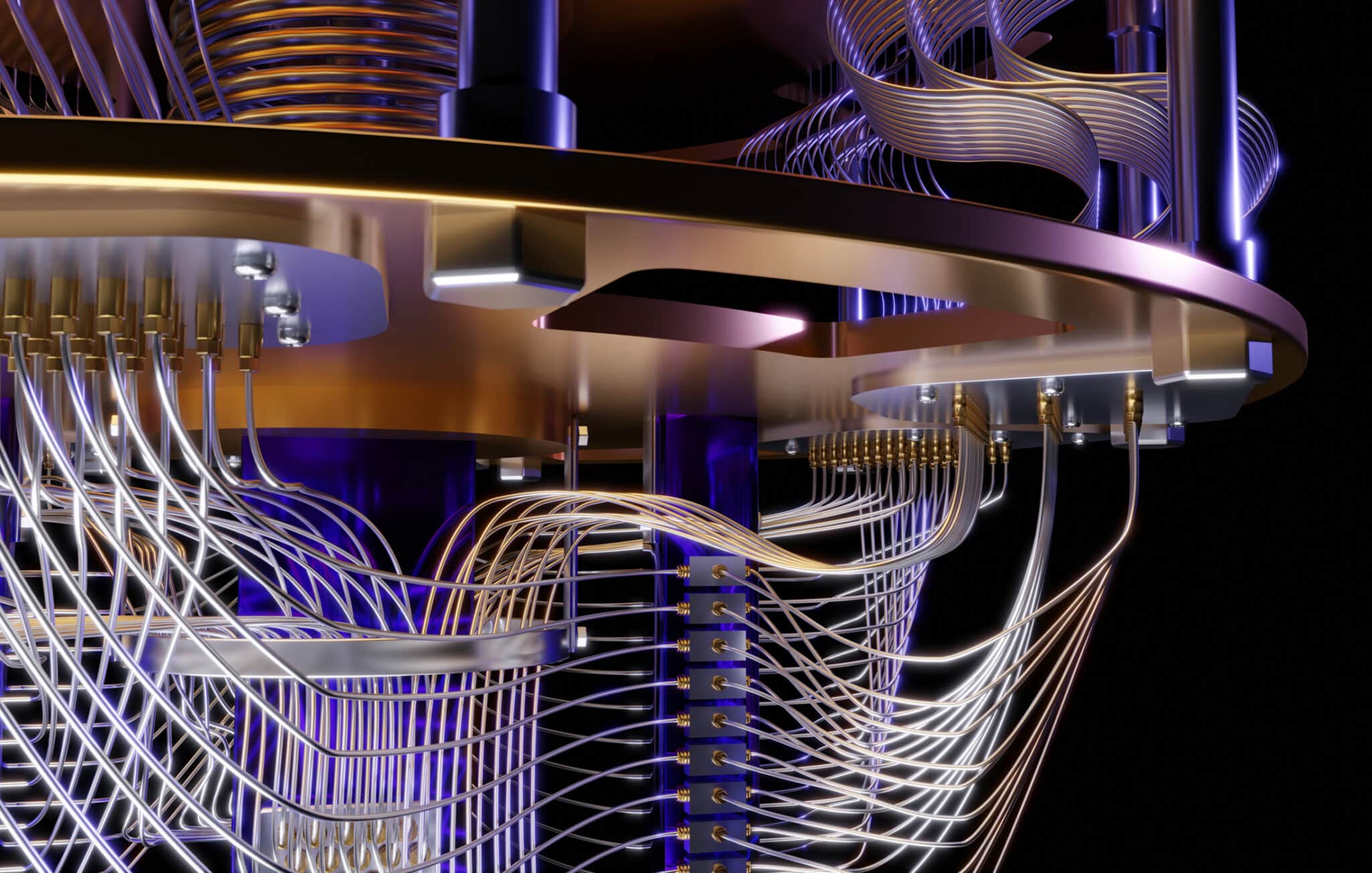
A comprehensive field guide to every way humanity is trying to build a quantum computer — and why it matters that there isn't just one. This Deep Dive series surveys the full landscape of quantum computing modalities and architectures: from the leading gate-based approaches (superconducting, trapped-ion, photonic, neutral atom, silicon) through measurement-based and topological paradigms, to quantum annealing and the exotic frontier of phononic, biological, and neuromorphic quantum computing. Each article examines a modality on its own terms — the physics, the engineering trade-offs, the current state of the art, the companies and labs behind it, and the realistic path (or lack of one) toward fault tolerance and scale. The taxonomy article at the heart of this series provides the structural overview; the individual deep dives go further on each approach. Whether you're a strategist evaluating hardware bets, a systems integrator planning for a multi-modality future, or simply trying to cut through vendor marketing, this series gives you the technical grounding to compare approaches honestly and understand what each one can — and cannot — deliver.
Read More »

-
Quantum Computing Modalities
Quantum Computing Modalities: Quantum Low-Density Parity-Check (LDPC) & Cluster States
Quantum Low-Density Parity-Check (LDPC) codes are a class of quantum error-correcting codes characterized by “sparse” parity-check constraints, analogous to classical LDPC codes. In a Quantum LDPC code (which is typically a stabilizer code), each stabilizer generator (parity-check operator) acts on only a small, fixed number of physical qubits, and each qubit participates in only a few such checks.
Read More » -
Quantum Computing Modalities
Quantum Computing Modalities: Gate-Based / Universal QC
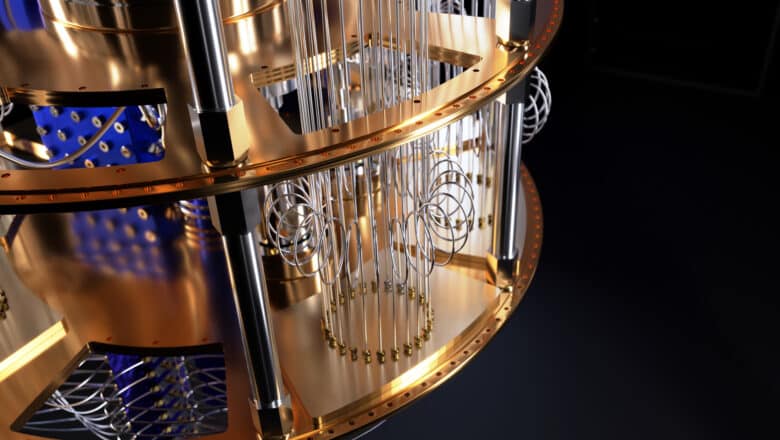
Quantum computing in the gate-based or circuit model is the most widely pursued paradigm for realizing a universal quantum computer. In this model, computations are carried out by applying sequences of quantum logic gates to qubits (quantum bits), analogous to how classical computers use circuits of logic gates on bits. A gate-model quantum computer leverages uniquely quantum phenomena – superposition, entanglement, and interference – to…
Read More » -
Quantum Computing Modalities

Quantum Computing Modalities: Quantum Annealing (QA) & Adiabatic QC (AQC)
Quantum annealing (QA) and adiabatic quantum computing (AQC) are closely related paradigms that use gradual quantum evolution to solve problems. In both approaches, a problem is encoded into a landscape of energy states (a quantum Hamiltonian), and the system is guided to its lowest-energy state which corresponds to the optimal solution.
Read More » -
Quantum Computing Modalities
Quantum Computing Modalities: Quantum Cellular Automata (QCA) in Living Cells
Trapped-ion quantum computing uses individual ions (charged atoms) as qubits. Each ion’s internal quantum state (usually two hyperfine levels of the atom’s electron configuration) serves as |0⟩ and |1⟩. Ions are held in place (suspended in free space) using electromagnetic traps – typically a linear Paul trap that confines ions in a line using oscillating electric fields. By using lasers or microwaves to interact with…
Read More » -
Quantum Computing Modalities
Quantum Computing Modalities: Acoustic (Phononic) Quantum Systems
Quantum acoustic quantum computing refers to using quantized mechanical vibrations – phonons – to store and process quantum information. Instead of relying on photons (particles of light) or electronic states of atoms, this modality leverages units of sound (vibrations in solid materials) as information carriers. In practice, this is implemented with tiny mechanical resonators or acoustic wave devices on a chip. These devices can trap…
Read More »


