August 22, 2024

Quantum Computing & Quantum Technology Initiatives in the USA

The United States has entered a new phase of quantum technology development – one marked by large-scale engineering challenges and system integration, rather than just laboratory science. The next decade will be critical. If current trends hold, we will witness U.S. quantum computers tackling problems that were impossible before, quantum communications protecting real-world data, and quantum sensors enhancing the precision of measurements that society relies on. The U.S. has laid a strong foundation through its national initiatives, research excellence, and industry agility. Maintaining leadership will require sustained investment, a continued focus on education and talent, and smart partnerships between government, academia, and industry ...

News - United States - Quantum Computing, Quantum Tech, Post-Quantum, Quantum Security

Washington Quantum Funding

Washington Isn’t Funding Quantum Research. It’s Building Quantum Factories.

Washington's $2 billion CHIPS Act quantum package isn't a research program. It's industrial policy — the U.S. is building quantum fabs, and that changes the calculus for everyone tracking the CRQC timeline ...
DARPA HARQ

DARPA Launches HARQ Program to Build Heterogeneous Quantum Architectures

DARPA has launched the HARQ program with 19 teams working to combine different qubit types into unified systems — the same heterogeneous vision that I was writing about many times ...
Elevate Quantum Q-PAC QOA

Q-PAC Goes Live: The First U.S. Quantum Open Architecture System Went From Announcement to Fully Operational in Five Months

Five months from announcement to fully operational quantum computer. Elevate Quantum's Q-PAC system in Denver proves the Quantum Open Architecture model works — and raises hard questions about whether the monolithic approach to quantum computing can survive ...
Commission US Quantum Primacy.

SCSP Launches Bipartisan Commission on U.S. Quantum Primacy

The Special Competitive Studies Project (SCSP) has launched the Commission on U.S. Quantum Primacy (CUSP), a new bipartisan body designed to produce a national strategy for keeping the United States ahead in quantum technologies. SCSP frames the effort not as a narrow science-policy exercise, but as a broader push to ...
CISA Product Categories for Technologies That Use Post-Quantum Cryptography Standards

CISA Draws the Line: The Product Category Advisory & The End of Legacy Procurement

The Cybersecurity and Infrastructure Security Agency (CISA) released a definitive advisory titled "Product Categories for Technologies Use Post-Quantum Cryptography Standards." This document, mandated by Executive Order 14306 (June 2025), fundamentally alters the procurement landscape for the United States federal government and, by extension, the global technology supply chain.    The advisory ...
NIST Cryptographic Agility CSWP 39

Crypto Agility Goes from Buzzword to Blueprint – NIST Releases “Considerations for Achieving Crypto Agility”

NIST published the final version of the Cybersecurity White Paper (CSWP) 39 – “Considerations for Achieving Crypto Agility: Strategies and Practices.” CSWP 39 elevates cryptographic agility from an oft-cited buzzword to a design imperative for both government and industry. The message is clear: organizations must be able to adapt their ...

Articles - United States

Quantum Technology, Quantum Computing, Quantum Security

May 14, 2026

CNSA 2.0: The Complete Guide to NSA’s Post-Quantum Requirements

The definitive vendor-neutral reference to NSA's Commercial National Security Algorithm Suite 2.0 — the most operationally specific post-quantum cryptography mandate in the world. This guide breaks down every component of CNSA 2.0 in one place: the complete algorithm suite with NIST standard names and FIPS references (ML-KEM-1024, ML-DSA-87, AES-256, SHA-384/512, LMS, XMSS), why NSA mandates only the highest parameter levels, ...
January 6, 2026

The Complete US Post-Quantum Cryptography (PQC) Regulatory Framework in 2026

Three pillars anchor the US PQC framework: the Quantum Computing Cybersecurity Preparedness Act (federal law that no executive order can undo), NSM-10's 2035 migration target (still in force), and NIST's finalized FIPS standards (published August 2024). The Trump administration's June 2025 executive order streamlined, rather than eliminated, PQC obligations, removing prescriptive procurement mandates while retaining the CISA product category list ...
May 22, 2025

Global Quantum Innovation Ecosystems: Lessons for TTOs from Around the World

For universities and tech transfer offices (TTOs), understanding global diverse quantum innovation ecosystems is more than a matter of curiosity – it’s a practical guide for positioning academic spin‑offs for success on the world stage. Government investment is a key differentiator: by 2025, governments worldwide have committed over $40 billion in public funding for quantum technology. How those funds are deployed, ...
March 5, 2025

The Race Toward FTQC: Ocelot, Majorana, Willow, Heron, Zuchongzhi

Quantum computing is entering a new phase marked by five major announcements from five quantum powerhouses—Amazon Web Services (AWS), Microsoft, Google, IBM, and Zuchongzhi—all in the last 4 months. Are these just hype-fueled announcements, or do they mark real progress toward useful, large-scale, fault-tolerant quantum computing—and perhaps signal an accelerated timeline for “Q-Day”? Personally, I'm bullish about these announcements. Each of ...
March 1, 2025

Physics at the Heart of the New Cold War

In the 21st century, cutting-edge physics has moved from the laboratory into the realm of high geopolitics. Breakthroughs in quantum computing, advanced materials, and energy aren’t just academic - they are strategic assets coveted by nations. The situation echoes the mid-20th century, when projects like the Manhattan Project turned abstract physics into world-altering power. Today, governments are pouring billions into ...
March 1, 2025

Quantum Geopolitics: The Global Race for Quantum Computing

Quantum computing has emerged as a new frontier of great-power competition in the 21st century​. Nations around the world view advanced quantum technologies as strategic assets—keys to future economic prowess, military strength, and technological sovereignty. Governments have already poured over $40 billion into quantum research and development globally​, launching national initiatives and international collaborations to secure a lead in this ...
Loading...

Other Cybersecurity, AI, Emerging Tech

US vs China 5G
April 1, 2019

Geopolitics of 5G and 5G-Connected Massive & Critical IoT

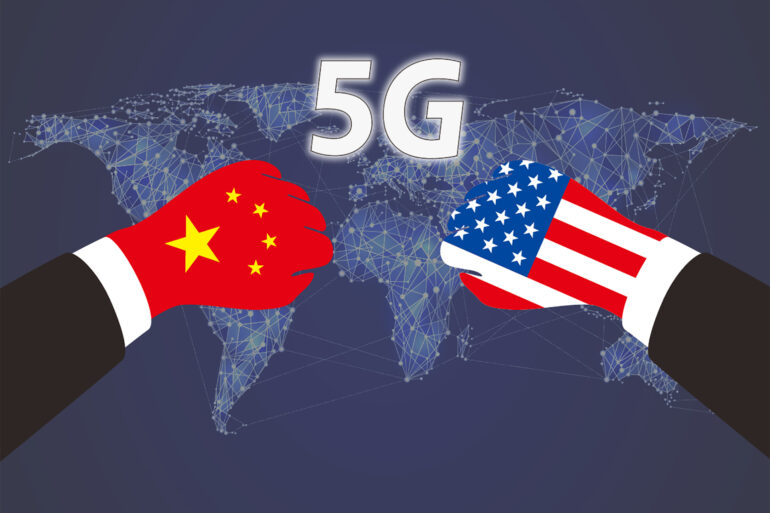
Emerging Technology and Geopolitics of 5G There are several reasons emerging technology is a highly competitive industry, notwithstanding the race for intellectual property that can be licensed by burgeoning markets for revenue. A first-mover advantage is often a way to lock in relationships that can lead to long-term infrastructure commitments, integration support services, and service delivery platform development. As the ...

Companies - United States

Quantum Computing Hardware

Quantum Circuits Logo
July 1, 2025

Quantum Circuits Inc (QCI)

Quantum Circuits, Inc. (QCI) is a Yale University spin-out that has pioneered a novel approach to superconducting quantum computing focused on hardware-efficient error correction. Co-founded in 2017 by leading Yale ...
Logo Quantinuum
May 22, 2025

Quantinuum

Quantinuum, formed by the 2021 merger of Honeywell Quantum Solutions and Cambridge Quantum, is another leader in trapped-ion quantum computing. It combines Honeywell’s hardware prowess with Cambridge’s algorithm/software expertise. Quantinuum’s ...
Quantum Computing Inc
May 22, 2025

Quantum Computing Inc

Quantum Computing Inc. (QCI) is a young entrant in the quantum computing race that has charted a strikingly different course from its larger rivals. Rather than building superconducting or ion-trap ...
Rigetti
May 22, 2025

Rigetti

Rigetti Computing is a full-stack quantum hardware company specializing in superconducting qubit processors. Rigetti’s qubits are implemented as Josephson-junction-based circuits (transmons) operated at milli-Kelvin temperatures inside dilution refrigerators. This platform ...
QuEra
May 22, 2025

QuEra Computing

QuEra Computing is a Boston-based quantum computing company pioneering neutral-atom quantum processors. Built on research from Harvard and MIT, QuEra operates the world’s largest publicly accessible quantum computer (the 256-qubit ...
PsiQuantum
May 22, 2025

PsiQuantum

PsiQuantum is a Silicon Valley-based startup taking a fundamentally different approach: photonic quantum computing. Their goal from the outset has been to build a large-scale, fault-tolerant quantum computer using photons, ...
Microsoft Logo
May 22, 2025

Microsoft

Microsoft’s quantum program is defined by a long‑bet on topological qubits - Majorana‑based devices designed to suppress errors at the hardware level - paired with a near-term, market-facing push through ...
IonQ
May 22, 2025

IonQ

IonQ is a publicly traded leader in trapped‑ion quantum computing whose strategy is to reach useful fault tolerance with fewer physical qubits by maximizing fidelity, connectivity, and modularity. Rather than ...
Loading...