

-
Quantum Computing Modalities
Quantum Computing Modalities: Time Crystals’ Potential QC Use
Time crystals are an exotic state of matter that spontaneously breaks time-translation symmetry, meaning the system’s lowest-energy state exhibits periodic motion in time. This is analogous to how ordinary crystals break spatial translation symmetry by arranging atoms in a repeating…
Read More » -
Society 5.0

Will the Kingdom of Saudi Arabia (KSA) beat Japan to Society 5.0?
Ask most people what they remember from 2016 – if they remember anything at all – and there are usually two big events that float to the front of their minds: Britain voted to leave the European Union and the…
Read More » -
Quantum Computing Modalities
Quantum Computing Modalities: DNA-Based QIP
DNA-based quantum information processing envisions using DNA – the molecule of life – in roles within a quantum computer. This could mean DNA acting as qubits, facilitating quantum interactions, or serving as a structural scaffold for other qubits. It's an…
Read More » -
Quantum Computing Modalities
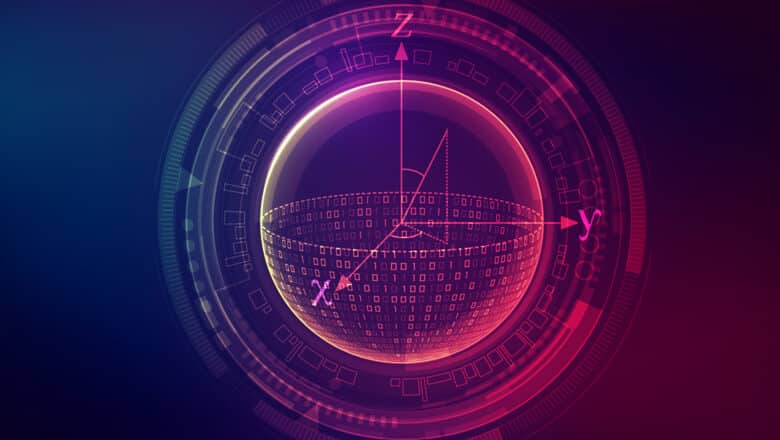
Quantum Computing Modalities: One-Clean-Qubit Model (DQC1)
The One-Clean-Qubit model, also known as Deterministic Quantum Computation with One Qubit (DQC1), is a restricted quantum computing paradigm where only a single qubit starts in a pure (or “clean”) state while all other qubits are in a completely mixed…
Read More » -
Quantum Computing Modalities

Quantum Computing Modalities: Exotic and Emerging QC
Overview of “exotic and emerging” quantum computing paradigms and discuss why they exist, what common themes link them, how they compare to mainstream quantum computers, and what implications they might hold for the future. We also introduce each paradigm in…
Read More » -
Quantum Computing Modalities
Quantum Computing Modalities: Photonic Continuous-Variable QC (CVQC)
Photonic continuous-variable quantum computing (CVQC) is an approach to quantum computation that uses quantum states with continuously varying quantities (like the amplitude or phase of an electromagnetic field) instead of discrete two-level systems (qubits).
Read More » -
Quantum Computing Modalities
Quantum Computing Modalities: Hybrid QC Architectures
Hybrid quantum computing architectures refer to combining different types of quantum systems or integrating quantum subsystems with one another (and often with classical systems) to create a more powerful or versatile computer. This can mean hybridizing physical qubit modalities (e.g.,…
Read More » -
Quantum Computing Modalities
Quantum Computing Modalities: Quantum Low-Density Parity-Check (LDPC) & Cluster States
Quantum Low-Density Parity-Check (LDPC) codes are a class of quantum error-correcting codes characterized by “sparse” parity-check constraints, analogous to classical LDPC codes. In a Quantum LDPC code (which is typically a stabilizer code), each stabilizer generator (parity-check operator) acts on…
Read More » -
5G Security
Is 5G security being sacrificed at the altar of profit, politics and process?
Homo sapiens is an incredibly adaptable species, arguably the most adaptable ever. But it is also a forgetful one, quick to take things for granted. Many of us can remember when cell phones first emerged, when the internet first became…
Read More » -
Quantum Computing Modalities
Quantum Computing Modalities: Gate-Based / Universal QC
Quantum computing in the gate-based or circuit model is the most widely pursued paradigm for realizing a universal quantum computer. In this model, computations are carried out by applying sequences of quantum logic gates to qubits (quantum bits), analogous to…
Read More » -
AI Security
Model Fragmentation Is Model Sprawl, and Nobody Has the Inventory
A quantised derivative of a model you scanned is a different artefact that you did not scan. Every variant carries its own provenance, its own vulnerabilities and its own blast radius, and the first control is an inventory most organisations…
Read More » -
Quantum Computing Modalities
Quantum Computing Modalities: Quantum Annealing (QA) & Adiabatic QC (AQC)
Quantum annealing (QA) and adiabatic quantum computing (AQC) are closely related paradigms that use gradual quantum evolution to solve problems. In both approaches, a problem is encoded into a landscape of energy states (a quantum Hamiltonian), and the system is…
Read More » -
Quantum Computing Modalities
Quantum Computing Modalities: Quantum Cellular Automata (QCA) in Living Cells
Trapped-ion quantum computing uses individual ions (charged atoms) as qubits. Each ion’s internal quantum state (usually two hyperfine levels of the atom’s electron configuration) serves as |0⟩ and |1⟩. Ions are held in place (suspended in free space) using electromagnetic…
Read More » -
AI Security
Model Evasion: Why Attackers Rarely Need Adversarial ML
Evasion research and evasion practice have been pointing in different directions for years. The attacks work in the lab, the constraint that makes them hard is a defensive asset almost nobody uses, and real attackers mostly do something cheaper.
Read More » -
Leadership
Canada’s Quiet Blockchain Revolution: A Tech Legacy Forged in the North
Canada might not be the first country that comes to mind when you think of blockchain and cryptocurrency. Yet, from community meetups in Toronto pubs to world-leading enterprise deployments, Canadians have played a pivotal role in shaping blockchain’s global story.…
Read More »


