

-
Quantum Security & PQC
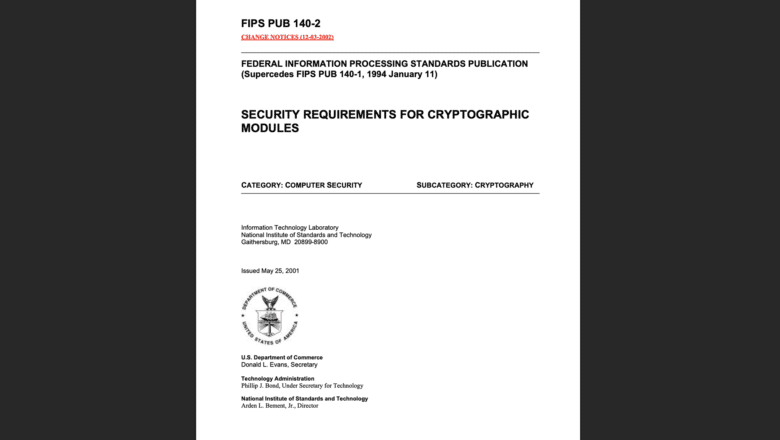
FIPS 140-2 Goes Historical Today – What Actually Changes and What Doesn’t
Every remaining FIPS 140-2 certificate moves to the CMVP Historical list on September 21, 2026. The sunset changes procurement, not operations – but the supply-side gap in FIPS 140-3 validated modules makes the transition harder than the seven-year runway implied.
Read More » -
Quantum Security & PQC

Apple Joins the Merkle Tree Certificate Consensus – and Raises the Bar
Apple's Root Program has committed to Merkle Tree Certificates for TLS with requirements that go beyond Chrome's in key respects, while taking the composite-algorithm path for S/MIME – confirming the two-track PKI fork organizations must plan for.
Read More » -
Post-Quantum, PQC, Quantum Security
One Quantum Threat, Many Migrations: How and Why PQC Programmes Are Diverging Around the World
Fresh from GISEC in Dubai and ahead of a keynote in Maryland: the same quantum threat is being managed very differently across the US, Europe, the Gulf and Asia, and each migration has produced something the others could use.
Read More » -
Quantum Computing
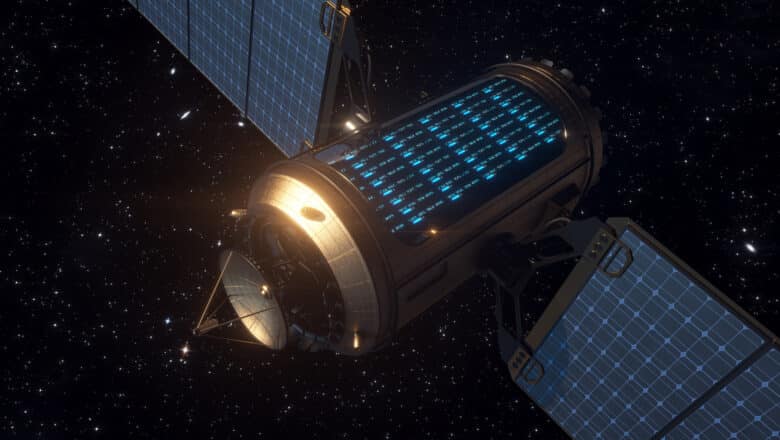
Data Centers in Space Don’t Work. Quantum AI Data Centers in Space Are an Absurdity.
An investor asked me to evaluate a pitch for quantum AI data centers in orbit. The physics, the engineering, and the economics all say the same thing: no.
Read More » -
Quantum Security & PQC

RSA-896 Factored With Claude on Spare GPUs, 16 Days After RSA-260
Stephen Weis of Anthropic used Claude to port CADO-NFS to GPUs and factored RSA-896 on idle capacity, 16 days after Cognition's RSA-260 record. RSA-2048 remains about 35 billion times harder and needs a quantum computer.
Read More » -
Research
Physicists in Guangzhou Confirm Feynman’s Path-Integral Rules With Single Photons, but Not That They Take Every Path
South China Normal University physicists measured single-photon propagators at 98.5% fidelity and multiplied them into 1.4 million path amplitudes. Quantum mechanics, its rival interpretations and classical wave optics predict the same propagators.
Read More » -
Quantum Security & PQC
SAMA Makes Quantum Risk a Standing Item for Saudi Bank Risk Committees. Its December 31 Inventory Deadline Is Too Tight for Banks Starting From Zero.
SAMA asks Saudi banks for cryptographic inventory procedures that are accurate and comprehensive. An inventory built from interviews, the quickest kind to buy, cannot show either. With measured coverage and graded evidence, an examiner can check both.
Read More » -
Policy & Sovereignty
Europe’s Chips Act 2.0 Keeps Quantum Pilot Lines but Leaves Quantum Fabrication Out of Its Strategic-Project Priorities
The European Quantum Industry Consortium says the Chips Act 2.0 proposal names quantum foundries without an instrument to build one. I checked its reading of the annexes and set it against what the US government funded in September.
Read More » -
Research
Stuttgart Physicists Measure an 11.5-Millisecond Lifetime for Circular Rydberg Atoms at Room Temperature. The Group’s Best Circular-Qubit Coherence Time Is Still 278 Microseconds.
A Stuttgart group used two coated glass plates to keep trapped strontium atoms in circular Rydberg states for over 10 ms without a cryostat. I check the three claimed records and what neutral-atom qubits still need.
Read More » -
Quantum Computing
Every Headline RSA-2048 Estimate Assumes Qubits That Work. A Sydney Team Measured What Happens When They Don’t.
On a single IBM chip, a distance-5 surface code lost to a distance-3 even after the defective components were routed around. The headline estimates of what breaking RSA-2048 takes assume they all work.
Read More » -
Policy & Sovereignty
DOE’s $215 Million Q Competition Puts a Price Tag on Fault-Tolerant Quantum Computing – and a Deadline
The DOE's Quantum Genesis Q Competition offers up to $215 million for fault-tolerant quantum computers with at least 100 logical qubits – not physical qubits – by September 2028, paid through milestone payments and equal-split incentive pools.
Read More » -
Research
UPenn Turns Diamond Crosstalk Into a Four-Qubit Entangling Gate at Room Temperature
University of Pennsylvania researchers generated a four-qubit entangled state inside a diamond at room temperature in 14.8 microseconds – about ten times faster than the sequential approach tested in the same register – by converting crosstalk into parallel conditional gates.
Read More » -
Systems & Engineering
Surface Code Runs Below Threshold on IBM Heavy-Hex – But Only in One Direction at a Time
Researchers showed that error suppression can work on hardware whose geometry was never designed for the surface code – a result that broadens the viable hardware base for fault-tolerant quantum computing, though full isotropic scaling has not been shown.
Read More » -
Systems & Engineering
Infleqtion and NVIDIA Build a qLDPC Compiler Pipeline, But the Code Has Not Yet Run on Hardware
Infleqtion integrated its open-source qLDPC library with NVIDIA's new CUDA-Q Logical compiler layer, validating a code that encodes 18 logical qubits in 98 physical data qubits. The software pipeline works. Physical execution is next.
Read More » -
Post-Quantum, PQC, Quantum Security
PQC Migration Framework v3.0: Build the Ability to Change Again
Crypto-agility is now the method, and the PQC migration is the first exercise of it. The program closes when the organization can change algorithms on a date it chooses. Two companion frameworks publish alongside version 3.0.
Read More »


