
All Quantum Computing Posts
-
Quantum Computing

Quantum Technologies and Cybersecurity: Threats and Defenses
Quantum technologies introduce a new era for cybersecurity – one that is simultaneously perilous and full of potential. On the threat side, the advent of quantum computers threatens to upend the cryptographic protections we rely on daily, making it imperative that we transition to quantum-safe methods before quantum attackers emerge. At the same time, on the defense side, quantum physics offers unprecedented tools to achieve…
Read More » -
Quantum Computing
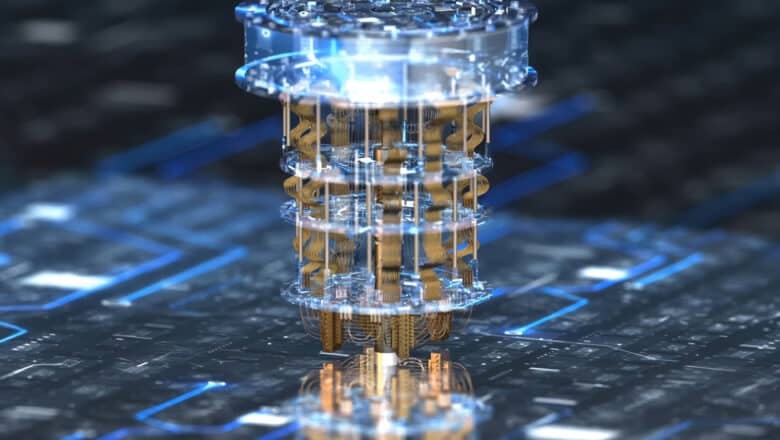
Quantum Computing Benchmarks: RCS, QV, AQ, and More
As quantum computing hardware rapidly improves, simple metrics like qubit count are no longer sufficient to gauge a system’s true capability. Unlike classical computers where transistor counts roughly correlate with performance, quantum bits (qubits) can be error-prone and short-lived, so a few high-fidelity qubits can be more valuable than many noisy ones. This has led researchers to develop specialized benchmarks that capture different aspects of…
Read More » -
Quantum Computing
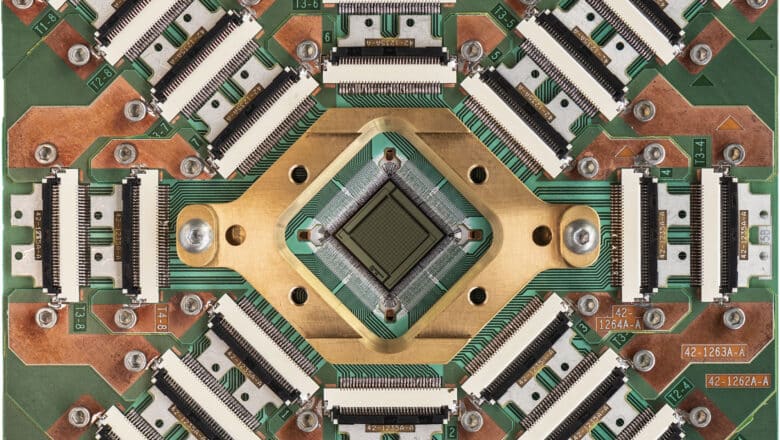
Adiabatic Quantum (AQC) and Cyber (2024 Update)
Adiabatic Quantum Computing (AQC) is an alternative paradigm that uses an analog process based on the quantum adiabatic theorem. Instead of discrete gate operations, AQC involves slowly evolving a quantum system’s Hamiltonian such that it remains in its lowest-energy (ground) state, effectively “computing” the solution as the system’s final state. AQC and its practical subset known as quantum annealing are particularly geared toward solving optimization…
Read More » -
Quantum Computing

Quantum Technology in Europe: A Comprehensive Guide
Europe's quantum technology ecosystem has grown from academic projects into a coordinated multi-billion-euro endeavor spanning the EU and national governments. This guide covers every major initiative, from the Quantum Europe Strategy and PROQCIMA to EAGLE-1 and the EuroHPC quantum computers.
Read More » -
Quantum Computing

Quantum Hacking: Cybersecurity of Quantum Systems
While these machines are not yet widespread, it is never too early to consider their cybersecurity. As quantum computing moves into cloud platforms and multi-user environments, attackers will undoubtedly seek ways to exploit them.
Read More » -
Quantum Computing
The Quantum Approximate Optimization Algorithm (QAOA) – A Beginner’s Guide
At its core, QAOA is a hybrid quantum-classical algorithm that constructs a special kind of quantum circuit (or “ansatz”) to represent a candidate solution, and then uses a classical optimizer to tweak that circuit for better results. It was introduced in 2014 by Edward Farhi and collaborators as an algorithm that “produces approximate solutions for combinatorial optimization problems” and that improves in quality as you…
Read More » -
Quantum Computing
Career Opportunities in Quantum Technologies (No PhD Required)
The landscape of careers in quantum technologies is incredibly rich and expanding by the day. What was once the domain of a few theoretical physicists is now a broad industry ecosystem hungry for talent from all backgrounds: software, hardware, analytics, management, and more. The driving premise is that you do not need to be an elite quantum physicist to contribute. The opportunities are as varied…
Read More » -
Quantum Computing
Australia Quantum Computing & Quantum Technology
Australia’s quantum technology journey has progressed from pioneering academic experiments to a coordinated national endeavor spanning government, academia, and industry. The country has built a solid foundation with landmark research in quantum computing (particularly in silicon qubit hardware and error correction) and has extended its expertise to quantum communications and sensing applications. With the National Quantum Strategy and increased funding, Australia is doubling down on…
Read More »


