
All Quantum Computing Posts
-
Quantum Computing

What Quantum Computers Are For: A Mathematician’s Map of Quantum Advantage
The mathematician's answer to what quantum computers are for: three problem families where the advantage is real, the theorems that cap combinatorics at quadratic, and the open problems stated in your notation.
Read More » -
Quantum Computing
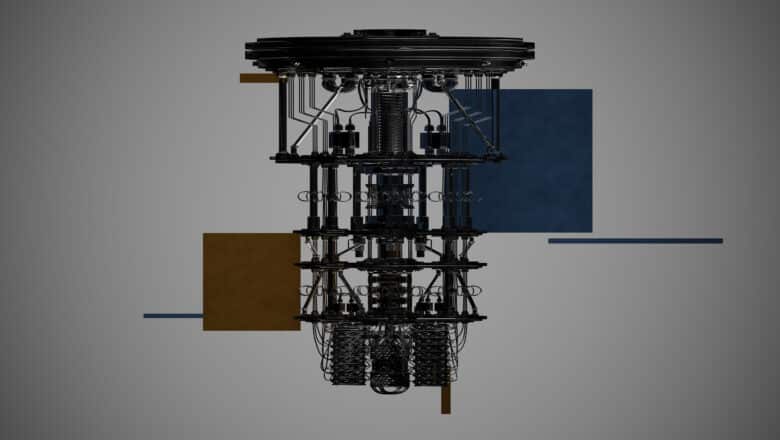
Quantum Computing for Mathematicians: From Four Axioms to Shor’s Algorithm
Everything a mathematician needs to understand quantum computing: the four axioms, why "trying all answers at once" is wrong, how interference powers Shor and Grover, and where mathematicians are needed next.
Read More » -
Quantum Computing

Several Vendors Now Supply Quantum Error Correction’s Classical Loop. The Qubits Are Still the Hard Part.
Riverlane, Qblox, Altera, Xanadu, AMD, NVIDIA and IonQ spent September turning error correction's classical loop into parts with published interfaces and measured latencies. What they tested, on what data, and how I now read fault-tolerance timelines.
Read More » -
Quantum Computing
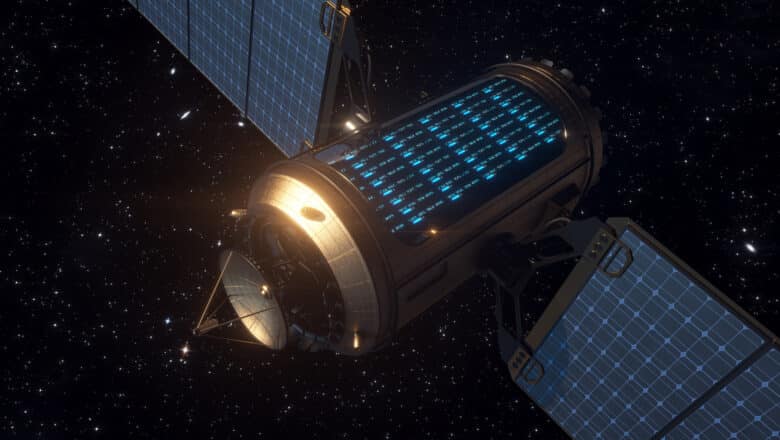
Data Centers in Space Don’t Work. Quantum AI Data Centers in Space Are an Absurdity.
An investor asked me to evaluate a pitch for quantum AI data centers in orbit. The physics, the engineering, and the economics all say the same thing: no.
Read More » -
Quantum Computing

Every Headline RSA-2048 Estimate Assumes Qubits That Work. A Sydney Team Measured What Happens When They Don’t.
On a single IBM chip, a distance-5 surface code lost to a distance-3 even after the defective components were routed around. The headline estimates of what breaking RSA-2048 takes assume they all work.
Read More » -
Quantum Computing
Google’s Multiverse Claim Was a Serious Argument Attached to the Wrong Experiment
Google attached a serious interpretation of quantum mechanics to a benchmark every standard interpretation predicted, and whose headline run was never directly verified. Ten months later the same lab kept the interference and left the metaphysics out.
Read More » -
Quantum Computing
Everything Called a Decoder in Quantum
A syndrome decoder has to keep pace with a microsecond syndrome stream. A syndrome decoding problem has to stay infeasible forever. Same two words, opposite requirements, and coverage that routinely cannot tell them apart.
Read More » -
Quantum Computing
The GSMA’s Telco Quantum Playbook Misreports the McKinsey Report It Cites
A trade body published a vendor-contributed document, and the one exhibit anyone could verify turned out to misreport the report it names. What that costs the operators who will quote it in board papers.
Read More »


