
All Quantum Computing Posts
-
Quantum Computing
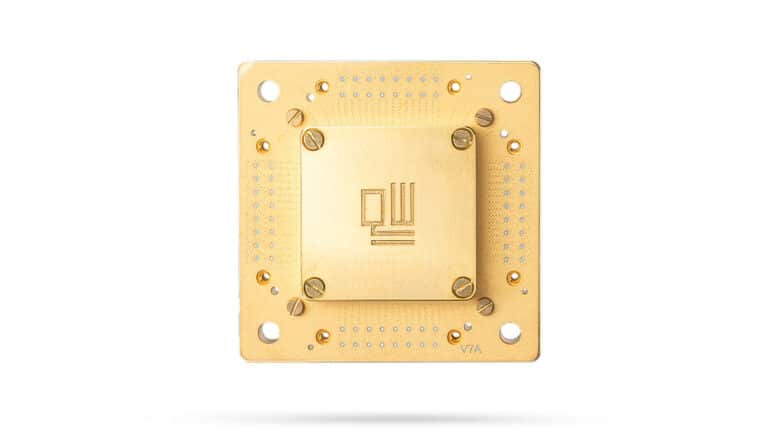
The Merchant QPU Market – Who Will Actually Sell You a Quantum Processor
Strip away cloud access and turnkey machines and the number of companies that will sell a quantum processor for third-party integration drops to six. An audit of the merchant market, with prices, specs, and the gaps.
Read More » -
Quantum Computing
I Set Five Tests for Silicon Spin in March. One of Them Was Too Weak.
Two cleared, one partial, one open, and one that HRL passed as written while leaving the thing it was meant to measure exactly where it was in March.
Read More » -
Post-Quantum, PQC, Quantum Security
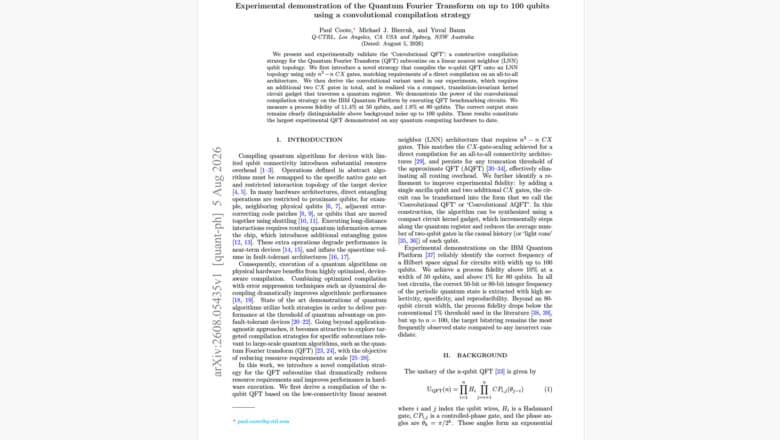
Two QFT Records in Four Months. Neither Gets You Closer to Breaking RSA.
Two compilation teams claimed the largest quantum Fourier transform ever run, four months apart, on the same IBM chip. Their circuits and metrics are not comparable, and the gate counts explain why.
Read More » -
Quantum Computing

Quantum Careers in 2026 (No PhD Required)
An updated map of quantum careers: what each role involves day to day, who hires for it, what employers screen for, and how to judge whether a specialization will still exist in ten years.
Read More » -
Quantum Computing

DARPA’s Most Rigorous Quantum Evaluation Is Led by Its Least Proven Contenders
Neither Stage C company has publicly demonstrated a logical qubit on the architecture DARPA is evaluating. One may not have demonstrated a physical qubit. That outcome tells you more about the program's design than about the technology.
Read More » -
Quantum Computing
Every Quantum Vendor Measures Progress Differently. That’s the Point.
Quantum vendors report different measures of scale, fidelity, throughput, and logical performance. Each number may be valid, but together they do not form a common scoreboard. Here is why that matters.
Read More » -
Quantum Sovereignty
I Spent a Year Writing About Europe’s Quantum Failures. Now I’m Moving My Company There.
I've spent the past year documenting Europe's quantum commercialization gap. Now I'm moving Applied Quantum's headquarters from Singapore to the EU. The contradiction is only apparent.
Read More » -
Quantum Computing
Quantum Computers Are “Always Five Years Away.” The Targets Are Not.
A new philosophical paper explains why quantum-computing timelines keep resetting. The PFYT framework names a real pattern, but it confuses an unsettled architecture with an undefined target.
Read More »


