

-
Industry
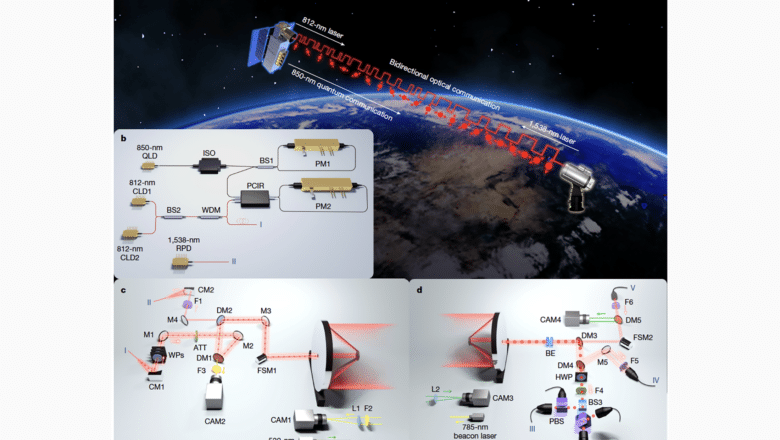
Jinan-1’s real-time QKD demo is a “practicality milestone,” not just a distance headline
A new Nature paper - and a companion Nature news story - highlights what might be the most “deployment-shaped” leap in satellite quantum key distribution (QKD) since the Micius era: Jinan‑1, a quantum microsatellite, has demonstrated real-time space-to-ground QKD using portable (~100 kg) optical ground…
Read More » -
Research
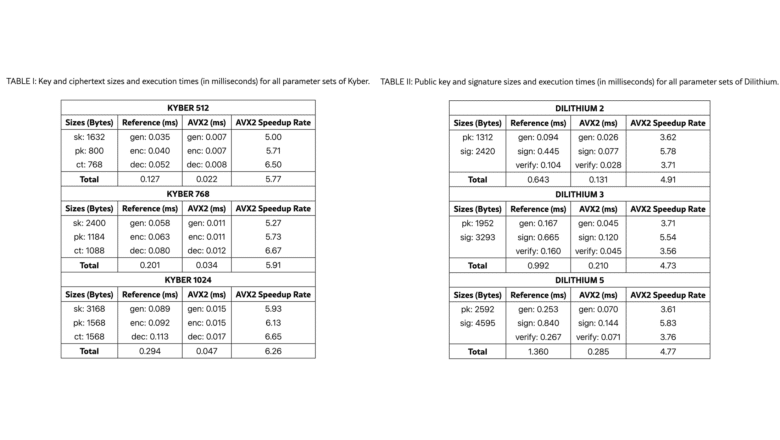
New Study Shows Post‑Quantum Cryptography (PQC) Doesn’t Have to Sacrifice Performance
The new performance analysis of Kyber and Dilithium is a welcome addition to the PQC literature. It confirms that post‑quantum security and good performance are not mutually exclusive, especially when using optimized implementations. In fact, Kyber and Dilithium often outperform…
Read More » -
Post-Quantum, PQC, Quantum Security

Quantum Readiness: What Crypto Exchanges Should Do Today
Preparing for quantum computing is a grand challenge, but it’s one that crypto exchanges can tackle step by step. By addressing off-chain vulnerabilities, fortifying custodial key management, and staying vigilant on-chain, exchanges can dramatically reduce the risk of being caught…
Read More » -
Quantum Computing

Why I Founded Applied Quantum – The First Pure-Play, End-to-End Quantum Consultancy
Applied Quantum is a firm that for the first time would be 100% dedicated to quantum technology services – not as a sideline, not as one emerging tech practice among many, but as the entire mission of the company, and…
Read More » -
Quantum Computing

Quantum Programming: An In-Depth Introduction and Framework Comparison
Quantum programming is an emerging discipline that challenges developers to think beyond classical bits and deterministic algorithms. Instead of manipulating binary 0s and 1s, quantum programmers work with qubits that can exist in multiple states at once and harness phenomena…
Read More » -
Quantum Computing
How Quantum Could Break Through Amdahl’s Law and Computing’s Limits
Amdahl’s Law teaches us a humbling lesson about the limits of classical computing: there is always a portion that resists parallel speedup, chaining us to diminishing returns. We’ve coped by clever engineering – making that chain as short as possible…
Read More » -
Quantum Computing
Quantum Technologies and Quantum Computing in South Korea
South Korea’s quantum technology ecosystem has rapidly matured from obscurity into a well-organized force. Backed by a clear national strategy and increasing investments, Korea is making its mark through cutting-edge research at top universities, substantial government support for quantum computing…
Read More » -
Industry
D-Wave Claims Quantum Supremacy with Quantum Annealing
D-Wave Quantum Inc. has announced a breakthrough, claiming to achieve quantum computational advantage – even “quantum supremacy” – using its quantum annealing technology on a practical problem. In a peer-reviewed study published in Science on March 12, 2025, D-Wave’s researchers…
Read More » -
Research
QNodeOS Is the First Operating System for Quantum Network Nodes
Quantum Internet Alliance researchers published QNodeOS in Nature, running high-level quantum network programs on NV-centre nodes in Delft, adding a driver for a trapped-ion node in Innsbruck, and multitasking two applications.
Read More » -
Policy & Sovereignty
NIST Picks HQC as New Post-Quantum Encryption Candidate
The U.S. National Institute of Standards and Technology (NIST) has announced today the selection of Hamming Quasi-Cyclic (HQC) as a new post-quantum encryption candidate in its Round 4 of the Post-Quantum Cryptography (PQC) standardization program. HQC’s advancement is especially interesting…
Read More » -
Research
Fault-Tolerant Quantum Computing (FTQC) with Erasure Qubits
Fault-tolerant quantum architectures based on erasure qubits represent an exciting development in quantum engineering. They blend clever hardware design with advanced error-correcting codes to tackle the Achilles’ heel of quantum computers: noise. The research by Gu, Retzker, and Kubica shows…
Read More » -
Quantum Computing
Quantum Technologies and Quantum Computing in the Middle East
Leaders in the Middle East are talking about quantum algorithms and national quantum computing hubs. And even about Quantum AI. The Middle East is determined not to miss out on the quantum revolution, and that determination is reshaping the tech…
Read More » -
Quantum Computing
The Race Toward FTQC: Ocelot, Majorana, Willow, Heron, Zuchongzhi
Quantum computing is entering a new phase marked by five major announcements from five quantum powerhouses—Amazon Web Services (AWS), Microsoft, Google, IBM, and Zuchongzhi—all in the last 4 months. Are these just hype-fueled announcements, or do they mark real progress toward…
Read More » -
Industry
Zuchongzhi 3.0 Quantum Chip: Technical Analysis and Implications
China’s quantum computing powerhouse, the Zuchongzhi research teams, just unveiled Zuchongzhi 3.0, a new superconducting quantum processor with 105 qubits, marking a major leap in quantum computing performance. Announced in March 2025 by a University of Science and Technology of…
Read More » -
Post-Quantum, PQC, Quantum Security
Physics at the Heart of the New Cold War
In the 21st century, cutting-edge physics has moved from the laboratory into the realm of high geopolitics. Breakthroughs in quantum computing, advanced materials, and energy aren’t just academic - they are strategic assets coveted by nations. The situation echoes the…
Read More »


