

-
Quantum Security & PQC
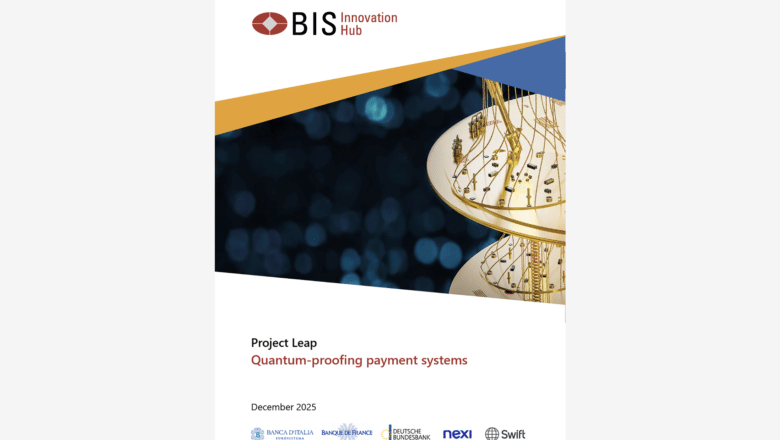
BIS Project Leap Phase 2 – PQC in Real-World Payment Systems
The Bank for International Settlements (BIS) and the Eurosystem published the results of Project Leap Phase 2, a massive technical trial testing PQC on the TARGET2 payment system (the Real-Time Gross Settlement system for the Euro). The project involved the Banque…
Read More » -
Post-Quantum, PQC, Quantum Security

Telecom Quantum Readiness: Why the Urgency and Where to Start
An increasing number of telecom leaders have been pinging me lately about quantum readiness. And frankly, that’s exactly what they should be doing. New regulations and mandates are emerging left and right (in various jurisdictions and across the industry) requiring…
Read More » -
Systems & Engineering
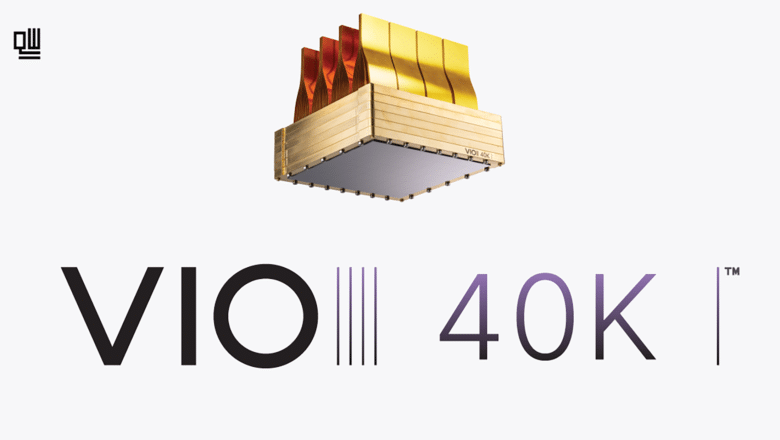
QuantWare’s “10,000‑qubit chip” headline: a real scaling bet – and why it still doesn’t mean Q‑Day
Dutch startup QuantWare has announced VIO-40K™, a new 3D packaging architecture designed to build superconducting quantum processors with up to 10,000 qubits on a single device. This represents roughly a 100× increase over the scale of today’s largest superconducting chips.…
Read More » -
Industry
OECD Maps the Quantum Statecraft Era
This week, the OECD published An overview of national strategies and policies for quantum technologies as OECD Digital Economy Papers No. 379, with the publication page dating it to 8 December 2025. The OECD frames it as a stocktake of…
Read More » -
Quantum Policies

How the EU Can Capture the Benefits of Quantum Computing
The European Union has entered the global quantum race with determination - aiming not just to excel in research, but to translate breakthroughs into economic and strategic benefits. In July 2025, the European Commission unveiled the Quantum Europe Strategy, a…
Read More » -
Quantum Ecosystem
The Infrastructure Beneath the Qubit: Four Enabling Technologies That Will Determine Which Quantum Computers Actually Scale
Quantum computing captivates with its physics: superposition, entanglement, interference. The companies that build qubits get the headlines, the funding rounds, and the breathless media coverage. But the companies that build the infrastructure beneath the qubits - the electronics that control…
Read More » -
Post-Quantum, PQC, Quantum Security
Quantum Key Distribution (QKD): Why Countries Differ on Its Future
Quantum Key Distribution (QKD) - a method of securing communications using quantum physics - has become a flashpoint of debate worldwide. Recent news (like Google’s announcement favoring post-quantum algorithms over QKD) highlights how divided opinions are. Some nations are investing…
Read More » -
Industry
D-Wave Targets U.S. Government With New Quantum Unit
D-Wave Quantum Inc. has launched a dedicated business unit to accelerate quantum adoption across U.S. government agencies. Led by newly appointed VP Jack Sears Jr., a defense contracting veteran, the unit will focus on logistics, transportation, and national security applications…
Read More » -
Industry
Danish Photonics Startup Sparrow Quantum Raises $32M
Sparrow Quantum, a spin-out from the Niels Bohr Institute, has closed a €27.5 million (~$32 million) Series A round - the largest quantum-tech investment in the Nordic region to date. The funding, led by North Ventures and the European Investment Bank’s venture…
Read More » -
Q-Day Prediction
Q-Day: Predicting the Unpredictable
When will a quantum computer break RSA and ECC? Expert predictions range from "already happened in a classified lab" to "never" — and the honest truth is that nobody knows. Q-Day prediction is hard because it depends on simultaneous breakthroughs…
Read More » -
Research
Linking Two Quantum Networks
A new paper in Nature Photonics by Natalia Herrera Valencia et al. (2025) reports a prototype quantum network that connects two previously separate networks into a single eight-user system. In practical terms, the team from Heriot-Watt University demonstrated a reconfigurable…
Read More » -
Quantum Security & PQC
The UAE Just Issued One of the World’s First Binding National PQC Migration Requirements
The UAE just became one of the first countries to issue a binding national policy requiring formal PQC migration plans from government entities. Automated cryptographic inventory, crypto-agility by design, and HNDL-driven prioritization are all mandated, not suggested.
Read More » -
Quantum Sovereignty
Sovereignty Stress Tests: Tabletop Scenarios for States and Enterprises
In an era of quantum and digital sovereignty, governments and companies must ensure they aren’t caught off-guard by geopolitical tech disruptions. Building on my previous analyses of quantum sovereignty and a number of Applied Quantum client engagements, I wanted to…
Read More » -
Post-Quantum, PQC, Quantum Security
Rethinking CBOM
The simplest way to explain CBOM is still the best. If SBOM is the ingredients list for software, CBOM is the ingredients list for the security assumptions that software depends on. Where SBOM tracks components and dependencies, CBOM tracks cryptographic…
Read More » -
Industry
White House “Genesis Mission” Links Supercomputers, AI & Quantum
The White House has launched the Genesis Mission, an ambitious Department of Energy initiative to integrate America’s top supercomputers, AI systems, quantum computers, and scientific instruments into a unified "discovery platform". Announced via Executive Order by President Trump, the mission’s…
Read More »


