

-
Quantum Computing

Quantum Geopolitics: The Global Race for Quantum Computing
Quantum computing has emerged as a new frontier of great-power competition in the 21st century. Nations around the world view advanced quantum technologies as strategic assets—keys to future economic prowess, military strength, and technological sovereignty. Governments have already poured over…
Read More » -
Industry
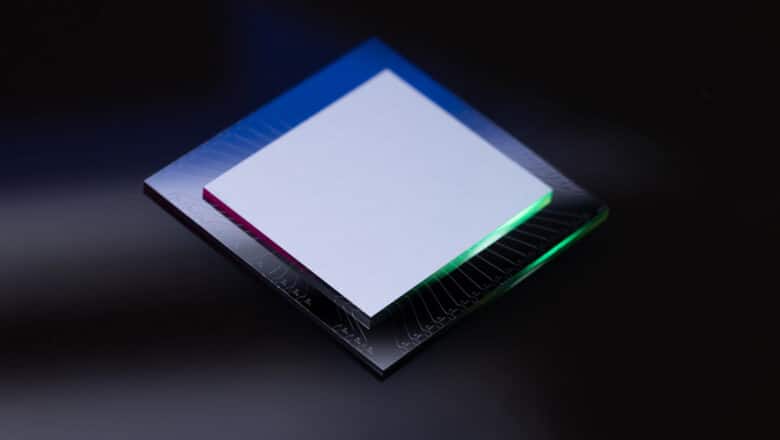
AWS Announces Ocelot Chip for Ultra-Reliable Qubits
Amazon Web Services (AWS) has officially unveiled Ocelot, its first in-house quantum computing chip, marking a significant milestone in the company’s quantum ambitions. Announced on February 27, 2025, Ocelot is a prototype processor designed from the ground up to tackle…
Read More » -
Leadership
Financing the Quantum Leap: Funding Strategies for University Spin‑offs
In the end, funding a quantum leap is about building bridges – between lab and market, between public and private interests, and between today’s prototypes and tomorrow’s transformative industries. Each dollar raised and each partnership forged is like adding a…
Read More » -
Research
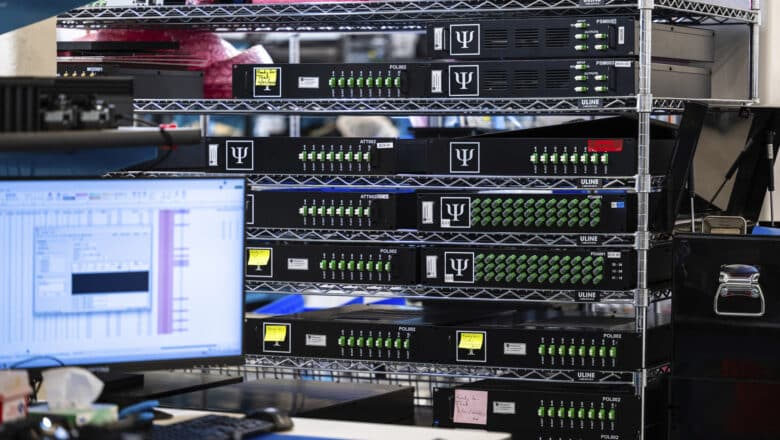
PsiQuantum Demonstrates Foundry-Manufactured Photonic Quantum Computing Platform With Record Fidelities
PsiQuantum publishes the first complete photonic quantum computing platform fabricated in a commercial semiconductor foundry, with record fidelities across every building block.
Read More » -
Quantum Sensing

AI and Quantum Sensing: A Perfect Synergy
AI and quantum sensing complement each other perfectly. Quantum sensors provide the rich, nuanced data about physical reality at its smallest scales; AI provides the means to interpret and act on that data in real time. This synergy is already…
Read More » -
Quantum Computing
Quantum Use Cases in Telecom
Quantum computing’s impact on global telecommunications will be transformative. It holds the potential to revolutionize how we secure and operate networks, enabling levels of performance and protection previously unattainable. At the same time, it forces a reckoning with the vulnerabilities…
Read More » -
Industry
QuantWare unveils Contralto‑A, a QPU designed for quantum error correction experiments
QuantWare has introduced Contralto‑A, a new superconducting quantum processing unit aimed specifically at advancing practical quantum error correction (QEC) development. Announced in Delft, The Netherlands, the processor is positioned for teams working on surface-code style QEC demonstrations and early fault‑tolerance…
Read More » -
Research
Silicon Runs Its First Real Algorithm: Grover’s Search on Four Qubits With Every Gate Above Threshold
24 Feb 2025 - There is a difference between proving you can throw a ball and proving you can play a game. For three years, silicon spin qubits have been proving they can throw: individual gate operations above the fault-tolerance…
Read More » -
Industry
Microsoft’s Majorana-Based Quantum Chip – Beyond the Hype
In February 2025, Microsoft unveiled “Majorana 1,” an eight-qubit quantum chip built on a topological qubit architecture – a first-of-its-kind design leveraging exotic Majorana quasiparticles. This chip uses a new material called a “topoconductor” (a specially engineered topological superconductor) made…
Read More » -
Quantum Security & PQC
-
Quantum Security & PQC
South Korea Selects Four Domestic PQC Algorithms, Running a Parallel Track to NIST
South Korea has selected four domestic PQC algorithms through its KpqC competition, none of which are NIST standards. The choice to run a parallel standardization process alongside NIST adoption raises interoperability questions that multinationals cannot ignore.
Read More » -
Quantum Computing
Quantum of Flapdoodle: A Guide to Quantum Hype and Scams
The gap between the hard reality of quantum engineering and the sensational way it’s often portrayed has created a fertile breeding ground for misinformation and fraud. It ranges from innocuous exaggeration, to willful marketing spin, to serious financial scams and…
Read More » -
Quantum Security & PQC
The EU’s Cyber Resilience Act Doesn’t Say “Post-Quantum” but Its Crypto-Agility Requirement Will Shape PQC Migration
The EU Cyber Resilience Act doesn't mention "post-quantum" by name. But its requirement that products support cryptographic updates throughout their lifecycle effectively mandates the architectural capability that PQC migration depends on: crypto-agility.
Read More » -
Policy & Sovereignty
Executive Order 14144: Biden’s Big Swing at Cybersecurity Modernization
On January 16 2025 President Joe Biden signed Executive Order 14144, “Strengthening and Promoting Innovation in the Nation’s Cybersecurity.” The 17‑page directive is the administration’s most comprehensive cyber policy since EO 14028 in 2021 and, for the first time, embeds post‑quantum cryptography (PQC) migration deadlines directly…
Read More » -
Quantum Computing
Quantum Use Cases in Healthcare & Medical Research
Quantum computing has the potential to reshape global healthcare and medical research in the coming decades. From our current vantage point, we can see glimmers of its future impact: prototype quantum algorithms already accelerating drug discovery, early collaborations bringing quantum…
Read More »


