Latest Quantum Research & Methods News
-
Oct- 2023 -30 OctoberResearch News

99.5% Fidelity in Neutral-Atom Qubits Achieved
A team of researchers from Harvard University, MIT, and QuEra have achieved two-qubit entangling gates with 99.5% fidelity on 60 neutral atom qubits operating simultaneously. This milestone represents a crucial step towards the practical application of quantum computing in commercial environments. The collaborative research signifies a major leap forward in the quest for reliable quantum information processing. Detailed findings from…
Read More » -
28 OctoberResearch News
Over 1,000 Controllable Atomic Qubits Achieved
In a research article just published on the arXiv preprint server the research team from TU Darmstadt in Germany reports on the world’s first successful experiment to realise a quantum-processing architecture that contains more than 1,000 atomic qubits in one single plane. The researchers used a novel method of “quantum bit supercharging” that enabled researchers to overcome the limitations imposed by the…
Read More » -
14 OctoberIndustry & Ecosystem News
Jiuzhang 3.0: China’s Photonic Quantum Computer
Chinese researchers have announced Jiuzhang 3.0, a new photonic quantum computing prototype that set a record by detecting 255 photons in a boson sampling experiment. Unveiled in October 2023 by a team led by renowned physicist Pan Jianwei, Jiuzhang 3.0 pushes the boundaries of photonic quantum computing with a demonstration that is 10 quadrillion times faster at solving a Gaussian…
Read More » -
Aug- 2023 -7 AugustResearch News
New Hybrid Quantum Monte Carlo Algorithm
Researchers Xiaosi Xu and Ying Li have developed a “quantum-assisted” Monte Carlo method that uses a small quantum processor to boost the accuracy of classical simulations. The breakthrough, published in Quantum in 2023, addresses the notorious sign problem in quantum Monte Carlo calculations – a key issue that causes explosive uncertainty in simulations of electrons and other fermions. By incorporating…
Read More » -
Jun- 2023 -22 JuneResearch News
Intel’s Tunnel Falls: 24,000 Quantum Chips Per Wafer and the Manufacturing Argument Made Real
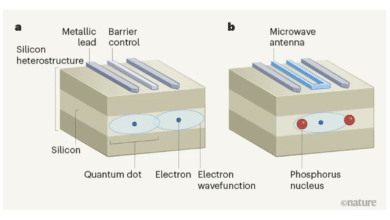
22 Jun 2023 - Every conversation about silicon spin qubits eventually arrives at the same claim: because these qubits are essentially single-electron transistors, they can be manufactured using the same processes that produce billions of classical transistors every year. The implication is staggering — a scalable quantum computer rolled off a semiconductor production line, not hand-assembled in a physics lab.…
Read More » -
Feb- 2023 -24 FebruaryResearch News
Google Claims Breakthrough in Quantum Error Correction
Feb 2023 – Quantum computers hold the promise of tackling problems beyond the reach of classical machines, but they are notoriously fragile. Even tiny disturbances can introduce errors into quantum computations. To build a fault-tolerant quantum computer – one that can reliably run long computations – scientists have to keep these errors in check. Google’s Quantum AI team just reported…
Read More » -
Jan- 2023 -29 JanuaryResearch News
Scientists Achieve Entanglement Between Two Light Sources
Researchers from the University of Copenhagen and Ruhr University Bochum have made a significant breakthrough in quantum technology by achieving controlled interaction between two quantum light sources, or quantum emitters, embedded in a nanophotonic waveguide. This development, reported in Science, is a foundational step toward building scalable quantum computers and enhancing quantum communication systems. In simple terms, quantum emitters are…
Read More » -
Nov- 2022 -30 NovemberIndustry & Ecosystem News
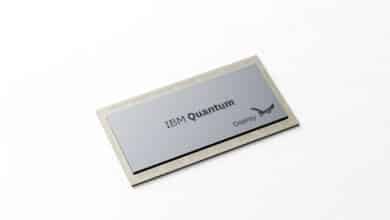
IBM Osprey: A 433-Qubit Quantum Leap
IBM has announced Osprey, a superconducting quantum processor with a record-breaking 433 qubits – by far the largest of its kind as of its 2022 debut. Revealed at the IBM Quantum Summit in November 2022, Osprey more than triples the qubit count of IBM’s previous 127-qubit Eagle chip. IBM says this new processor “brings us a step closer to the…
Read More » -
Aug- 2022 -25 AugustResearch News
Silicon’s First Attempts at Self-Repair: Phase-Flip Error Correction Demonstrated in Semiconductor Spin Qubits
25 Aug 2022 - Seven months ago, three teams simultaneously proved that silicon spin qubits could operate above the fault-tolerance threshold — the quality of individual gates good enough, in principle, for error correction to work. That was the prerequisite. Now comes the thing itself. Two independent groups have demonstrated quantum error correction in semiconductor spin qubits for the first…
Read More » -
Apr- 2022 -29 AprilIndustry & Ecosystem News
Record-Breaking Quantum Transmission Via Micius
A team of Chinese physicists has achieved a landmark advance in quantum communication, successfully teleporting quantum states between two ground stations 1,200 kilometers apart via Micius satellite. The experiment, led by Pan Jianwei of the University of Science and Technology of China, marks the longest-distance quantum teleportation ever demonstrated, shattering previous records that were limited to tens or hundreds of kilometers.…
Read More » -
Jan- 2022 -26 JanuaryResearch News
Three Labs, One Week, One Threshold: Silicon Qubits Cross the Fault-Tolerance Line
26 Jan 2022 - For a decade, silicon spin qubits have been quantum computing's most tantalizing "not yet." The pitch was always compelling: qubits built from the same material that powers every smartphone and data centre on earth, manufactured using processes the semiconductor industry has spent half a century perfecting. But the performance gap was real. While superconducting circuits and…
Read More » -
Nov- 2021 -30 NovemberIndustry & Ecosystem News
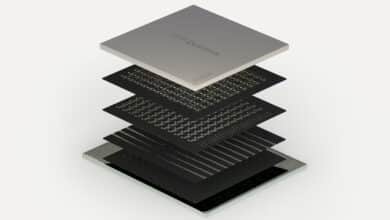
IBM Eagle: The First 100+ Qubit Quantum Processor
IBM has announced Eagle, a 127-qubit superconducting quantum processor – the world’s first quantum chip to surpass 100 qubits. Unveiled at the IBM Quantum Summit in late 2021, Eagle marks a major milestone in quantum computing, nearly doubling the qubit count of IBM’s previous 65-qubit “Hummingbird” processor and overtaking the scale of rival devices like Google’s 53-qubit Sycamore. IBM’s researchers…
Read More » -
Jun- 2021 -30 JuneIndustry & Ecosystem News
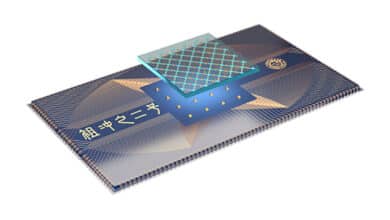
Zuchongzhi 2.0: China’s Superconducting Quantum Leap
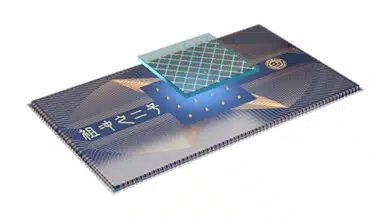
A team of Chinese physicists has unveiled Zuchongzhi 2.0, a cutting-edge 66-qubit superconducting quantum computing prototype that pushes the frontiers of computational power. Announced by the CAS Center for Excellence in Quantum Information, this new quantum machine builds on its predecessor (Zuchongzhi 1.0) with more qubits and higher fidelity, achieving a milestone known as quantum computational advantage (or “quantum supremacy”)…
Read More » -
May- 2021 -30 MayIndustry & Ecosystem News
Zuchongzhi 1.0: China’s New Superconducting Processor
In May 2021, scientists at the Chinese Academy of Sciences (CAS) unveiled Zuchongzhi 1.0, a 62-qubit programmable superconducting quantum computer that set a new benchmark in the quantum computing race. Named after a 5th-century Chinese mathematician, Zuchongzhi 1.0 contains the largest number of superconducting qubits ever assembled in a single processor so far.
Read More » -
Apr- 2021 -16 AprilResearch News

Breaking RSA-2048 With 20M Noisy Qubit
An interesting paper was published on arXiv, the preprint server. Titled “How to factor 2048 bit RSA integers in 8 hours using 20 million noisy qubits,” the paper by Craig Gidney and Martin Ekerå combines previous techniques from Shor (1994), Griffiths-Niu (1996), Zalka (2006), Fowler (2012), Ekerå-Håstad (2017), Ekerå (2017, 2018), Gidney-Fowler (2019), and Gidney (2019) to significantly reduce the…
Read More »