
All Quantum Policy & Sovereignty Posts
-
Quantum Sovereignty
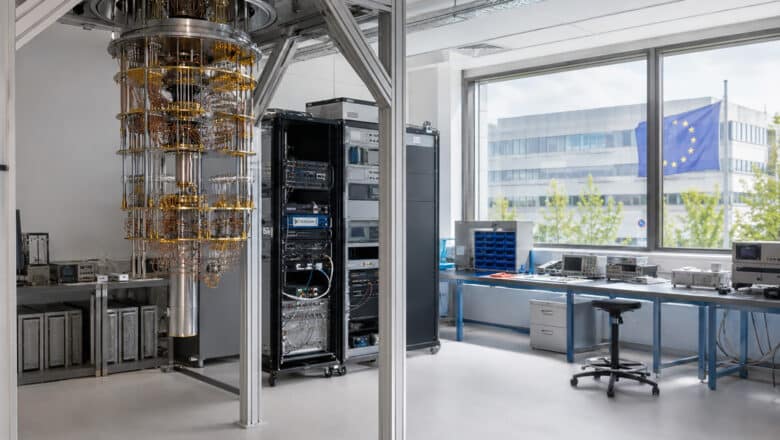
I Spent a Year Writing About Europe’s Quantum Failures. Now I’m Moving My Company There.
I've spent the past year documenting Europe's quantum commercialization gap. Now I'm moving Applied Quantum's headquarters from Singapore to the EU. The contradiction is only apparent.
Read More » -
Quantum Policies
Europe Is Rewriting Its Quantum Roadmaps and Asking for Comments
Six draft roadmaps will guide European quantum funding to 2035, and comments close August 16. My team read every page. The strongest sovereignty doctrine, a missing PQC workstream, and a KPI demanding autarky.
Read More » -
Quantum Sovereignty

Why the OpenAI Breach Matters for Quantum Strategy
Everyone is covering the OpenAI/Hugging Face breach as an AI scare. The real lesson is in the forensics: US models blocked defenders, a Chinese model did the job, and the same flawed control logic governs quantum.
Read More » -
Quantum Sovereignty
Every US Quantum Computer Runs on Foreign Parts and Foreign Inventions
The U.S. quantum community keeps saying America built every layer of the quantum stack. I tested that claim against the historical record, layer by layer, from theory through cryogenics. The answer has direct implications for supply chain policy and alliance management.
Read More » -
Post-Quantum, PQC, Quantum Security

US Federal PQC Mandate After June 2026: Complete Guide
June 2026 transformed US PQC policy from planning guidance into enforceable mandates. This is the complete picture: what applies to whom, by when, and under which authority.
Read More » -
Quantum Sovereignty
America Just Made the Case for Quantum Sovereignty
Washington ordered two of the most capable AI models offline for every customer on the planet, and it took hours. I keep getting asked why the world wants its own quantum stack. Here is the cleanest answer I have.
Read More » -
Post-Quantum, PQC, Quantum Security
Canada’s PQC Framework: Sound Design, Stalled Execution — What the Bill C-8 Senate Debate Reveals
Four years after Bill C-26 was introduced, its successor Bill C-8 has finally passed the Senate. Quantum got one question in the debate. The enforcement layer that makes Canada's PQC framework work remains years away from addressing quantum risk.
Read More » -
CNSA 2.0
CNSA 2.0: The Complete Guide to NSA’s Post-Quantum Requirements
The definitive vendor-neutral reference to NSA's Commercial National Security Algorithm Suite 2.0 — the most operationally specific post-quantum cryptography mandate in the world. This guide breaks down every component of CNSA 2.0 in one place: the complete algorithm suite with NIST standard names and FIPS references (ML-KEM-1024, ML-DSA-87, AES-256, SHA-384/512, LMS, XMSS), why NSA mandates only the highest parameter levels, the full category-by-category transition timeline…
Read More »


