
All Q-Day, Y2Q Posts
-
Post-Quantum, PQC, Quantum Security
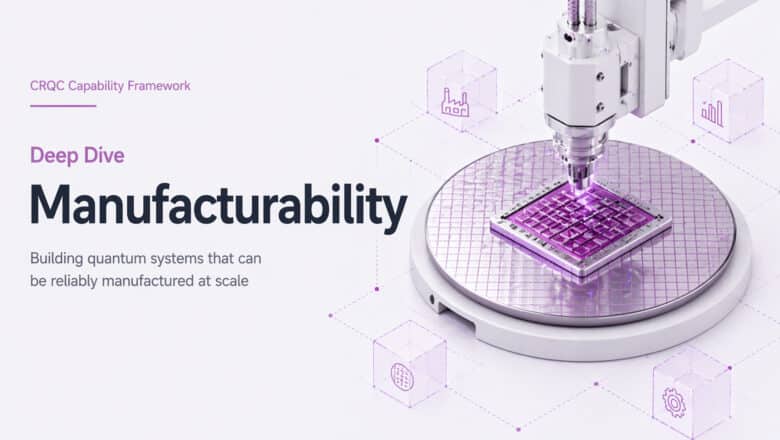
Capability E.1: Engineering Scale & Manufacturability
Building a cryptography-breaking quantum computer (often dubbed Q-Day) will demand far more than just better algorithms or a few more qubits. It requires a massive scale-up in engineering - reaching hundreds of thousands or even millions of physical qubits - and doing so in a practical, manufacturable way. Engineering Scale & Manufacturability (Capability E.1) is about bridging the gap between today’s laboratory prototypes and tomorrow’s…
Read More » -
Post-Quantum, PQC, Quantum Security
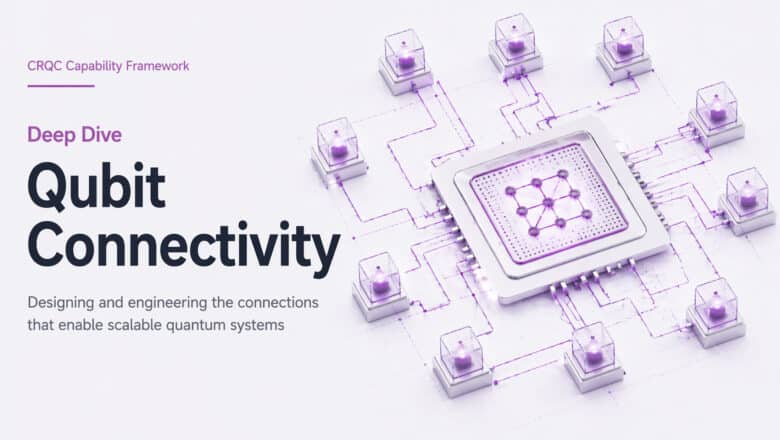
Capability B.4: Qubit Connectivity & Routing Efficiency
Qubit connectivity refers to which qubits can interact directly (perform two-qubit gates) with each other. This is often visualized as a connectivity graph: each node is a qubit, and an edge between two nodes means those qubits can be coupled for a two-qubit gate. Some hardware has a dense graph (even complete or all-to-all connectivity), meaning any qubit can directly entangle with any other. Others…
Read More » -
Post-Quantum, PQC, Quantum Security

4,099 Qubits: The Myth and Reality of Breaking RSA-2048 with Quantum Computers
4,099 is the widely cited number of quantum bits one would need to factor a 2048-bit RSA key using Shor’s algorithm – in other words, the notional threshold at which a quantum computer could crack one of today’s most common encryption standards. The claim has an alluring simplicity: if we could just build a quantum machine with a few thousand perfect qubits, decades of RSA-protected…
Read More » -
Q-Day

What Will Really Happen Once Q-Day Arrives – When Our Current Cryptography Is Broken?
As the world edges closer to the era of powerful quantum computers, experts warn of an approaching “Q-Day” (sometimes called Y2Q or the Quantum Apocalypse): the day a cryptographically relevant quantum computer can break our current encryption. Unlike the Y2K bug—which had a fixed deadline and was mostly defused before the clock struck midnight—Q-Day won’t announce itself with a clear date or time. We won’t…
Read More » -
Q-Day

Q-Day Predictions: Anticipating the Arrival of CRQC
While CRQCs capable of breaking current public key encryption algorithms have not yet materialized, technological advancements are pushing us towards what is ominously dubbed 'Q-Day'—the day a CRQC becomes operational. Many experts believe that Q-Day, or Y2Q as it's sometimes called, is just around the corner, suggesting it could occur by 2030 or even sooner; some speculate it may already exist within secret government laboratories.
Read More » -
Post-Quantum, PQC, Quantum Security
Harvest Now, Decrypt Later (HNDL) Risk
"Harvest Now, Decrypt Later" (HNDL), also known as "Store Now, Decrypt Later" (SNDL), is a concerning risk where adversaries collect encrypted data with the intent to decrypt it once quantum computing becomes capable of breaking current encryption methods. This is the quantum computing's ticking time bomb, with potential implications for every encrypted byte of data currently considered secure.
Read More » -
Post-Quantum, PQC, Quantum Security
Cryptographically Relevant Quantum Computers (CRQCs)
Cryptographically Relevant Quantum Computers (CRQCs) represent a seismic shift on the horizon of cybersecurity. In this article, we’ve seen that CRQCs are defined by their ability to execute quantum algorithms (like Shor’s and Grover’s) at a scale that breaks the cryptographic primitives we rely on daily. While still likely years (if not a decade or more) away, their eventual arrival is not a question of…
Read More » -
Quantum Computing
Neven’s Law: The Doubly Exponential Surge of Quantum Computing
In 2019, Google’s Quantum AI director Hartmut Neven noticed something remarkable: within a matter of months, the computing muscle of Google’s best quantum processors leapt so quickly that classical machines struggled to keep up. This observation gave birth to “Neven’s Law,” a proposed rule of thumb that quantum computing power is advancing at a doubly exponential rate – far outpacing the steady exponential progress of…
Read More »


