
All Post-Quantum, PQC Posts
-
Post-Quantum, PQC, Quantum Security

The Coming CRQC Blackout: Why the Papers Will Stop Before the Progress Does
The field ran three disclosure experiments in 2026: full openness, cryptographic secrecy, and silence. Only one is stable, and it ends our ability to track CRQC progress through published research.
Read More » -
Post-Quantum, PQC, Quantum Security

The Shannon Hustle: How Vendors Abuse Perfect Secrecy to Sell You Less Than You Think
Vendors drop "Shannon" into pitch decks to imply information-theoretic security. The math says otherwise. A five-question framework for evaluating any claim of perfect secrecy with practical key sizes.
Read More » -
Post-Quantum, PQC, Quantum Security

US Federal PQC Mandate After June 2026: Complete Guide
June 2026 transformed US PQC policy from planning guidance into enforceable mandates. This is the complete picture: what applies to whom, by when, and under which authority.
Read More » -
Post-Quantum, PQC, Quantum Security
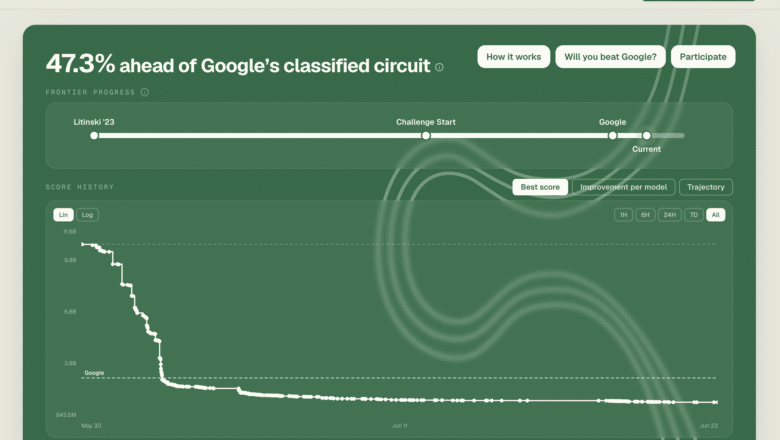
Why the Quantum Attack on ECC Keeps Getting Cheaper, and Where It Stops
An open competition has driven the logical qubits for one secp256k1 point addition into the high 1,100s. The arithmetic says how much further circuit tricks can go, and exactly where they stop.
Read More » -
Post-Quantum, PQC, Quantum Security

PQC Migration – What No One Tells You Until You’re Already in It
What happens when PQC migration advice meets real infrastructure at government and enterprise scale? Lessons from leading programs with 120,000+ tasks, delivered at the inaugural Q-Day Summit in Paris.
Read More » -
Post-Quantum, PQC, Quantum Security
Nobody Should Be Buying Proprietary Post-Quantum Cryptography (PQC) Algorithms
Five LinkedIn pitches in one day, each promising provably unbreakable encryption. A tour through cryptography's graveyard shows why unvetted algorithms fail, and how to check any vendor's claims in one afternoon.
Read More » -
Post-Quantum, PQC, Quantum Security
The GRC Playbook for Quantum Security
Quantum risk sits awkwardly in most enterprise risk frameworks — too long-horizon for the security team, too technical for the risk committee, too uncertain for the actuaries. This article gives GRC teams the KRIs, governance structures, and regulatory monitoring processes to manage it anyway.
Read More » -
Post-Quantum, PQC, Quantum Security
The SOC Quantum Playbook: Detection Rules, Threat Intelligence, and Incident Response
Your SOC already monitors for TLS downgrades and data exfiltration. Quantum security extends those capabilities with new detection rules, threat intelligence requirements, and incident response playbooks that most teams have not yet built.
Read More »


