

-
Quantum Ecosystem
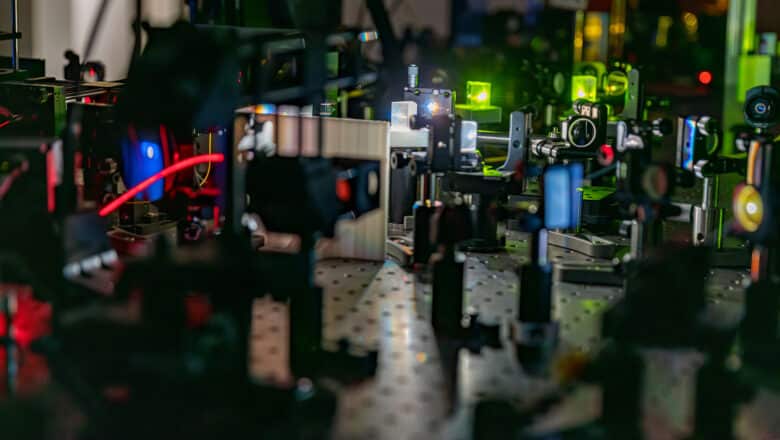
The Optical Table’s Hidden Supply Chain: Who Really Wins If Trapped-Ion Quantum Computing Wins
In September 2025, IonQ paid $1.075 billion for a company called Oxford Ionics that had built precisely one quantum computer. It wasn't the qubit count that justified the price tag. Oxford Ionics held fewer than two dozen qubits at the…
Read More » -
Quantum Computing

Quantum MedBeds and Death Threats
I never write about current politics. This might be my first on this blog. In fact, for the sake of my own sanity, I’ve made a point of steering this blog and most of my day clear of politics and…
Read More » -
Quantum Ecosystem
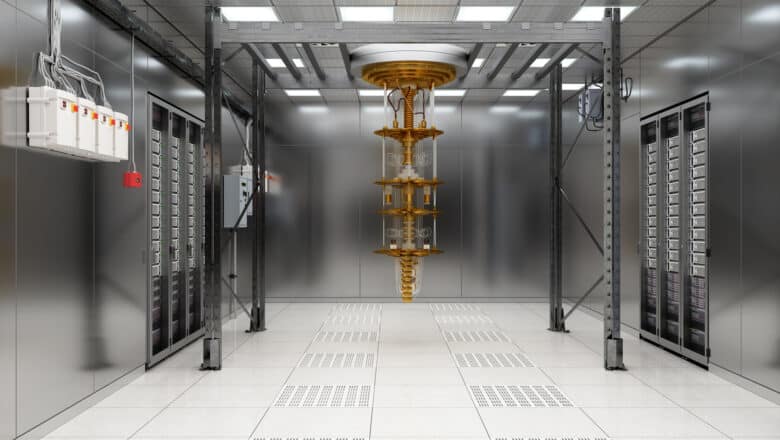
The Chandelier’s Hidden Supply Chain: Who Really Wins If Superconducting Quantum Computing Wins
In September 2025, Bluefors - the Finnish company whose cryogenic systems cool most of the world's superconducting quantum computers - signed a deal to buy up to ten thousand liters of helium-3 per year. The supplier? Interlune, a Seattle startup…
Read More » -
Policy & Sovereignty
MAS and Partners Unveil QKD Sandbox Technical Report: Quantum Security in Financial Services
The Monetary Authority of Singapore (MAS), together with four major banks (DBS, HSBC, OCBC, UOB) and tech partners SPTel and SpeQtral, has released a technical report detailing the results of a pioneering Quantum Key Distribution (QKD) sandbox in the financial…
Read More » -
Quantum Computing

Cisco’s Full-Stack Approach and the Road to Quantum Data Centers
Cisco took on an ambitious full-stack strategy to make distributed quantum computing a reality sooner than many expect. Instead of waiting for a single perfect quantum processor with millions of qubits, Cisco is building the hardware, software, and architecture needed…
Read More » -
Research
Researchers Demonstrate Quantum Entanglement Can Slash a 20-Million-Year Learning Task Down to Minutes
A team led by the Technical University of Denmark (DTU) has published a milestone paper, “Quantum learning advantage on a scalable photonic platform,” in Science (Sept 25, 2025). Preprint arXiv:2502.07770. The work is the first proven quantum advantage using a…
Read More » -
Research
Alice & Bob’s One-Hour “Cat Qubit” Breakthrough – What It Means for Quantum Computing and Q-Day
A new experiment from quantum computing startup Alice & Bob has set a remarkable milestone. In a recent blog post titled”Just Out of the Lab: A Cat Qubit That Jumps Every Hour,” the company revealed that one of its qubits…
Read More » -
Policy & Sovereignty
FS-ISAC’s New Roadmap for Post-Quantum Migration in Finance
Financial industry CISOs have a new playbook for the post-quantum era. The Financial Services Information Sharing and Analysis Center (FS-ISAC) has published a position paper titled “The Timeline for Post-Quantum Cryptographic Migration,” offering a detailed roadmap for the financial sector’s…
Read More » -
Research
Silicon Spin Qubits Achieve >99% Fidelity in 300‑mm Foundry Fabrication
The race toward large-scale quantum computing just hit a significant milestone. In a new Nature paper “Industry‑compatible silicon spin‑qubit unit cells exceeding 99% fidelity” (open access) a team from Diraq and imec reported that they achieved better than 99% gate…
Read More » -
Research
HSBC and IBM’s Quantum-Enabled Bond Trading Breakthrough
HSBC and IBM revealed the world’s first-known quantum-enabled algorithmic trading trial in the bond market. In a collaboration bridging banking and cutting-edge tech, the team demonstrated up to a 34% improvement in predicting whether a customer’s bond trade would go…
Read More » -
Research
New Paper Alert: “Low‑Overhead Transversal Fault Tolerance for Universal Quantum Computation”
A new fault-tolerance framework unveiled by researchers from QuEra, Harvard, and Yale promises to drastically reduce the time overhead of quantum error correction. Published yesterday in Nature as “Low‑Overhead Transversal Fault Tolerance for Universal Quantum Computation” (Zhou et al., 2025), their…
Read More » -
Research
Caltech’s 6,100-Qubit Optical Tweezer Array: A Quantum Leap in Scale and Coherence
In a new quantum computing milestone, Caltech physicists have created the largest qubit array ever assembled: 6,100 atomic qubits held in place by laser “tweezers.” This far exceeds previous neutral-atom arrays, which contained only hundreds of qubits. Even more impressive,…
Read More » -
Policy & Sovereignty
White House FY2027 R&D Memo Puts Quantum Technologies Front and Center
The Executive Office of the President (Office of Management and Budget and Office of Science and Technology Policy) issued a memorandum (M-25-34, NSTM-2) outlining the Administration’s Research and Development Budget Priorities for Fiscal Year 2027. This annual memo guides Federal…
Read More » -
Post-Quantum, PQC, Quantum Security
Quantum-Readiness / PQC Full Program Description (Telecom Example)
Preparing a large telecom (or any enterprise) for the post-quantum cryptography era is a massive, multi-faceted undertaking, but it is achievable with foresight, resources, and commitment. We’ve seen that it involves much more than just installing new algorithms - it’s…
Read More » -
Policy & Sovereignty
ACSC’s Post-Quantum Plan: Start Now, Plan for Longer Execution
The Australian Cyber Security Centre (ACSC) - via the Australian Signals Directorate (ASD) - has published updated guidance titled “Planning for Post-Quantum Cryptography.” This publication underscores the looming threat that cryptographically relevant quantum computers (CRQCs) will pose to current encryption.…
Read More »


