

-
Quantum AI

Guide to Quantum ML for Data Scientists
Quantum Machine Learning (QML) is an emerging interdisciplinary field that integrates quantum computing with traditional machine learning. The motivation is simple: as data grows and models become more complex, classical computing faces limitations in speed and capacity. Quantum computers leverage…
Read More » -
AI Security

Closing the Gap Between AI Principles and AI Reality
In pursuit of AI systems that are ethical and robust we are seeing the emergence of an, ironically, ethical challenge: firms rushing to position themselves as leaders in Responsible AI without the necessary depth in technical expertise. Though their motivations…
Read More » -
Industry
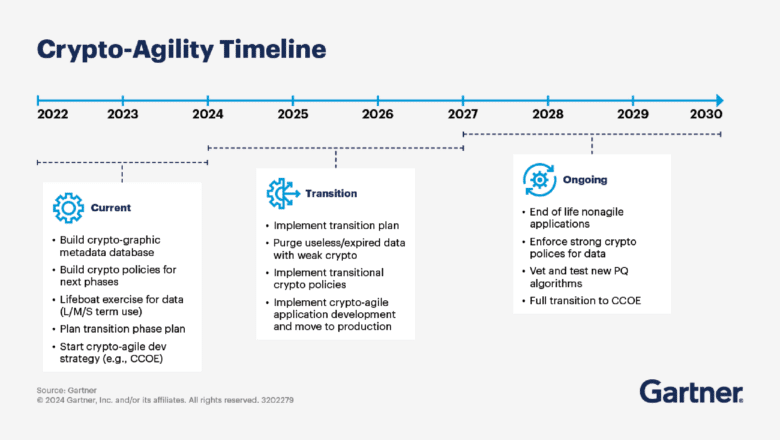
Gartner just put a date on the quantum threat – and it’s sooner than many think
Gartner just published a clear, plain‑English call to action on post‑quantum cryptography (PQC). The headline message is blunt: “Quantum computing will render traditional cryptography unsafe by 2029.” As someone who spends a lot of time helping enterprises inventory their crypto,…
Read More » -
Policy & Sovereignty
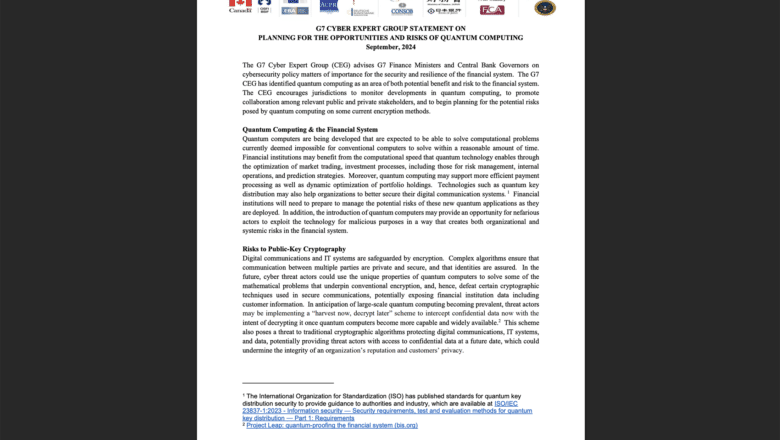
G7 Cyber Experts Warn Financial Sector: Prepare Now for Quantum Computing’s Opportunities and Threats
A recent statement by the G7 Cyber Expert Group (CEG) - an advisory panel to G7 finance ministries and central banks - sounds a dual alarm and call to action on quantum computing. In a memo released in late September,…
Read More » -
Quantum Computing

Career Opportunities in Quantum Technologies (No PhD Required)
The landscape of careers in quantum technologies is incredibly rich and expanding by the day. What was once the domain of a few theoretical physicists is now a broad industry ecosystem hungry for talent from all backgrounds: software, hardware, analytics,…
Read More » -
Post-Quantum, PQC, Quantum Security
Quantum Ethics: Why We Must Plan for a Responsible Quantum Future
New technologies bring not only breakthroughs but also new risks and dilemmas - and quantum computing is no exception. Quantum computers promise to solve problems beyond the reach of classical machines, from cracking complex optimization puzzles to simulating new drugs…
Read More » -
Quantum Computing
Australia Quantum Computing & Quantum Technology
Australia’s quantum technology journey has progressed from pioneering academic experiments to a coordinated national endeavor spanning government, academia, and industry. The country has built a solid foundation with landmark research in quantum computing (particularly in silicon qubit hardware and error…
Read More » -
Post-Quantum, PQC, Quantum Security
Post-Quantum Cryptography (PQC) Meets Quantum AI (QAI)
Post-Quantum Cryptography (PQC) and Quantum Artificial Intelligence (QAI) are converging fields at the forefront of cybersecurity. PQC aims to develop cryptographic algorithms that can withstand attacks by quantum computers, while QAI explores the use of quantum computing and AI to…
Read More » -
Quantum Computing
Quantum Technology Use Cases in Aerospace & Automotive
Quantum computing is on the verge of reshaping the future of both aerospace and automotive sectors, even if the technology’s full maturation is still years away. In this article, we’ve seen that current developments – from corporate partnerships and research…
Read More » -
Quantum Computing
Quantum Technology Use Cases in Finance & Banking
Quantum computing is no longer just a physics lab curiosity; it’s emerging as a strategic frontier for the Finance and Banking sector. Quantum technologies hold the potential to transform financial services – improving risk management, turbocharging trading and analytics, enhancing…
Read More » -
Industry
India Tests First Indigenous 6-Qubit Quantum Processor
India has achieved a significant quantum computing milestone with its first successful test of a homegrown 6-qubit superconducting quantum processor. A team of scientists from the Defence Research and Development Organisation (DRDO), Tata Institute of Fundamental Research (TIFR), and Tata…
Read More » -
Quantum Computing
Quantum Technology Use Cases in Government & Defense
Quantum computing is on the cusp of reshaping government and defense, much as radar or the internet did in earlier eras. It promises enhancements across the board – unbreakable communications, unprecedented computing power for logistics and AI, new sensors that…
Read More » -
AI Security
Full Stack of AI Concerns: Responsible, Safe, Secure AI
As AI continues to evolve and integrate deeper into societal frameworks, the strategies for its governance, alignment, and security must also advance, ensuring that AI enhances human capabilities without undermining human values. This requires a vigilant, adaptive approach that is…
Read More » -
Quantum Computing
Quantum Computing & Quantum Technology Initiatives in the USA
The United States has entered a new phase of quantum technology development – one marked by large-scale engineering challenges and system integration, rather than just laboratory science. The next decade will be critical. If current trends hold, we will witness…
Read More » -
Quantum Security & PQC
CISA Unveils Plan to Automate Post-Quantum Crypto Inventory
The U.S. Cybersecurity and Infrastructure Security Agency (CISA) has released a “Strategy for Migrating to Automated Post-Quantum Cryptography Discovery and Inventory Tools” on August 15, 2024. In essence, this strategy is a roadmap for federal civilian agencies to identify where…
Read More »


