What It Takes to Build a Quantum Computer: Mapping the Hidden Supply Chains Behind Every Modality

The quantum computing industry has a visibility problem — and it’s not the one you’d expect.
There is no shortage of coverage about who is building quantum processors. IBM, Google, Quantinuum, IonQ, PsiQuantum, QuEra, Intel, and dozens of others generate headlines with every qubit milestone, every error-correction result, every funding round. The processor companies are the faces of the industry. They are not, however, the whole industry.
Behind every quantum processor sits an ecosystem of enabling technologies, specialist suppliers, and critical infrastructure without which the processor is just a blueprint. Superconducting quantum computers need dilution refrigerators that cool circuits to fifteen millikelvins — and there are only a handful of companies on the planet that can build them. Trapped-ion systems depend on precision laser systems, ultra-high vacuum chambers, and increasingly, semiconductor trap chips. Photonic approaches require single-photon detectors, low-loss waveguides, and photonic integrated circuit foundries. Neutral-atom machines need optical tweezer arrays, spatial light modulators, and Rydberg laser systems. Silicon spin qubits lean on isotopically purified silicon-28, cryo-CMOS control electronics, and advanced semiconductor fabrication at tolerances that push even TSMC and Intel.
These supply chains are not interchangeable. Each modality draws from a different industrial base, faces different bottlenecks, and carries different geopolitical vulnerabilities. The strategic implications — for investors evaluating where value will accrue, for policymakers assessing technological sovereignty, for systems integrators planning for a multi-modality future, and for enterprise leaders trying to understand which quantum bets are real — are at least as important as the physics.
Yet this layer remains largely invisible. Most quantum coverage fixates on qubits, gate fidelities, and roadmap dates. Very few analyses ask the harder question: if a given modality wins, who else wins? Which suppliers become critical? Where are the single points of failure? Which enabling technologies are contested, dual-use, or geographically concentrated? And what happens when multiple modalities need the same scarce resource — like helium-3, or cryogenic cabling, or photonic foundry capacity?
This Deep Dive series is my attempt to map that hidden layer.
How this series is structured
Each modality gets its own dedicated analysis, structured around the same question: if this modality wins the race to useful, fault-tolerant quantum computing, who else wins — and what could go wrong in the supply chain along the way?
The articles trace each ecosystem layer by layer: from the physical qubit and its immediate enabling hardware, through control systems and classical electronics, to fabrication, materials, and distribution. At each layer, I identify the key companies, the bottlenecks, the concentration risks, and the strategic dependencies. Each article also includes a tiered ecosystem map — from direct, high-concentration beneficiaries down to infrastructure and distribution players — and a comparison with other modalities where the contrasts are instructive.
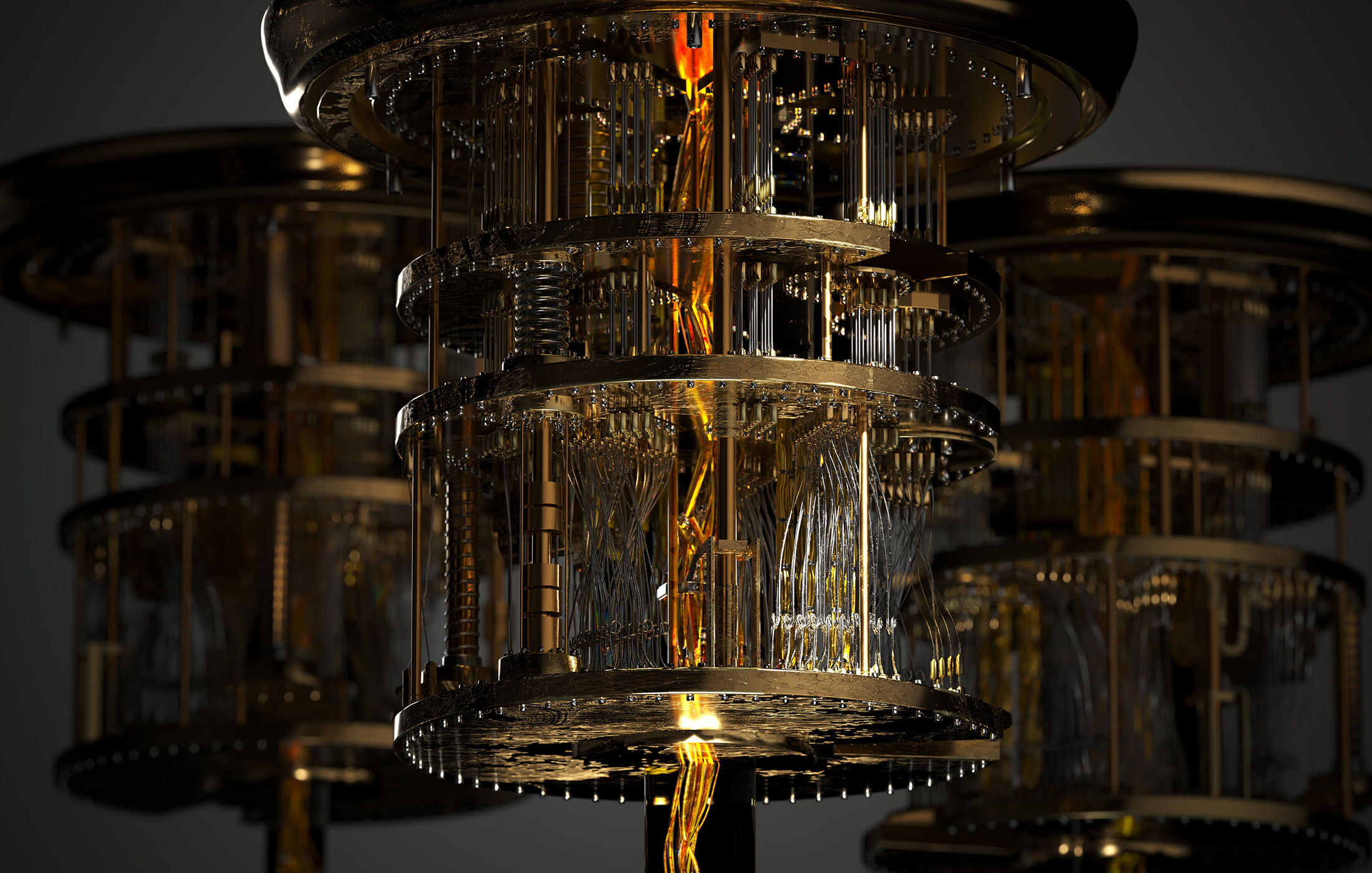
The Chandelier’s Hidden Supply Chain: Who Really Wins If Superconducting Quantum Computing Wins — The most mature modality, and the one where the supply chain is most clearly defined. The chandelier-shaped dilution refrigerator is the iconic image — and the defining bottleneck. This article maps the ecosystem from Josephson junction fabrication and microwave control electronics through cryogenic infrastructure and helium-3 supply to the handful of companies (Bluefors, Oxford Instruments, Leiden Cryogenics) whose order books effectively set the pace of the industry. It examines how IBM, Google, and others are trying to break free of these constraints through vertical integration, and what that means for the rest of the ecosystem.
The Optical Table’s Hidden Supply Chain: Who Really Wins If Trapped-Ion Quantum Computing Wins — Where superconducting is defined by cold, trapped ions are defined by light and emptiness. The supply chain here is fundamentally different: precision laser systems, ultra-high vacuum technology, ion trap chips, and photonic interconnects. This article traces the ecosystem from the laser problem (the primary bottleneck) through the semiconductor-fabricated trap chips that are transforming the modality’s manufacturing story, to the strategic implications of IonQ’s billion-dollar acquisition of Oxford Ionics and what it reveals about where the real bottleneck lies.
The Fab’s Hidden Supply Chain: Who Really Wins If Photonic Quantum Computing Wins — Photonic quantum computing promises room-temperature operation and natural networking advantages, but its supply chain challenge is different again: photonic integrated circuit foundries, single-photon sources and detectors, low-loss fiber and waveguides, and the classical computing infrastructure needed to drive feed-forward operations on nanosecond timescales. This article maps the ecosystem from PIC fabrication through detection technology to the emerging foundry model, and asks whether the photonic supply chain can scale faster precisely because it overlaps more naturally with existing telecommunications and semiconductor infrastructure.
The Tweezer Array’s Hidden Supply Chain: Who Really Wins If Neutral-Atom Quantum Computing Wins — Neutral-atom systems have emerged rapidly as serious contenders, with companies like QuEra, Pasqal, and Atom Computing demonstrating large qubit counts and flexible connectivity. The enabling ecosystem is distinctive: optical tweezer arrays built from spatial light modulators, high-power Rydberg laser systems, ultra-high vacuum chambers, and precision optics. This article traces the supply chain and examines the concentration risks in a modality where much of the critical hardware comes from a small number of photonics and laser suppliers.
The Foundry’s Hidden Supply Chain: Who Really Wins If Silicon Spin Quantum Computing Wins — Silicon spin qubits represent the dream of leveraging existing semiconductor manufacturing infrastructure — the same fabs, the same processes, the same supply chains that produce billions of classical chips. The reality is more complicated. This article examines what it actually takes to fabricate spin qubits at the tolerances required: isotopically purified silicon-28, cryo-CMOS control electronics, advanced lithography at or below the 10nm node, and the deep partnerships between quantum startups and foundries like Intel, IMEC, and CEA-Leti. It asks whether the “CMOS compatibility” narrative is genuine leverage or a misleading simplification.
The cross-cutting layer
The Infrastructure Beneath the Qubit: Four Enabling Technologies That Will Determine Which Quantum Computers Actually Scale — Some enabling technologies cut across multiple modalities and represent shared bottlenecks or shared opportunities. This article examines four of them: cryogenic infrastructure (relevant to superconducting, some trapped-ion, and silicon spin), control electronics (shared across nearly every approach), photonic interconnects (increasingly critical for modular architectures across all modalities), and error-correction decoders (a classical computing problem that every modality must eventually solve). These cross-cutting dependencies matter because they determine whether bottlenecks in one modality’s supply chain spill over into others.
Common themes across modalities
Having mapped five modality-specific ecosystems and one cross-cutting infrastructure layer, several patterns emerge that are worth highlighting for anyone making strategic decisions about quantum technology.
Concentration risk is the norm, not the exception. In almost every modality, at least one critical supply chain layer is dominated by one to three suppliers. Dilution refrigerators for superconducting. Precision laser systems for trapped ions and neutral atoms. Photonic foundry capacity for photonic approaches. Isotopically purified silicon-28 for spin qubits. These are not theoretical vulnerabilities — they are active constraints that already affect delivery timelines and system costs today.
Vertical integration is accelerating. The largest quantum computing companies are responding to supply chain fragility by acquiring or building their enabling technology in-house. IonQ’s acquisition of Oxford Ionics, IBM’s in-house Josephson junction fabrication, PsiQuantum’s foundry partnerships — these are not just corporate strategy moves. They are signals that the companies closest to the hardware understand that control of the supply chain may matter as much as control of the qubit.
The modalities draw from different industrial bases — and that has geopolitical consequences. Superconducting quantum computing is tethered to cryogenics and helium supply chains with significant European concentration. Trapped ions and neutral atoms depend on precision photonics and laser suppliers, many based in Europe and Japan. Photonic approaches overlap with telecommunications and semiconductor supply chains that are more globally distributed but subject to well-known export control regimes. Silicon spin qubits are most tightly coupled to the existing semiconductor geopolitical map — TSMC, ASML, Intel, Samsung. The question of who can build a sovereign quantum capability is not just about physics; it’s about which industrial base a nation already controls.
Shared dependencies create hidden correlations. When multiple modalities depend on the same scarce resource — cryogenic capacity, photonic components, precision optics, or classical control electronics — a bottleneck in one area can affect seemingly unrelated quantum programs. Investors and policymakers who think of each modality as an independent bet may be underestimating the correlation between their supply chains.
The real winners may not be the processor companies. In the gold rush, the money was in picks and shovels. The quantum analogy is imperfect but instructive. Companies that supply critical, hard-to-replicate enabling technologies to multiple quantum computing platforms — cryogenics companies, laser manufacturers, photonic foundries, classical control electronics providers — may capture durable value regardless of which modality ultimately dominates. The modality-specific articles in this series each include a tiered ecosystem map designed to help identify exactly these players.
How to read this series
If you’re evaluating quantum investments or assessing supply chain risks, I’d recommend starting with the modality or modalities most relevant to your portfolio or strategic interest. Each article is self-contained.
If you’re interested in the cross-cutting strategic picture — concentration risks, sovereignty implications, shared bottlenecks — start with this article and the infrastructure technologies analysis, then drill into specific modalities as needed.
If you’ve already read the Quantum Computing Modalities Deep Dive, which covers the physics and engineering trade-offs of each approach, this series is the natural companion: where that one asks “how does each modality work and what are its prospects?”, this one asks “what does each modality need, who supplies it, and where are the vulnerabilities?”
This series examines technology and market dynamics. It does not constitute financial or investment advice.
Quantum Upside & Quantum Risk - Handled
My company - Applied Quantum - helps governments, enterprises, and investors prepare for both the upside and the risk of quantum technologies. We deliver concise board and investor briefings; demystify quantum computing, sensing, and communications; craft national and corporate strategies to capture advantage; and turn plans into delivery. We help you mitigate the quantum risk by executing crypto‑inventory, crypto‑agility implementation, PQC migration, and broader defenses against the quantum threat. We run vendor due diligence, proof‑of‑value pilots, standards and policy alignment, workforce training, and procurement support, then oversee implementation across your organization. Contact me if you want help.