Latest Quantum Security, PQC, Post-Quantum, Crypto-Agility News
-
Feb- 2026 -8 FebruaryQuantum Security & PQC News

China Just Pushed Device-Independent QKD (DI-QKD) to 100 Kilometres
A team at the University of Science and Technology of China (USTC) published a paper in Science that quietly redrew the map of what device-independent quantum key distribution (DI-QKD) can do. Led by Bo-Wei Lu, Chao-Wei Yang, Run-Qi Wang, Xiao-Hui Bao, and the ever-present Jian-Wei Pan - the physicist sometimes called China's quantum communications supremo - the experiment demonstrated DI-QKD…
Read More » -
6 FebruaryQuantum Security & PQC News
India’s Task Force Releases Quantum‑Safe Roadmap with 2027–2029 Migration Timeline for CII
India’s Department of Science and Technology (DST) published the “Implementation of Quantum Safe Ecosystem in India – Report of the Task Force.” This report, produced by a national Task Force under DST, lays out a strategic roadmap for transitioning India’s digital infrastructure to quantum-resistant security. The Task Force was chaired by Dr. Rajkumar Upadhyay (CEO of C-DOT) and convened experts…
Read More » -
3 FebruaryQuantum Security & PQC News
Hong Kong’s HKMA Launches Quantum Preparedness Index to Safeguard Finance
Hong Kong’s central bank unveils a “Quantum Preparedness Index” to gauge how ready its banks are for the quantum computing era, underscoring a global push among regulators to future-proof financial security. Hong Kong’s de facto central bank, the Hong Kong Monetary Authority (HKMA), has announced the launch of a Quantum Preparedness Index (QPI) as part of its new Fintech Promotion…
Read More » -
Jan- 2026 -24 JanuaryQuantum Security & PQC News
CISA Draws the Line: The Product Category Advisory & The End of Legacy Procurement
The Cybersecurity and Infrastructure Security Agency (CISA) released a definitive advisory titled "Product Categories for Technologies Use Post-Quantum Cryptography Standards." This document, mandated by Executive Order 14306 (June 2025), fundamentally alters the procurement landscape for the United States federal government and, by extension, the global technology supply chain. The advisory bifurcates the Information Technology marketplace into two distinct classifications: "Widely Available" PQC…
Read More » -
18 JanuaryQuantum Security & PQC News
Citi’s Quantum Threat Report: The Trillion-Dollar Security Race in Focus
The Citi Institute - a research arm of global banking giant Citigroup - published a stark warning titled “Quantum Threat: The Trillion-Dollar Security Race Is On.” In unequivocal terms, Citi’s analysts predict that within the next decade quantum computers are likely to become powerful enough to break widely used public-key encryption. They caution that the economic and geopolitical fallout of…
Read More » -
12 JanuaryQuantum Security & PQC News
G7’s Post‑Quantum Roadmap: Preparing the Financial Sector for a Quantum-Resilient Future
The G7 Cyber Expert Group (CEG) - an international team of cybersecurity authorities co-chaired by the U.S. Treasury and the Bank of England - issued a landmark roadmap for the financial sector’s transition to post-quantum cryptography. This high-level plan, formally titled “Advancing a Coordinated Roadmap for the Transition to Post‑Quantum Cryptography in the Financial Sector,” is aimed at banks, financial…
Read More » -
Dec- 2025 -27 DecemberQuantum Security & PQC News
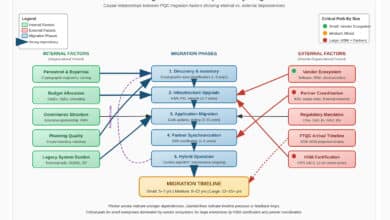
Enterprise PQC Migration: New Study Predicts 5–15+ Year Timelines
A new peer-reviewed study titled "Enterprise Migration to Post-Quantum Cryptography: Timeline Analysis and Strategic Frameworks" by independent researcher Robert Campbell has been published in the open-access journal Computers (MDPI). This paper provides one of the most comprehensive analyses to date of how long it will take enterprises to fully migrate their cryptographic systems to post-quantum cryptography (PQC). The findings are…
Read More » -
21 DecemberQuantum Security & PQC News
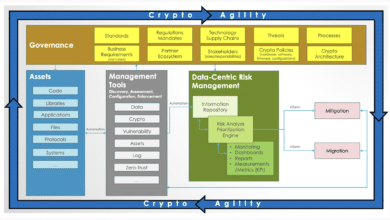
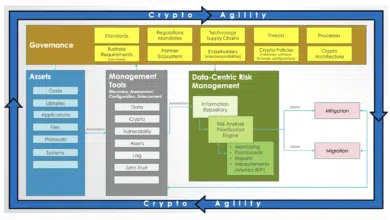
Crypto Agility Goes from Buzzword to Blueprint – NIST Releases “Considerations for Achieving Crypto Agility”
NIST published the final version of the Cybersecurity White Paper (CSWP) 39 – “Considerations for Achieving Crypto Agility: Strategies and Practices.” CSWP 39 elevates cryptographic agility from an oft-cited buzzword to a design imperative for both government and industry. The message is clear: organizations must be able to adapt their cryptography on the fly without breaking systems, treating agility as…
Read More » -
13 DecemberQuantum Security & PQC News
BIS Project Leap Phase 2 – PQC in Real-World Payment Systems
The Bank for International Settlements (BIS) and the Eurosystem published the results of Project Leap Phase 2, a massive technical trial testing PQC on the TARGET2 payment system (the Real-Time Gross Settlement system for the Euro). The project involved the Banque de France, Deutsche Bundesbank, the Bank of Italy, and Swift. The headline finding was a success: the consortium proved they…
Read More » -
Nov- 2025 -22 NovemberQuantum Security & PQC News

Pentagon CIO memo puts post-quantum crypto on a procurement leash
A memo from The Pentagon CIO dated Nov. 18, 2025 (cleared for open publication Nov. 20) forces a shift from ad‑hoc PQC pilots to a controlled, enterprise migration program. It orders an all-systems cryptography inventory, requires Components to name PQC migration leads, makes PQC testing and acquisition subject to CIO intake/deployment approvals, and draws bright lines - most notably, it bars quantum…
Read More » -
20 NovemberIndustry & Ecosystem News

Palo Alto Networks CEO Warns of Nation-State Quantum Threat by 2029
Nikesh Arora, CEO of Palo Alto Networks, has issued a stark warning that hostile nation-states may possess cryptanalytically relevant quantum computers by 2029 – or even sooner. Speaking on the cybersecurity company’s Q1 2026 earnings call, Arora predicted that within about four years, quantum technology could advance enough for adversaries to break current encryption, which "at which point most security…
Read More » -
18 NovemberIndustry & Ecosystem News
Microsoft Brings Post-Quantum Crypto to Windows 11 and .NET
Microsoft has announced the general availability of NIST’s post-quantum cryptography (PQC) algorithms in core Windows and .NET platforms. As of the November 2025 update, Windows 11 and Windows Server 2025 now include built-in support for the CRYSTALS-Kyber key encapsulation mechanism and CRYSTALS-Dilithium digital signature algorithm (under their NIST standardized names ML-KEM and ML-DSA). In parallel, Microsoft’s new .NET 10 framework…
Read More » -
Oct- 2025 -21 OctoberResearch News
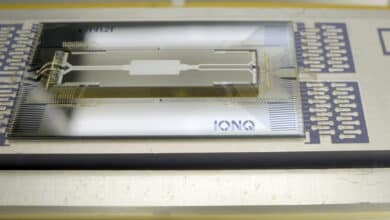
IonQ’s 99.99% Breakthrough and What It Means for Q Day
IonQ announced a new world record in quantum gate performance: >99.99% two‑qubit fidelity demonstrated on trapped‑ion hardware without ground‑state cooling. IonQ says the result comes from a new “smooth gate” technique developed by the Oxford Ionics team (now part of IonQ) and claims it will underpin 256‑qubit prototype systems in 2026 and a long‑term roadmap to millions of qubits by…
Read More » -
10 OctoberQuantum Policy, Standards & Regulation News
Treasury Board’s PQC SPIN: Canada Turns Post‑Quantum Migration Into Dated, Auditable Requirements
Treasury Board of Canada Secretariat has now formalized PQC migration as a measurable federal IT obligation via a Security Policy Implementation Notice (SPIN) titled “Migrating the Government of Canada to Post‑Quantum Cryptography.” It is both published and effective on October 9, 2025, and it does something the earlier PQC roadmap did not fully achieve on its own: it converts “plan to…
Read More » -
4 OctoberQuantum Policy, Standards & Regulation News
Canada’s PQC Procurement Playbook: ITSM.00.501 Moves Post-Quantum From Strategy to Contract Language
10 Oct 2025 - The Canadian Centre for Cyber Security’s newly released ITSM.00.501 is the most procurement-ready PQC artifact Canada has published so far: it translates “migrate to PQC” into contract clauses that vendors can actually quote, negotiate, and commit to. The headline signal is a vendor-facing expectation that key establishment and digital signature cryptographic modules support PQC by the end…
Read More »