Finance & Banking - Quantum Technology, Quantum Computing, Quantum Security Articles

August 31, 2024
Quantum Technology Use Cases in Finance & Banking
Quantum computing is no longer just a physics lab curiosity; it’s emerging as a strategic frontier for the Finance and Banking sector. Quantum technologies hold the potential to transform financial services – improving risk management, turbocharging trading and analytics, enhancing cybersecurity, and even forcing a paradigm shift in how data is secured. Banks and institutions around the world are investing in research and partnerships to stay quantum-ready, recognizing both the competitive opportunities and the existential threats that quantum computing brings ...
Bitcoin’s Quantum Timeline Is Not RSA’s Quantum Timeline
Most quantum-risk-to-Bitcoin analyses rehash RSA-2048 timelines. They're missing the point. Bitcoin doesn't use RSA. It uses 256-bit ECC - and Shor's algorithm will break that first. Scan the quantum computing coverage of Bitcoin and you will find a remarkable pattern. Article after article cites the same RSA-2048 qubit estimates - 20 million physical qubits (Gidney-Ekerå 2021), under a million (Gidney 2025), fewer than 100,000 (Pinnacle 2026) - then pivots to reassure readers that Bitcoin is safe because quantum computers cannot yet factor 2,048-bit numbers. The problem with this framing is simple: Bitcoin does not use RSA. It has never used RSA. Every transaction signature, every key derivation, every proof of ...
Payments and the Race to Quantum Safety / Post-Quantum Cryptography (PQC)
The payments industry has navigated big cryptographic transitions before. The migration from magnetic stripes to EMV chips took the better part of two decades and cost billions. The shift from SHA-1 to SHA-256 certificates was painful but bounded - it mostly meant updating software, not ripping out hardware. The post-quantum transition is different in kind, not just degree. It touches every layer of the payments stack simultaneously: the silicon inside a contactless card, the hardware security modules in bank data centers, the message formats that glue the global system together, and the settlement infrastructure operated by central banks. To understand why, consider what happens when you tap your card at ...
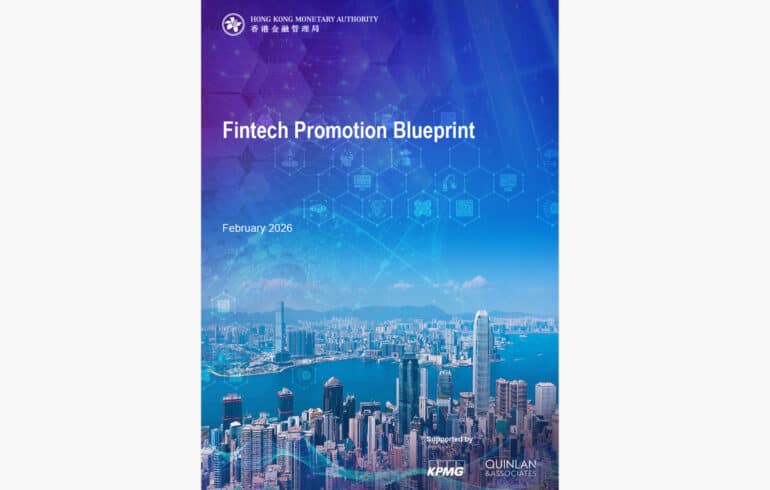
Hong Kong’s HKMA Launches Quantum Preparedness Index to Safeguard Finance
Hong Kong’s central bank unveils a “Quantum Preparedness Index” to gauge how ready its banks are for the quantum computing era, underscoring a global push among regulators to future-proof financial security. Hong Kong’s de facto central bank, the Hong Kong Monetary Authority (HKMA), has announced the launch of a Quantum Preparedness Index (QPI) as part of its new Fintech Promotion Blueprint unveiled in early February 2026. The QPI is a first-of-its-kind initiative aimed at assessing how prepared the city’s banking sector is for the age of post-quantum cryptography (PQC) - the next generation of encryption designed to withstand attacks from powerful quantum computers. In essence, the index will provide a ...
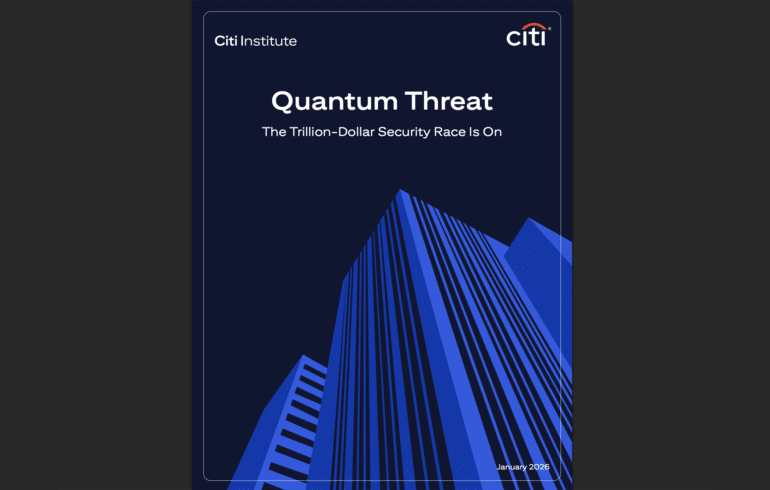
Citi’s Quantum Threat Report: The Trillion-Dollar Security Race in Focus
The Citi Institute - a research arm of global banking giant Citigroup - published a stark warning titled “Quantum Threat: The Trillion-Dollar Security Race Is On.” In unequivocal terms, Citi’s analysts predict that within the next decade quantum computers are likely to become powerful enough to break widely used public-key encryption. They caution that the economic and geopolitical fallout of an unprepared “Q-Day” – the day a quantum computer shatters our current cryptography – could be severe, disrupting the digital security we take for granted across finance, government, and critical infrastructure. It’s not every day that a major financial institution frames a technology risk in terms of trillions of dollars ...
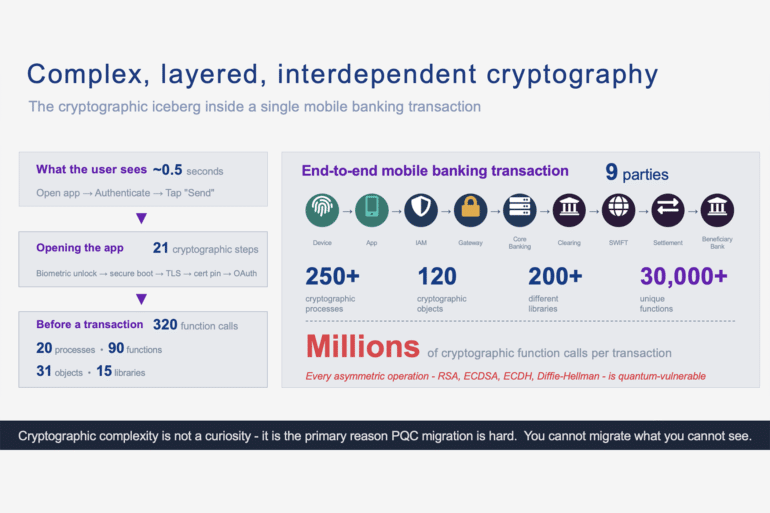
The Cryptographic Iceberg Inside a Mobile Banking Transaction
A single mobile banking payment triggers millions of cryptographic function calls across nine parties. Here's what actually happens - from silicon to settlement - and why it matters for quantum readiness. The Cryptographic Iceberg Inside a Mobile Banking Transaction 320 function calls before you even type an amount It takes roughly half a second. You press your thumb against the sensor, your banking app opens, and a familiar interface appears — account balance, recent transactions, a "Send Money" button. The gesture feels effortless, even mundane. You might do it six or seven times a day without thinking. But in that half-second, your phone has executed approximately 320 cryptographic function calls ...
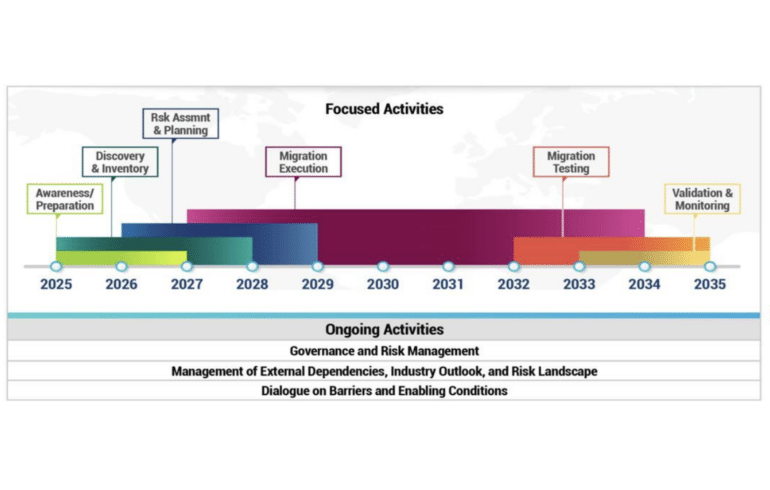
G7’s Post‑Quantum Roadmap: Preparing the Financial Sector for a Quantum-Resilient Future
The G7 Cyber Expert Group (CEG) - an international team of cybersecurity authorities co-chaired by the U.S. Treasury and the Bank of England - issued a landmark roadmap for the financial sector’s transition to post-quantum cryptography. This high-level plan, formally titled “Advancing a Coordinated Roadmap for the Transition to Post‑Quantum Cryptography in the Financial Sector,” is aimed at banks, financial market infrastructures, regulators, technology vendors, and other key players across G7 economies. Its message is clear: the clock is ticking on today’s encryption. Quantum computing advances could render the cryptographic foundations of modern finance obsolete within the next decade. The G7 is urging a proactive, coordinated shift to quantum-resistant security ...
BIS Project Leap Phase 2 – PQC in Real-World Payment Systems
The Bank for International Settlements (BIS) and the Eurosystem published the results of Project Leap Phase 2, a massive technical trial testing PQC on the TARGET2 payment system (the Real-Time Gross Settlement system for the Euro). The project involved the Banque de France, Deutsche Bundesbank, the Bank of Italy, and Swift. The headline finding was a success: the consortium proved they could functionally send PQC-signed liquidity transfers between central banks. However, the technical details buried in the report are important. The report explicitly states that "Post-quantum signature verification took meaningfully longer than traditional RSA-based verification" and that the system suffered from packet size issues that required substantial redevelopment. Technical Deep Dive: The Physics of Latency ...

Q-Day Isn’t an Outage – It’s a Confidence Crisis
Cybersecurity lore often paints Q-Day (the moment a quantum computer cracks RSA/ECC encryption) as an instant "Quantum Apocalypse" where every system gets hacked immediately. Planes falling from the sky, banks drained in seconds, an overnight digital Armageddon - if that nightmare doesn’t happen, some assume Q-Day wasn’t so bad after all. But this view misses a crucial point. The real catastrophe of Q-Day isn’t that everything will crash at once - it’s that our confidence in all things digital will collapse in an instant. In reality, when quantum code-breaking arrives, nothing visibly “breaks” on day one - websites still load, bank apps still work - yet one of the fundamental ...

FCA’s Latest Research Note Explores Quantum Computing in Financial Services
The UK’s Financial Conduct Authority (FCA) has released a new Research Note titled “Quantum Computing Applications in Financial Services” authored by Charlie Markham (FCA) and Ross Grassie (formerly of the UK Quantum Software Lab). FCA Research Notes are designed to stimulate debate and inform thinking across industry and policy without constituting formal FCA policy; they present rigorous analysis and the authors’ views rather than binding guidance. This latest note asks a simple but timely question: where might quantum computing matter first in finance, and what should firms and regulators do now to prepare? The decision to focus on quantum in late 2025 is not incidental. The FCA frames this as ...
U.S. Federal Reserve Warns of Quantum Threat to Bitcoin
The U.S. Federal Reserve is sounding the alarm that future quantum computers could pose a serious threat to the security of cryptocurrencies like Bitcoin. In a new study titled “Harvest Now, Decrypt Later,” Fed analysts warn that once sufficiently powerful quantum computers exist, they could decrypt historical Bitcoin transactions, potentially revealing years’ worth of users’ transaction histories that are currently hidden by cryptographic keys. The core issue highlighted is the “harvest now, decrypt later” (HNDL) attack strategy. Adversaries can intercept or copy encrypted data today - for instance, the encrypted components of Bitcoin transactions or any other data protected by standard encryption - and simply store it. Even though they ...
