The Chandelier’s Hidden Supply Chain: Who Really Wins If Superconducting Quantum Computing Wins


Table of Contents
In September 2025, Bluefors – the Finnish company whose cryogenic systems cool most of the world’s superconducting quantum computers – signed a deal to buy up to ten thousand liters of helium-3 per year. The supplier? Interlune, a Seattle startup planning to mine the isotope from the surface of the Moon.
The deal, running from 2028 to 2037, is worth contemplating not for its science-fiction optics, but for what it reveals about the state of the superconducting quantum computing supply chain. The world’s dominant manufacturer of the refrigerators that make quantum computing possible is securing a decade-long supply agreement for a material so rare on Earth that it currently trades at several thousand dollars per liter – from a company that hasn’t yet left the planet. It’s a sign that someone who sees the demand curve for superconducting quantum systems up close believes the existing supply chain cannot support what’s coming.
If you’re an investor evaluating the quantum computing landscape, you’ve probably assessed the major hardware companies – IBM, Google, Rigetti, IQM, QuantWare. You may have formed a view on which quantum computing modality is most likely to scale. But the deeper question, and the one that may ultimately determine where value accrues, is this: what does a superconducting quantum computer actually need to exist, and who provides it?
The answer involves a supply chain that stretches from ultra-pure metal sputtering chambers in cleanrooms to helium wells in Qatar, from Finnish cryogenics factories to Dutch and Swiss electronics companies, and from specialty cabling firms to sapphire substrate growers. It is a supply chain with alarming concentration at several critical nodes, with geopolitical vulnerabilities that a May 2025 NATO Transatlantic Quantum Community study flagged as requiring immediate attention, and with bottlenecks that could determine the pace of the entire industry.
This article maps that supply chain layer by layer – not as a technical exercise, but as a strategic guide for investors, technology executives, and policymakers asking the question: if superconducting wins, who else wins?
This analysis examines technology and market dynamics. It does not constitute financial or investment advice.
Anatomy of a Superconducting Quantum Computer
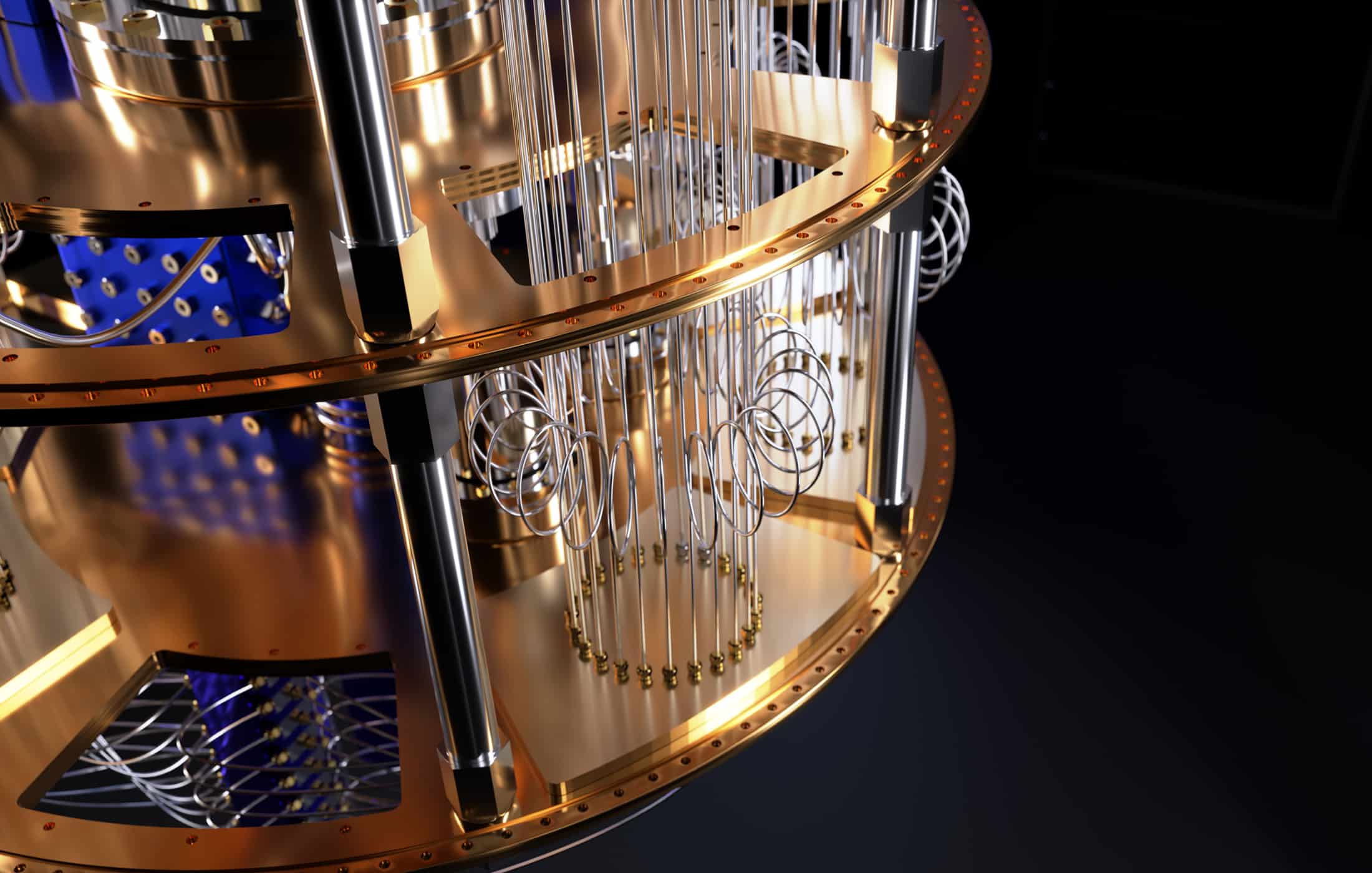
Before dissecting the supply chain, it helps to understand what you’re looking at when you see one of those iconic “quantum chandelier” photographs. What appears to be a gleaming, tiered structure of gold-plated discs and dangling cables is, in engineering terms, a dilution refrigerator with a quantum processor chip at its coldest point. Every component in that image exists to do one of four things: cool the processor to temperatures colder than outer space, deliver precisely shaped microwave pulses to manipulate individual qubits, read out the quantum state without destroying it, or shield the entire system from every conceivable source of noise.
A complete superconducting quantum computing system requires, at minimum:
A quantum processor (QPU) – a chip fabricated from superconducting materials on a semiconductor-grade substrate, patterned with qubits built around Josephson junctions. A dilution refrigerator – a cryogenic system that cools the processor to approximately 10–15 millikelvin, roughly one hundred times colder than deep space. Cryogenic wiring and microwave infrastructure – hundreds of coaxial cables, attenuators, filters, isolators, circulators, and amplifiers that carry signals between room temperature and the millikelvin stage. Control electronics – room-temperature (and increasingly, cryogenic) hardware that generates, sequences, and processes the microwave signals used to operate and read qubits. Classical computing infrastructure – for calibration, error correction decoding, scheduling, and the hybrid quantum-classical workflows that define how quantum computers are actually used today. Software and middleware – compilers, optimizers, error mitigation tools, and the operating system layer that ties the stack together. Physical infrastructure – electromagnetic shielding, vibration isolation, power conditioning, helium management, and the facility itself.
Each of these layers has its own supplier landscape, its own bottlenecks, and its own competitive dynamics. Let’s start at the bottom – where it’s coldest.
The Cryogenics Chokepoint: Five Companies and the Future of Quantum
No component of the superconducting quantum computer supply chain is more critical, or more concentrated, than the dilution refrigerator. Every superconducting quantum computer operating today – from IBM’s fleet of cloud-accessible systems to Google’s Willow chip to the Tuna-5 system in Delft – depends on a dilution refrigerator to reach the millikelvin temperatures where superconducting qubits function.
The global dilution refrigerator market was valued at roughly $117–173 million in 2024, depending on the source and scope of the estimate, and is projected to reach $190–270 million by 2031. Those are not large numbers by the standards of the semiconductor industry. But the market is extraordinarily concentrated. According to ICV Tank research, Bluefors and Oxford Instruments together control over 70% of the market. Broader market analyses estimate the top three players – Bluefors, Oxford Instruments, and Leiden Cryogenics – hold approximately 36% in a slightly wider market definition that includes non-quantum applications.
Bluefors (Finland) is the clear market leader for quantum applications. Founded in 2008, the company seized the quantum computing opportunity early and adapted its products aggressively for the needs of qubit researchers. Bluefors has delivered over 1,500 dilution refrigerators and more than 15,000 cryocoolers worldwide. Its KIDE Cryogenic Platform, designed for systems exceeding 1,000 qubits, is the backbone of IBM’s Quantum System Two. Google’s Willow chip runs in a Bluefors system. The company expanded its U.S. manufacturing presence in Syracuse, New York – positioning itself as the largest producer of dilution refrigerators in North America – and acquired Cryomech, a leading cryocooler manufacturer, to secure a critical upstream component.
Oxford Instruments (UK) is the second major player, with deep roots in cryogenic instrumentation dating back decades. Its NanoScience division supplies dilution refrigerators for both research and commercial quantum computing applications.
Leiden Cryogenics (Netherlands), CryoConcept (France, now part of Air Liquide), and FormFactor round out the established Western suppliers. Each serves a niche – Leiden in bespoke research systems, CryoConcept in compact designs, FormFactor in probe stations.
But the real disruption is coming from two directions.
From the U.S., Maybell Quantum (Denver) claims its refrigeration systems support three times the qubits in one-tenth the space of competing systems. Maybell is part of the Quantum Open Architecture ecosystem and supplied the cryogenic platform for the recently launched Q-PAC system – the first commercially deployable QOA quantum computer in the United States.
From Germany, Kiutra takes a fundamentally different approach: magnetic cooling technology that uses solid-state materials instead of helium-3 altogether. In October 2025, Kiutra secured €13 million in funding explicitly to strengthen quantum supply chain resilience by eliminating helium-3 dependency – a vulnerability flagged by NATO and the EU.
From China, at least ten domestic manufacturers have emerged in recent years, including Benyuan Quantum Computing Technology (Hefei), Hefei QuantumCTek, ZL Cryogenics, and others. This rapid build-out reflects China’s vertical integration strategy for quantum technology – a deliberate effort to eliminate dependence on Western cryogenics suppliers, accelerated after export control tightening.
The investor read: Cryogenics is the single most modality-specific chokepoint in the superconducting supply chain. A disruption in dilution refrigerator supply, as the War on the Rocks analysis of the NATO study noted, would halt U.S. superconducting quantum development within months. Bluefors is the dominant player, but the concentration creates both opportunity and risk. Companies developing alternative cooling technologies (like Kiutra) or expanding domestic production capacity represent supply chain diversification plays. Six-to-nine-month lead times on new systems mean that as demand scales, the handful of companies that can deliver become gating factors for the entire industry.
Helium-3: The Rarest Fuel in Computing
Dilution refrigerators achieve millikelvin temperatures by exploiting the quantum mechanical behavior of a mixture of two helium isotopes: helium-3 (³He) and helium-4 (⁴He). Regular helium-4 is the gas in party balloons. Helium-3 is something else entirely.
Helium-3 does not exist in meaningful quantities in nature on Earth. The primary terrestrial source is the radioactive decay of tritium, which is itself a byproduct of nuclear weapons programs. Small amounts can be extracted from certain natural gas deposits, but these sources are extremely limited. Today, helium-3 is one of the most expensive substances on Earth, with prices ranging from roughly $2,000 to $15,000 per liter – making it, per unit mass, far more valuable than gold.
Each dilution refrigerator uses a few dozen liters of helium-3 for operation. As quantum computing systems scale – both in qubit count per system and in the total number of systems deployed globally – individual systems may require hundreds or even thousands of liters. The Bluefors-Interlune deal for up to 10,000 liters annually, and a similar agreement between Maybell Quantum and Interlune for thousands of liters from 2029 to 2035, signal the scale of anticipated demand.
The geopolitical dimension is also significant. It is important to distinguish between helium-3 and helium-4. Much of the public discussion about helium supply disruptions – including concerns about the impact of the U.S.-Iran conflict on Qatar’s production – centers on helium-4, which is produced industrially as a byproduct of natural gas extraction. The supply chains for helium-3 and helium-4 are distinct. However, helium-4 is also critical: it’s used in the broader cryogenic infrastructure, semiconductor fabrication (including the fabs that make quantum chips), and MRI systems that compete for the same supply.
Three strategic responses to helium-3 scarcity are emerging. First, lunar mining: Interlune is developing technology to harvest helium-3 deposited on the Moon by solar wind – a technically audacious but commercially motivated approach. Second, helium-3-free cooling: Kiutra’s solid-state magnetic cooling technology eliminates the requirement entirely. Third, closed-loop recycling: Bluefors and others are developing helium recovery systems that capture and recirculate helium rather than venting it.
The investor read: Helium-3 is a structural supply constraint, not a cyclical one. The global supply is measured in kilograms, not tonnes. Companies that secure long-term supply, develop alternative cooling methods, or build recycling infrastructure occupy strategic positions in the quantum supply chain. The lunar mining angle is speculative but backed by real contracts and DOE funding. Meanwhile, helium-4 supply dynamics — driven by healthcare (MRI), semiconductor manufacturing, and aerospace demand – create a broader resource competition that affects quantum computing indirectly through cryocooler performance and infrastructure costs.
The Quantum Processor: From Cleanroom to Cryostat
At the center of the chandelier sits the quantum processor chip itself – typically measuring a few centimeters across, fabricated on a silicon or sapphire substrate, and patterned with the Josephson junctions and capacitive structures that form superconducting qubits.
Materials
The materials palette for superconducting quantum processors is surprisingly narrow but demands extraordinary purity. The most common qubit fabrication approach uses aluminum (with a critical temperature of 1.2 K) for wiring and Josephson junctions, deposited on high-resistivity silicon or sapphire substrates. The junction itself is typically an aluminum-aluminum oxide-aluminum (Al-AlOx-Al) sandwich just a few atoms thick, created through controlled oxidation.
For more complex multi-layer processes – particularly those used in quantum annealing systems like D-Wave‘s – niobium (critical temperature 9.2 K) provides the superconducting wiring and junction materials. Newer research from Argonne National Laboratory and others is reviving niobium-based qubits for gate-based computing, while tantalum has emerged as another promising material for reducing qubit decoherence.
The NATO supply chain study flagged several material dependencies: niobium, tantalum, titanium, lithium niobate, silicon-28, and helium-3 were all identified as materials sourced from potentially unstable or non-allied regions. Niobium, which is essential for both quantum processors and the superconducting cables used inside cryostats, is primarily mined in Brazil (which accounts for roughly 90% of global production). The processing of high-purity materials for quantum applications – where even parts-per-billion impurities can destroy qubit coherence – further concentrates the supply chain.
Fabrication
Superconducting qubit fabrication borrows tools from the semiconductor industry but diverges sharply in process. The highest-coherence qubits today are fabricated using relatively simple processes – often a single layer of metal, rather than the 10+ metal layers found in classical chips. This is because the premium is on eliminating defects and surface impurities, not on integration density.
The standard technique for making Josephson junctions – double-angle evaporation – requires dedicated evaporation tools with tilt capability. This process is generally incompatible with modern CMOS manufacturing, though researchers at IMEC and others have demonstrated CMOS-compatible alternatives with performance approaching state-of-the-art.
Most leading quantum hardware companies fabricate their own chips in-house or in dedicated partner facilities. IBM operates its own quantum chip fabrication line. Google does the same. Rigetti operates one of the few vertically integrated quantum hardware companies with its own fab in Fremont, California. In Europe, IQM (Finland) and Oxford Quantum Circuits (UK) maintain their own fabrication capabilities.
The exception – and the strategically interesting one – is QuantWare (Delft, Netherlands), which has built a business around being the world’s first commercial supplier of off-the-shelf superconducting quantum processors. QuantWare now describes itself as the highest-volume QPU supplier globally, with customers in over 22 countries. Its VIO-40K architecture, announced in December 2025, targets 10,000 qubits by 2028, and the company is building KiloFab – Europe’s first industrial-scale quantum chip fabrication facility – in Delft. This is the “Intel model” for quantum: QuantWare makes the processor, and others assemble the computer.
SEEQC (Elmsford, NY, with facilities in London and Naples) represents another fabrication model. A spin-out from HYPRES – the world’s leading developer of superconductor electronics – SEEQC operates a superconductor multi-layer commercial chip foundry and has partnered with Taiwan’s ITRI to build a dedicated manufacturing line for its proprietary Single Flux Quantum (SFQ) cryogenic control chips. SEEQC’s approach integrates classical superconducting logic with quantum circuits on the same cryogenic platform — potentially eliminating the cabling bottleneck that limits scaling.
The investor read: Quantum chip fabrication today sits in an awkward middle ground – too specialized for standard semiconductor foundries, but not yet at volumes that justify massive capital expenditure on dedicated facilities. QuantWare’s bet on being the “Intel of quantum” represents the most direct way to invest in the QPU layer without picking a specific quantum computer maker. SEEQC’s foundry model targets the classical-quantum integration challenge. The materials exposure (high-purity aluminum, niobium, tantalum, sapphire substrates) is currently too small to move commodity markets, but the processing of these materials into quantum-grade purity is a specialized capability with limited providers.
Control Electronics: The Brain Outside the Fridge
If the dilution refrigerator is the body and the QPU is the heart, then the control electronics are the brain. Every qubit in a superconducting quantum computer requires precisely shaped microwave pulses — typically in the 4–8 GHz range — for gate operations, and each qubit’s state must be read out through similarly precise microwave measurements. As qubit counts scale from dozens to thousands, the control electronics challenge scales faster than linearly: more channels, tighter synchronization, lower latency for error correction feedback, and increasingly sophisticated real-time processing.
This layer of the stack has attracted a cluster of specialized companies, most of them European:
Zurich Instruments (Switzerland, subsidiary of Rohde & Schwarz) is a market leader in quantum computing control and readout electronics. In March 2026, Zurich Instruments launched the ZQCS Quantum Control System, a next-generation platform engineered for the logical qubit era – supporting over 1,000 channels per rack with microsecond-scale feedback for quantum error correction. The system’s modular AdvancedTCA architecture and direct-RF front end represent the current cutting edge for high-fidelity qubit control.
Qblox (Netherlands) provides modular control stacks that are becoming the standard for open-architecture quantum systems. Qblox supplied the control electronics for the Q-PAC QOA deployment, was selected by the DOE and Fermilab to manufacture and distribute the QICK quantum control platform in the U.S., and has an active collaboration with Bluefors on integrated cryogenic-control solutions for spin qubits.
Quantum Machines (Israel) develops the OPX+ control platform, which serves as the orchestration backbone for Israel’s Quantum Computing Center (IQCC) and numerous other installations worldwide. Quantum Machines has positioned itself not just as a control electronics vendor but as a quantum computing infrastructure company.
Keysight Technologies (U.S., NYSE: KEYS) is the largest publicly traded company with significant quantum control exposure. Keysight’s Quantum Control System (QCS) was selected for Fujitsu and RIKEN’s 256-qubit quantum computer in Japan, and the company has signed five-year agreements with Singapore’s quantum ecosystem for co-developing scalable qubit control architectures.
Additional players include Tabor Electronics (Israel), Swabian Instruments (Germany), and several companies developing cryogenic control electronics that operate inside the refrigerator itself — most notably SEEQC, whose SFQ technology could ultimately replace much of the room-temperature electronics rack with chips at the millikelvin stage.
The investor read: Control electronics is one of the most investable layers of the quantum stack because it is largely modality-agnostic. Superconducting, spin, and even some trapped-ion systems need microwave control electronics. The market is growing with every quantum computer deployed, the technology evolves with each generation, and the player landscape includes both venture-backed pure plays (Qblox, Quantum Machines) and publicly traded companies with quantum exposure (Keysight, Rohde & Schwarz via Zurich Instruments). The push toward cryogenic control electronics (SEEQC’s SFQ approach) represents a potential disruption that could reshape the entire wiring and control architecture – worth monitoring closely.
The Cold Wiring Challenge: Cables, Amplifiers, and the Plumbing of Quantum
Perhaps the least glamorous but most practically constraining layer of the superconducting quantum stack is the cryogenic wiring and microwave infrastructure – the hundreds of coaxial cables, attenuators, filters, isolators, circulators, and amplifiers that you see cascading down the stages of a dilution refrigerator.
A 50-qubit superconducting system requires roughly 124 RF lines: 50 drive lines for qubit manipulation, 50 flux-tuning lines, dedicated readout lines, and TWPA (Traveling Wave Parametric Amplifier) pump lines. Each line passes through multiple temperature stages of the refrigerator, with attenuators at each stage to reduce thermal noise and signal power to appropriate levels. The cables themselves are specialized: stainless steel or niobium-titanium (NbTi) semi-rigid coaxial cables, chosen for their thermal conductivity characteristics at different temperature stages.
This wiring is a scaling bottleneck. Every additional qubit requires multiple additional cables, each adding heat load to the cryostat. As one analysis in EPJ Quantum Technology demonstrated, the thermal performance of a system engineered for 50 qubits would support approximately 150 qubits if cable capacity were tripled – but tripling the cables triples the heat load, potentially overwhelming the refrigerator’s cooling power. This is the scaling wall that QuantWare’s VIO architecture and SEEQC’s cryogenic control chips are designed to break through.
Key suppliers in this space include:
Delft Circuits (Netherlands) – a specialist in scalable quantum computing cabling, producing flex-cable solutions designed specifically for high-density qubit connections. Their design guide for quantum computing cables is among the most detailed publicly available references on the engineering challenges involved.
Radiall (France) – a major RF connector and component supplier that has developed cryogenic-specific products like the F2C-40, a non-magnetic solderless connector tested for high-qubit quantum computing devices. Radiall is part of the French QRYOLink consortium, an €8 million, 54-month R&D program to develop next-generation cryogenic microwave cabling capable of supporting systems with up to one million physical qubits.
Rosenberger (Germany) – a connector specialist that has developed multichannel WSMP connectors specifically for quantum computers, tested through the qBriqs funded project, with cable assemblies available in stainless steel, cupro-nickel, niobium-titanium, and beryllium-copper.
Atlantic Microwave / ETL Systems (UK) – suppliers of cryogenic RF components including attenuators, switches, isolators, and filters.
On the amplification side, Traveling Wave Parametric Amplifiers (TWPAs) are critical and in limited supply. These near-quantum-limited amplifiers, placed at the coldest stage of the dilution refrigerator, provide high gain for readout signals while adding minimal noise. TWPAs are still largely research-grade components, and scaling their availability for commercial quantum computers remains a challenge. Zurich Instruments has partnered with EPFL and WithWave to improve the performance and market-readiness of TWPAs. Low Noise Factory (Sweden) and other specialist companies supply HEMT (High-Electron Mobility Transistor) amplifiers for the 4K stage.
The investor read: Cryogenic wiring and microwave components represent a fragmented but essential market. The QRYOLink program – which brings together Alice & Bob, Radiall, Atem, and other French companies — illustrates the sovereignty dimension: France is investing specifically to ensure its quantum cabling supply chain is domestic. For investors, this layer is a collection of small, specialized plays rather than a single dominant company. But the wiring bottleneck is so fundamental that any company that solves high-density qubit interconnects – whether through QuantWare’s VIO 3D vertical approach, SEEQC’s cryogenic control integration, or entirely new photonic interconnects — could unlock value across the entire superconducting stack.
The Modular Stack: Quantum Open Architecture and the “PC Moment”
One of the most significant structural shifts in the superconducting quantum supply chain is the emergence of Quantum Open Architecture (QOA) – the idea that quantum computers should be built from interoperable, modular components sourced from specialized suppliers, rather than as vertically integrated, proprietary stacks.
The March 2026 launch of the Q-PAC system by Elevate Quantum and partners – the first commercially deployable Quantum Open Architecture system in the United States – demonstrates this model in action. The system was assembled in just five months at a fraction of the cost of closed full-stack systems, using components from QuantWare (QPUs), Qblox (control electronics), Maybell Quantum (cryogenics), Q-CTRL (calibration and optimization software), and Arrow Electronics (procurement and distribution). Each component was sourced from a specialist, integrated through defined interfaces, and the result was a working quantum computer deployable to any enterprise or research site.
This has profound implications for the supply chain. In the vertically integrated model (IBM, Google), the supply chain is internal – these companies build their own chips, operate their own cryostats, develop their own control electronics. In the QOA model, the supply chain becomes external, visible, and investable. Every layer becomes a market.
The Netherlands has been at the forefront of this evolution. The Tuna-5 system was built entirely from the Dutch quantum ecosystem: QuantWare QPUs, Qblox control electronics, Delft Circuits cabling, Orange Quantum Systems integration, all assembled in a Bluefors cryostat. Similarly, Italy’s largest quantum computing initiative runs on QuantWare processors. Israel’s IQCC was built using QuantWare QPUs orchestrated by Quantum Machines’ control platform.
The QOA model is also reshaping the competitive dynamics between the West and China. As our analysis of Origin Quantum’s Pilot OS release explored, China is pursuing a top-down integration approach – providing a complete software integration layer that could attract countries building quantum programs in the Global South, the Middle East, and Southeast Asia. The Western QOA model builds the ecosystem bottom-up, through component specialization. Both approaches need supply chains, but they organize them differently.
The investor read: QOA transforms the investment thesis for superconducting quantum computing. Rather than betting on which quantum computer company will win, investors can evaluate which layers of the modular stack offer the best combination of market growth, competitive position, and modality resilience. Arrow Electronics’ involvement in Q-PAC – distributing quantum components through existing electronics supply chain infrastructure — hints at how this market may eventually scale through established channels. Quantum Systems Integration itself is emerging as a distinct capability and potential market category.
The Geopolitics of Cold: Sovereignty, Export Controls, and National Strategies
The superconducting quantum supply chain doesn’t exist in a vacuum. It exists in a world where the United States has placed Chinese quantum companies on the Entity List, where export controls restrict the sale of advanced cryogenic systems and control electronics to certain countries, and where governments are actively building – or attempting to build – sovereign quantum supply chains.
The May 2025 NATO Transatlantic Quantum Community study provides the most systematic assessment of these vulnerabilities. Using a five-metric scoring system across supplier count, R&D leadership, scaling capability, IP position, and supply chain vulnerability, the study found several areas requiring immediate attention for the superconducting modality:
Semiconductor manufacturing appears throughout the risk assessment. Quantum processors, control electronics (FPGAs, ASICs), and supporting components all depend on semiconductor fabrication. The NATO study recommended coordinating with existing semiconductor initiatives (including leveraging IMEC in Belgium and GlobalFoundries in the U.S.) to address manufacturing risks that span the quantum and classical supply chains.
Rare earth elements – specifically erbium and ytterbium for photonic components, but also the broader rare earth processing supply chain – present a concentration risk. Over 90% of high-purity rare earth processing occurs outside NATO territories, predominantly in China.
China’s response has been rapid and comprehensive. As Xinhua reported in November 2025, China has spawned more than ten domestic dilution refrigerator manufacturers in just a few years. Origin Quantum has achieved full-stack vertical integration – building the quantum processor, cryogenic infrastructure, measurement-control system, operating system, programming framework, and cloud platform entirely in-house. SpinQ has built a comparable end-to-end ecosystem. This is the mirror image of the Western QOA approach: rather than modular specialization, China is pursuing domestic self-sufficiency at every layer.
The investor read: Quantum supply chain sovereignty is a policy driver that creates market demand regardless of the pace of quantum computing itself. Governments are spending to ensure domestic capability at every layer. For investors, this means that companies with production capacity in NATO-allied countries – especially those manufacturing cryogenic systems, control electronics, and QPUs — carry a geopolitical premium. Conversely, supply chains that route through China or depend on Chinese processing of critical materials face regulatory and reputational risk. The dual-use nature of quantum technology means these dynamics are likely to intensify, not moderate, in the coming years.
Who Wins If Superconducting Wins: An Ecosystem Map
Pulling all the layers together, here is the strategic map of who benefits if superconducting quantum computing becomes the dominant modality – or even if it simply continues to grow at the pace implied by current roadmaps:
Tier 1: Direct, High-Concentration Beneficiaries
These are companies or categories where superconducting dominance creates the strongest demand signal and the supply base is most concentrated:
Bluefors (private, Finland) – The dominant cryogenics supplier. Every new superconducting quantum computer is likely to use a Bluefors system (or one of the very few alternatives). The company’s acquisition of Cryomech and expansion in Syracuse further consolidate its position.
Zurich Instruments / Rohde & Schwarz (private/public, Switzerland/Germany) – Leading control electronics for superconducting qubits. The ZQCS system positions them for the logical qubit scaling era.
Qblox (private, Netherlands) – The other leading control stack, with strong positioning in the QOA ecosystem and U.S. government partnerships.
QuantWare (private, Netherlands) – If the QPU becomes a commodity component (the “Intel model”), QuantWare is the company most directly pursuing that market. Its VIO architecture and KiloFab investment represent the largest bet on modular superconducting processors.
Tier 2: Enabling Technology Providers
Companies that benefit significantly from superconducting scaling but serve broader markets:
Keysight Technologies (NYSE: KEYS) – Quantum control systems are a growing segment within Keysight’s broader test and measurement portfolio. The Fujitsu/RIKEN win and Singapore partnerships demonstrate credibility.
Helium suppliers – Companies securing helium-3 supply (Interlune, DOE Isotope Program) and helium-4 production/distribution benefit from the structural demand growth. The broader helium market’s supply constraints (with prices having surged significantly in recent years) create favorable conditions for producers.
Specialty materials and substrate suppliers – Companies processing high-purity aluminum, niobium, tantalum, and sapphire substrates for quantum applications occupy niche but essential positions.
Cryogenic component suppliers – Manufacturers of cryocoolers, vacuum pumps, and cryogenic infrastructure components (e.g., the pulse tube cryocoolers that pre-cool the dilution refrigerator to 4K).
Tier 3: Systems Integration and Software
SEEQC (private, U.S./UK/Italy) – If cryogenic control electronics scale, SEEQC’s SFQ technology could disrupt the entire control and wiring layer, reducing the number of room-temperature electronics racks per quantum computer.
Q-CTRL (private, Australia) – Quantum control software that improves performance across hardware platforms. Q-CTRL’s Boulder Opal integrates with all major control electronics vendors and is hardware-agnostic.
Quantum Machines (private, Israel) – Positioned as a quantum computing infrastructure company, not just a control electronics vendor. Its orchestration and scheduling capabilities become more valuable as hybrid quantum-classical computing matures.
Riverlane (private, UK) – Quantum error correction technology (Deltaflow) that sits between the control electronics and the QPU. Error correction is the key enabler for fault-tolerant computing and creates its own market.
Tier 4: Infrastructure and Facilities
Data center operators – The OCP initiative to standardize quantum-classical data center integration creates opportunities for data center operators who build quantum-ready facilities. Requirements include reinforced floors (750+ kg cryostats), chilled water at 15–25°C, electromagnetic shielding, and vibration isolation.
Arrow Electronics (NYSE: ARW) – Arrow’s role in Q-PAC distribution hints at how quantum components may reach the market through existing electronics distribution channels. If quantum hardware becomes modular and procurement follows the QOA model, component distributors become supply chain infrastructure.
What Could Derail the Supply Chain
Several risks could disrupt even the most optimistic scaling scenarios:
Helium supply shocks. Over a third of the world’s helium-4 supply originates from Qatar, where geopolitical instability has already affected production. Helium-3 supply is even more fragile. A sustained disruption could delay quantum computer deployments industry-wide.
Cryogenic production capacity limits. If demand for superconducting quantum systems accelerates faster than Bluefors, Oxford Instruments, and others can expand production, lead times – already six to nine months – could stretch to eighteen months or more, creating deployment delays that ripple across the ecosystem.
A competing modality breakthrough. If photonic, neutral atom, or topological quantum computing achieves a scaling advantage, the superconducting-specific parts of the supply chain (dilution refrigerators at their current design point, microwave control electronics, Josephson junction fabrication) face stranded-asset risk. The modality-agnostic layers (certain control software, error correction, hybrid HPC integration) are more resilient.
Export control escalation. Further tightening of quantum-related export controls could fragment the supply chain into Western and Chinese parallel ecosystems more rapidly than expected, reducing scale economies and increasing costs for both sides.
Talent scarcity. The number of people in the world who can design, fabricate, and operate superconducting quantum systems is extremely small. As the McKinsey Quantum Technology Monitor 2025 and NATO’s strategy both emphasize, talent is a binding constraint that affects every layer of the supply chain simultaneously.
Actionable Takeaways
For investors evaluating the superconducting quantum ecosystem: the greatest value concentration is not in the quantum computer companies themselves, but in the enabling layers where a small number of companies serve the entire industry. Cryogenics (Bluefors, Maybell), control electronics (Zurich Instruments, Qblox, Keysight), and QPU fabrication (QuantWare) represent the highest-leverage supply chain positions. Assess whether your quantum hardware portfolio companies depend on a single cryogenics supplier, evaluate control electronics vendors’ modality breadth, and track helium-3 supply developments as a leading indicator of whether the industry can physically scale as fast as its roadmaps suggest.
For technology executives evaluating quantum partnerships: the QOA model allows you to avoid lock-in to a single vendor’s full stack. But this requires understanding the supply chain dependencies of your chosen approach. Ask your quantum technology partner: who makes their cryostat, how long is the lead time, and what happens if that supplier prioritizes another customer? The answers may reveal more about your quantum timeline than any qubit roadmap.
For policymakers shaping national quantum strategies: the NATO study’s findings are unambiguous – the quantum supply chain has critical chokepoints that require investment in domestic capacity, not just R&D. Cryogenics manufacturing, helium-3 supply security, semiconductor fabrication for quantum-specific components, and control electronics production are all areas where policy intervention can directly affect national quantum capability. The Quantum Open Architecture model makes sovereignty achievable through ecosystem development rather than vertical integration – but only if each layer has a domestic or allied supplier.
The Next Link in the Chain
The superconducting quantum computer chandelier is beautiful, but it is a product of an industrial supply chain as much as it is a product of physics. Understanding that supply chain – its concentrations, its vulnerabilities, its key players, and its trajectory – is essential for anyone making strategic decisions about quantum technology, whether those decisions involve capital, technology partnerships, or national policy.
The industry is in a race to scale from today’s 100-qubit systems to the 1,000-qubit and 10,000-qubit systems needed for fault-tolerant quantum computing. The physics challenges are formidable. But the supply chain challenges – securing enough helium-3 to cool the machines, building enough dilution refrigerators to house them, fabricating enough processors to populate them, and manufacturing enough control electronics to operate them – may prove equally decisive.
In that race, the winners won’t just be the companies that build the best qubits. They’ll be the companies that build the supply chain those qubits depend on.
This article is part of PostQuantum.com’s Quantum Ecosystem series, mapping the technologies, companies, and supply chains that make quantum computing possible. For more on the modular approach to quantum system building, see our in-depth coverage of Quantum Open Architecture and Quantum Systems Integration.
Quantum Upside & Quantum Risk - Handled
My company - Applied Quantum - helps governments, enterprises, and investors prepare for both the upside and the risk of quantum technologies. We deliver concise board and investor briefings; demystify quantum computing, sensing, and communications; craft national and corporate strategies to capture advantage; and turn plans into delivery. We help you mitigate the quantum risk by executing crypto‑inventory, crypto‑agility implementation, PQC migration, and broader defenses against the quantum threat. We run vendor due diligence, proof‑of‑value pilots, standards and policy alignment, workforce training, and procurement support, then oversee implementation across your organization. Contact me if you want help.
Related Content