Tianyan-504 Goes Live: China’s 504-Qubit Quantum Computer Joins the Cloud

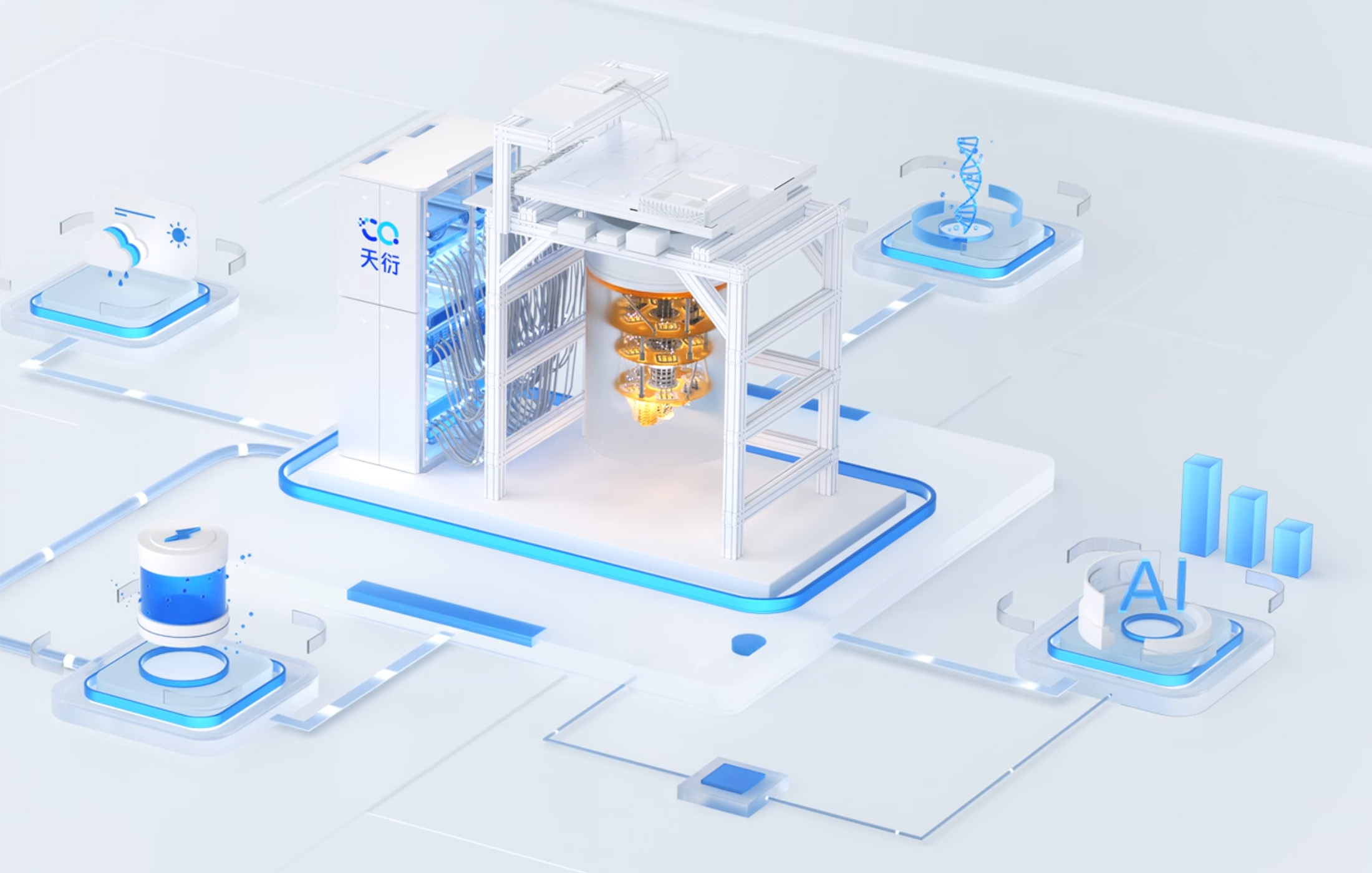
18 Dec 2024 – The Tianyan-504, China’s most powerful quantum computer, was formally unveiled on December 5, 2024 and is slated for integration into China Telecom’s Tianyan quantum computing cloud platform, where it will be accessible to users worldwide. The announcement, made through Xinhua and the Chinese Academy of Sciences, marks the next stage for the 504-qubit Xiaohong chip: from laboratory test platform to the centerpiece of a commercially accessible quantum computing service.
The unveiling was a coordinated effort by three organizations: the China Telecom Quantum Group (CTQG), the CAS Center for Excellence in Quantum Information and Quantum Physics, and QuantumCTek Co., Ltd. CTQG, a wholly owned subsidiary of China Telecom established in May 2023 with approximately 3 billion yuan (~$430 million) in investment, operates the Tianyan platform from its headquarters in Hefei, Anhui Province.
CTQG claims the Xiaohong chip’s performance — qubit lifetime, gate fidelity, and readout fidelity — matches that of leading international cloud quantum platforms, specifically naming IBM as the benchmark. No peer-reviewed data has been published to substantiate this comparison. What is known is that the chip’s primary engineering purpose remains unchanged from when it was first delivered to QuantumCTek earlier this year: validating a domestically developed kilo-qubit measurement and control system that will underpin China’s next generation of larger quantum processors.
The Tianyan cloud platform, launched in November 2023, has already attracted over 12 million visits from users in more than 50 countries. Wang Zhen, CTQG’s deputy general manager, stated that the company will work with QuantumCTek to build a full quantum computer around the Xiaohong chip and enable researchers globally to access the platform for practical algorithm development.
Where Tianyan-504 sits in the global landscape
At 504 qubits, the Tianyan-504 will be among the largest commercially accessible quantum processors in the world once it comes online – but not the largest outright. IBM’s 1,121-qubit Condor holds that record, though IBM has since de-emphasized raw qubit count in favor of higher-fidelity, modular architectures built around the 156-qubit Heron R2 processor. Google has not made its 105-qubit Willow processor publicly available via cloud. The Tianyan-504’s competitive significance lies less in qubit count than in what it represents: a state-backed quantum cloud ecosystem preparing to offer one of the world’s largest superconducting processors for open access.
The platform already hosts smaller systems – including 176-qubit and 24-qubit processors – and once the Tianyan-504 joins them, Tianyan will become a multi-system quantum cloud comparable in scope, if not yet in software maturity, to IBM Quantum.
The $430 Million Signal
When I wrote about the Xiaohong chip in May, I focused on the engineering achievement: 504 qubits, a control system testbed, China crossing the 500-qubit threshold. What I underweighted was the institutional story – and in hindsight, that’s where the real significance lies.
The number that matters most in this announcement is not 504 qubits. It’s 3 billion yuan.
That’s what China Telecom invested to create CTQG, a dedicated quantum subsidiary, in May 2023. Eighteen months later, that subsidiary is operating a quantum cloud platform with global reach, preparing to host one of the world’s largest superconducting processors, and has already logged 12 million visits from 50+ countries on its existing smaller systems. This is not a research grant or a startup raise. This is a state telecommunications company deploying quantum computing as infrastructure, with the same institutional seriousness it would bring to building out 5G networks.
The Western quantum industry operates on a different model: venture-backed startups (Rigetti, IonQ, PsiQuantum) competing for customers, or big tech divisions (Google Quantum AI, IBM Quantum) operating as internal R&D. Both models have produced extraordinary science. But neither has the kind of vertical integration on display here: a national research academy designing chips, a private-sector engineering company building control systems, and a state telecoms operator providing the cloud platform – all in the same city, all funded and coordinated at the national level.
This model has a name: it’s the same state-guided industrial strategy that made China dominant in solar panels, batteries, and electric vehicles. Those industries also started with products that weren’t yet competitive on quality. The early Chinese solar panels were cheaper but worse. The early EVs were slow sellers outside China. In both cases, the ecosystem matured, quality caught up, and the world suddenly found itself facing a supply chain it hadn’t taken seriously until it was too late.
Quantum Upside & Quantum Risk - Handled
My company - Applied Quantum - helps governments, enterprises, and investors prepare for both the upside and the risk of quantum technologies. We deliver concise board and investor briefings; demystify quantum computing, sensing, and communications; craft national and corporate strategies to capture advantage; and turn plans into delivery. We help you mitigate the quantum risk by executing crypto‑inventory, crypto‑agility implementation, PQC migration, and broader defenses against the quantum threat. We run vendor due diligence, proof‑of‑value pilots, standards and policy alignment, workforce training, and procurement support, then oversee implementation across your organization. Contact me if you want help.
Related Content