All Quantum Computing Ecosystem Posts
-
Quantum Ecosystem

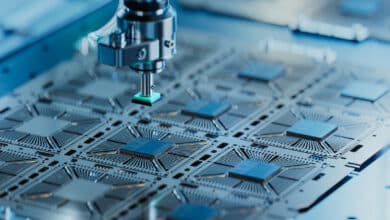
The Foundry’s Hidden Supply Chain: Who Really Wins If Silicon Spin Quantum Computing Wins
In September 2025, a team from the Australian startup Diraq and Belgium's imec published a result in Nature that no one in the semiconductor industry could ignore. They had fabricated silicon quantum dot spin qubits on imec's industrial 300-millimeter wafer line - the same kind of manufacturing platform that produces billions of classical processors every year - and achieved two-qubit gate fidelities consistently exceeding 99%.…
Read More » -
Quantum Ecosystem
The Infrastructure Beneath the Qubit: Four Enabling Technologies That Will Determine Which Quantum Computers Actually Scale
Quantum computing captivates with its physics: superposition, entanglement, interference. The companies that build qubits get the headlines, the funding rounds, and the breathless media coverage. But the companies that build the infrastructure beneath the qubits - the electronics that control them, the refrigerators that cool them, the decoders that correct their errors, the materials that make all of it possible - hold a disproportionate influence…
Read More » -
Quantum Ecosystem
The Tweezer Array’s Hidden Supply Chain: Who Really Wins If Neutral-Atom Quantum Computing Wins
In 2025, a team at Harvard, MIT, and QuEra did something that no quantum computing platform had done before: they ran a 3,000-qubit atom array continuously for over two hours, replenishing lost atoms mid-computation - effectively building the first quantum computer that could operate without stopping to reload. In a separate result published in Nature, the same constellation of researchers demonstrated below-threshold quantum error correction…
Read More » -
Quantum Ecosystem
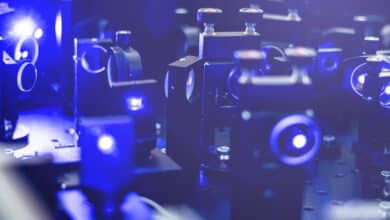
The Fab’s Hidden Supply Chain: Who Really Wins If Photonic Quantum Computing Wins
In February 2025, a team of more than ninety researchers published a paper in Nature describing something the photonic quantum computing community had been waiting a decade to see: a complete quantum photonic technology stack - single-photon sources, superconducting detectors, ultra-fast optical switches, and low-loss waveguides - fabricated on full-size silicon wafers at a commercial semiconductor foundry. The foundry was GlobalFoundries' Fab 8 in Malta,…
Read More » -
Quantum Ecosystem
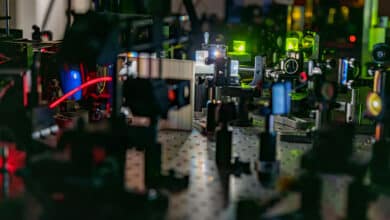
The Optical Table’s Hidden Supply Chain: Who Really Wins If Trapped-Ion Quantum Computing Wins
In September 2025, IonQ paid $1.075 billion for a company called Oxford Ionics that had built precisely one quantum computer. It wasn't the qubit count that justified the price tag. Oxford Ionics held fewer than two dozen qubits at the time. What IonQ bought was a method for getting rid of lasers. That may sound counterintuitive. Trapped-ion quantum computing is, at its core, a laser-and-atom…
Read More » -
Quantum Ecosystem
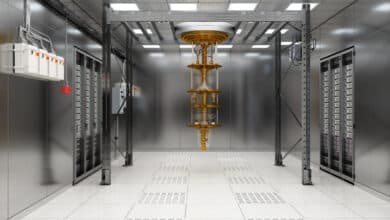
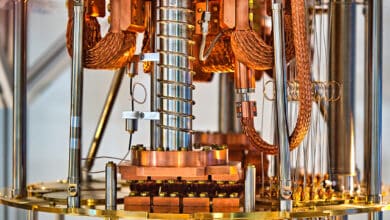
The Chandelier’s Hidden Supply Chain: Who Really Wins If Superconducting Quantum Computing Wins
In September 2025, Bluefors - the Finnish company whose cryogenic systems cool most of the world's superconducting quantum computers - signed a deal to buy up to ten thousand liters of helium-3 per year. The supplier? Interlune, a Seattle startup planning to mine the isotope from the surface of the Moon. The deal, running from 2028 to 2037, is worth contemplating not for its science-fiction…
Read More »