The Optical Table’s Hidden Supply Chain: Who Really Wins If Trapped-Ion Quantum Computing Wins


Table of Contents
In September 2025, IonQ paid $1.075 billion for a company called Oxford Ionics that had built precisely one quantum computer. It wasn’t the qubit count that justified the price tag. Oxford Ionics held fewer than two dozen qubits at the time. What IonQ bought was a method for getting rid of lasers.
That may sound counterintuitive. Trapped-ion quantum computing is, at its core, a laser-and-atom business. Every trapped-ion system in commercial operation today – from Quantinuum‘s Helios to AQT‘s rack-mounted systems in Innsbruck – uses precisely tuned laser beams to cool, initialize, manipulate, and read out individual ions suspended in electromagnetic traps. The lasers are what make it work. They are also what makes it expensive, fragile, and extraordinarily difficult to scale.
Oxford Ionics’ Electronic Qubit Control (EQC) technology replaces laser-driven quantum gates with microwave signals delivered through electrodes built into semiconductor chips – fabricated by Infineon, one of the world’s largest chipmakers. If it works at scale, it transforms the central supply chain challenge of trapped-ion quantum computing from an optics problem into a semiconductor manufacturing problem. The acquisition didn’t just change IonQ’s roadmap. It revealed a strategic bet about where the real bottleneck lies in the trapped-ion supply chain – and which industrial ecosystem will ultimately determine how fast this modality can grow.
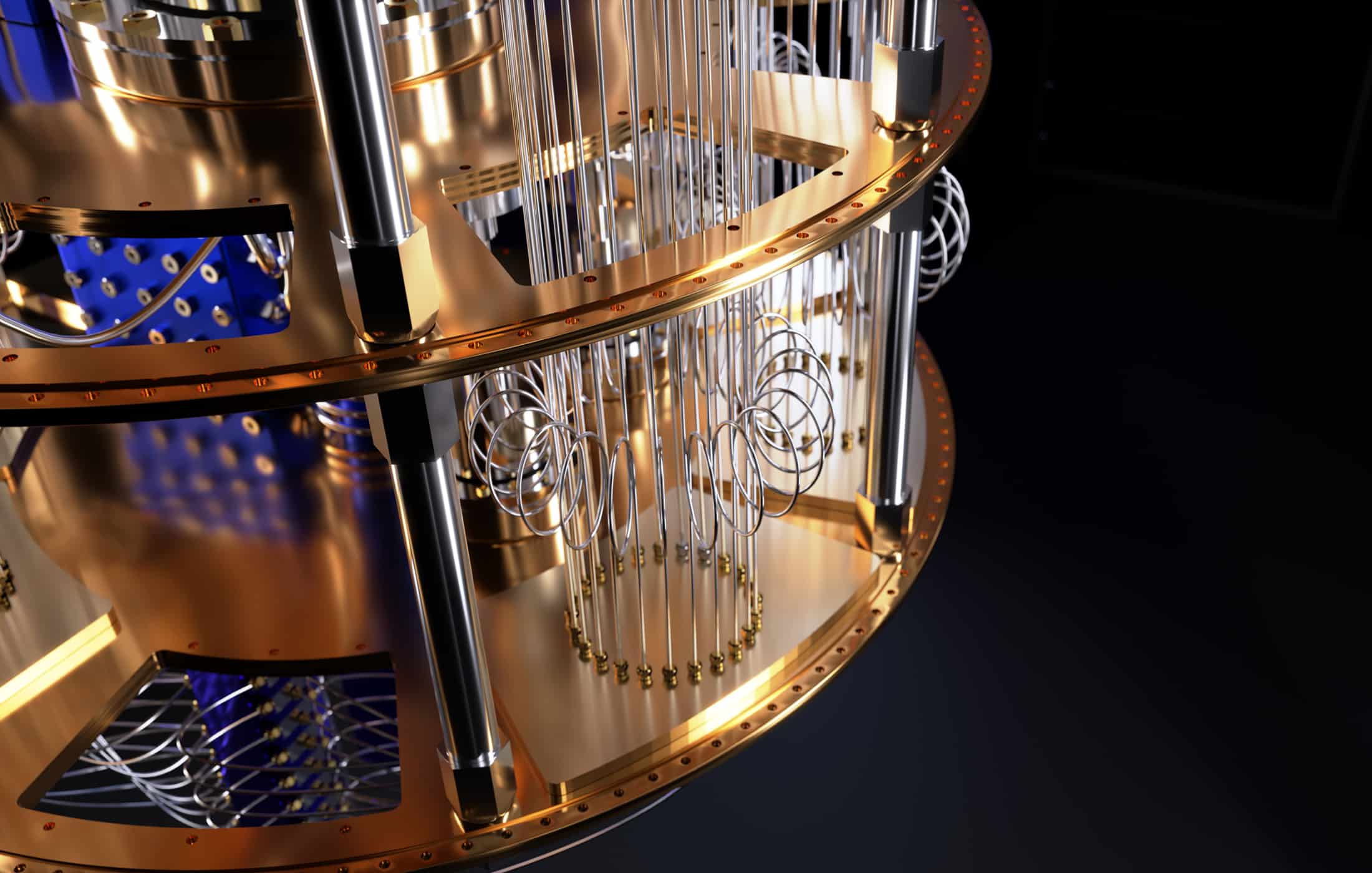
If you’ve read my analysis of the superconducting quantum supply chain, you know that the chandelier-shaped dilution refrigerator is the defining physical artifact of that modality – and its supply chain bottleneck. The equivalent artifact for trapped ions is the optical table: a massive, vibration-isolated surface covered in mirrors, lenses, beam splitters, acousto-optic modulators, and fiber couplings, all directing laser light of multiple wavelengths toward a vacuum chamber roughly the size of a football, inside which a handful of atoms hover in an electromagnetic field, performing calculations.
The supply chains behind these two images could hardly be more different. Superconducting quantum computing draws from cryogenics, helium isotopes, and microwave electronics. Trapped-ion quantum computing draws from precision laser manufacturing, photonics, ultra-high vacuum technology, and, increasingly, standard semiconductor fabrication. The competitive dynamics, the key suppliers, the bottlenecks, and the geopolitical vulnerabilities are distinct. So is the investment thesis.
This article maps the trapped-ion supply chain layer by layer: from the ions themselves to the lasers that control them, from the trap chips that confine them to the control electronics that orchestrate the system, and from the vacuum chambers that protect them to the photonic interconnects that may one day link thousands of modules together. At each layer, we identify the key players, the bottlenecks, and the strategic implications for investors, technology executives, and policymakers asking the same question we posed for superconducting: if trapped ions win, who else wins?
This analysis examines technology and market dynamics. It does not constitute financial or investment advice.
Anatomy of a Trapped-Ion Quantum Computer
Where a superconducting quantum computer is defined by cold – the millikelvin temperatures required for superconducting circuits – a trapped-ion quantum computer is defined by light and emptiness. The core operating principles are deceptively simple. Take a single atom. Strip away one electron to make it an ion – a charged particle that can be held in place by electromagnetic fields. Suspend that ion, along with a chain of others, in a vacuum so complete that stray gas molecules collide with the qubits only once every several minutes. Then use laser beams to cool the ions to near their quantum mechanical ground state, encode information in their electronic energy levels, manipulate that information using precisely shaped laser pulses, and read out the result by collecting the photons that the ions emit.
Each ion is identical to every other ion of the same species – a property that no fabricated qubit can match. This natural uniformity gives trapped ions some of the highest gate fidelities and longest coherence times in quantum computing. Quantinuum’s Helios system, launched in November 2025, achieves two-qubit gate fidelity of 99.921% across all 98 qubit pairs and coherence times measured in seconds to minutes — orders of magnitude longer than superconducting qubits. IonQ’s Oxford Ionics team has demonstrated two-qubit fidelity exceeding 99.99% without ground-state cooling, and state preparation and measurement (SPAM) fidelity of 99.9993%.
A complete trapped-ion quantum computing system requires, at minimum:
A quantum processor (QPU) – an ion trap chip, typically microfabricated from silicon, glass, or metal substrates, that generates the electromagnetic fields confining the ions. The “processor” in a trapped-ion system is really the combination of the trap chip, the ions loaded into it, and the laser or microwave systems that manipulate them. A laser system – multiple lasers at different wavelengths for cooling, state preparation, quantum gate operations, and readout. For ytterbium ions, this includes ultraviolet lasers near 369 nm; for barium, visible-wavelength lasers near 493 nm, 614 nm, and 650 nm; for calcium, lasers at 397 nm, 729 nm, 854 nm, and 866 nm. An ultra-high vacuum system – a chamber evacuated to approximately 10⁻¹¹ Torr, a pressure at which there are roughly one hundred trillion fewer molecules per cubic inch than in ambient air. Optical delivery and collection – precision optics for routing laser beams to individual ions, acousto-optic modulators (AOMs) and electro-optic modulators (EOMs) for rapid beam switching and frequency control, and high-numerical-aperture imaging systems for collecting fluorescence photons from individual ions. Control electronics – RF signal generators for driving the trap, DACs for controlling DC electrode voltages, FPGA-based real-time controllers for sequencing laser pulses and processing measurement results, and (in some architectures) microwave generators for qubit manipulation. Classical computing infrastructure – for calibration, error correction decoding, and hybrid quantum-classical workflows. Software and middleware – compilers, optimizers, and the orchestration layer, including Quantinuum’s TKET, Q-CTRL’s Boulder Opal, and the various cloud access platforms.
Unlike superconducting systems, most trapped-ion quantum computers operate at or near room temperature – though Quantinuum’s Helios cools its trap to approximately 15 Kelvin for improved vacuum performance. There is no dilution refrigerator, no helium-3, and no millikelvin operating point. This eliminates the cryogenics supply chain entirely but introduces a different set of dependencies: precision photonics, industrial laser manufacturing, ultra-high vacuum components, and the atomic physics expertise to make it all work together.
The Laser Problem: Photonics as the Primary Bottleneck
If the dilution refrigerator is the defining chokepoint of superconducting quantum computing, lasers occupy an analogous position in the trapped-ion stack – though the dynamics are significantly different. Where the cryogenics market is dominated by a handful of specialized companies, the industrial laser market is enormous: hundreds of billions of dollars globally, serving everything from telecommunications to medical devices to materials processing. The challenge for trapped-ion quantum computing isn’t that nobody makes lasers. It’s that nobody makes enough of the right lasers.
A trapped-ion quantum computer is astonishingly demanding of its optical systems. A system based on ytterbium ions, for example, needs lasers at 369 nm (ultraviolet – for cooling and detection), 399 nm (for photoionization), 935 nm (repumping), and 355 nm (for Raman transitions that execute quantum gates). Each laser must be frequency-stabilized to linewidths often below one megahertz – and for clock transitions used in some gate schemes, below one hertz. The beams must be aligned to hit individual ions separated by a few micrometers, switched on and off in microseconds using acousto-optic or electro-optic modulators, and maintained with extraordinary stability over hours of continuous operation.
Quantinuum’s decision to switch from ytterbium to barium ions in its Helios system was driven in large part by supply chain and engineering logic. Barium’s relevant transitions – at 493 nm (blue-green), 614 nm (orange), 650 nm (red), and 1762 nm (infrared) — fall in spectral regions where mature, high-performance laser technology already exists. Ytterbium’s 369 nm ultraviolet requirement, by contrast, demands lasers that are expensive, limited in power, and hard on optical components. As Quantinuum’s own team noted, barium’s visible-wavelength transitions enable shared laser architectures where one set of beams can be time-multiplexed across multiple operational zones – a crucial enabler for scaling.
The key laser suppliers for trapped-ion quantum computing include:
TOPTICA Photonics (Munich, Germany) is the dominant commercial supplier of precision laser systems for ion trapping. Founded in 1998, TOPTICA has built a €140+ million revenue business across seven business units, employing over 600 people. Its product line spans tunable diode lasers, frequency-stabilized systems with sub-Hz linewidths, acousto-optic modulator-based beam control, and complete rack-integrated laser stacks for quantum applications. TOPTICA’s lasers appear in virtually every major trapped-ion experiment and commercial system worldwide. The company’s Clock Laser System (CLS) – originally developed for optical atomic clocks in collaboration with Germany’s national metrology institute PTB – has been sold into quantum computing laboratories across the globe and is representative of the ultra-stable laser technology that trapped-ion computers demand. TOPTICA is a central partner in the ATIQ project, Germany’s €44.5 million nationally funded trapped-ion quantum computing demonstrator program, where it provides the laser infrastructure for qubit initialization, control, and readout.
MOGLabs (Melbourne, Australia) and Menlo Systems (Munich, Germany, a subsidiary of Hamamatsu) are additional suppliers of precision laser systems for atomic physics applications. Menlo Systems specializes in optical frequency combs – devices that provide a precisely calibrated “ruler” of optical frequencies – which are used in some trapped-ion systems for laser stabilization. Coherent (NYSE: COHR), Thorlabs, and NKT Photonics are broader photonics suppliers whose components appear throughout trapped-ion optical setups.
But the strategic dynamic here is shifting. The fundamental challenge with laser-based trapped-ion control is that every additional qubit potentially requires additional optical channels, additional alignment, and additional stabilization – creating a scaling problem that mirrors the cabling bottleneck in superconducting systems. Three distinct approaches to breaking through this bottleneck are now competing:
Photonic integrated circuits (PICs): Programs like the U.S. Department of Defense’s QUPICS initiative – in which TOPTICA, BluGlass, and other companies are developing 300mm foundry-scale fabrication for quantum photonic integrated circuits spanning ultraviolet through infrared – aim to replace the optical table’s mirrors-and-fibers approach with chip-scale photonic routing. If successful, this would transform laser delivery from a bespoke optical engineering exercise into a semiconductor manufacturing process.
Electronic qubit control (EQC): Oxford Ionics’ approach, now at the core of IonQ’s roadmap, replaces laser-driven gates with microwave-frequency signals delivered through on-chip electrodes. This doesn’t eliminate all lasers – you still need them for cooling and state preparation – but it removes the most alignment-sensitive and scaling-limited component: the individually addressed gate beams. Oxford Ionics’ records for single- and two-qubit fidelity were achieved using this electronic control approach.
Magnetic gradient-induced coupling (MAGIC): eleQtron (Siegen, Germany), a spin-out from the University of Siegen, uses radio-frequency fields and magnetic field gradients to manipulate qubits – eliminating laser-driven gates entirely. Like EQC, this shifts the control challenge from optics to electronics, but through a different physical mechanism.
The investor read: The laser supply chain for trapped-ion quantum computing is not concentrated in the way that cryogenics is for superconducting. TOPTICA is the clear leader in quantum-specific lasers but operates within a much larger photonics industry. The strategic question is whether the future of trapped-ion qubit control remains laser-based – in which case TOPTICA, photonic integrated circuit foundries, and optical component suppliers are the long-term beneficiaries – or shifts toward electronic and microwave control, in which case semiconductor manufacturers like Infineon become the critical enablers. IonQ’s $1.075 billion bet on Oxford Ionics, and eleQtron’s MAGIC approach, suggest that significant industry capital is being directed toward the laser-free future. But lasers won’t disappear from the trapped-ion stack entirely; cooling and state preparation will continue to require them, and companies that can miniaturize and integrate laser delivery into rack-mountable or chip-scale packages occupy durable positions.
The Trap Chip: Where Atomic Physics Meets Semiconductor Manufacturing
The ion trap itself – the chip that generates the electromagnetic fields confining and shuttling individual ions – is the component most analogous to the quantum processor in a superconducting system, and the one where semiconductor manufacturing expertise is becoming decisive.
Early ion traps were machined metal structures: precisely shaped electrodes assembled by hand in physics laboratories. Today’s commercial systems use microfabricated surface traps: planar electrode structures patterned on silicon, glass, or fused silica substrates using techniques borrowed from the semiconductor industry. These traps can incorporate dozens to hundreds of independently controlled DC electrodes for ion transport, RF electrodes for radial confinement, and integrated features like through-substrate vias, on-chip photon detectors, and optical waveguides.
The company that has emerged as the most strategically significant trap chip manufacturer is Infineon Technologies (Frankfurt, Germany; FSE: IFX). Infineon has invested in trapped-ion fabrication since 2017, developing a dedicated quantum processing unit (QPU) platform at its Villach, Austria fabrication facility – capable of processing wafers from 6-inch to 12-inch diameter across a broad variety of substrates and materials. What makes Infineon’s position remarkable is that it now supplies trap chips to virtually every major trapped-ion quantum computer maker outside of the Quantinuum-Honeywell ecosystem:
Infineon fabricates traps for Oxford Ionics (now IonQ), building the semiconductor chips that implement Electronic Qubit Control. Infineon supplies eleQtron with three progressively improved generations of ion traps adapted for the MAGIC microwave-based approach. Infineon has partnered with ZuriQ (Zurich, Switzerland), a newer trapped-ion startup spun out of ETH Zurich, to develop novel trapped-ion chips incorporating micro-Penning trap technology. Most recently, Infineon partnered with Quantinuum itself in November 2024 to develop next-generation ion traps for Quantinuum’s future systems – a partnership Quantinuum’s CEO described as key to delivering on the company’s 2029 fault-tolerance roadmap. And Infineon fabricates traps for the ATIQ project consortium and for multiple academic groups at the University of Innsbruck, which pioneered trapped-ion quantum computing.
This makes Infineon the closest thing to a “Bluefors of trapped ions” – a single company whose fabrication capabilities are woven into the roadmaps of nearly every major player in the modality. The parallel isn’t exact: Infineon is a €15 billion semiconductor company for which quantum trap fabrication is a small business unit, whereas Bluefors is a quantum-focused company. But the structural position – enabling and potentially gating the scaling of an entire quantum computing modality – is similar.
The other major source of ion trap fabrication is Honeywell itself. Quantinuum’s Helios trap chip was manufactured by Honeywell, leveraging Honeywell’s MEMS and microfabrication capabilities. This is a significant vertically integrated advantage that most competitors cannot replicate – and one reason that Quantinuum’s Infineon partnership for future generations is strategically notable. Even Quantinuum, which has access to Honeywell’s in-house fabrication, sees value in partnering with a high-volume semiconductor manufacturer for its next-generation devices.
Sandia National Laboratories (U.S.) operates one of the world’s most advanced ion trap fabrication facilities, producing research-grade surface traps for the U.S. government’s quantum computing programs. Sandia’s “enchilada trap” – capable of storing up to 200 ions — represents one of the most complex surface traps ever fabricated. However, Sandia’s role is primarily as a government laboratory, not a commercial supplier.
The European CHAMP-ION initiative (Championing a European Advanced Manufacturing Pilot Line of Ion-Traps), coordinated by Silicon Austria Labs, is building out an industrial pilot line for trap chip fabrication in Europe – reflecting the same sovereignty logic that drives EU investment in semiconductor fabs more broadly.
The investor read: Infineon (FSE: IFX; market cap approximately €45 billion) is the most accessible public equity with direct exposure to trapped-ion hardware scaling. Its quantum business is currently small relative to its automotive and power semiconductor divisions, but its position as the default fabrication partner for IonQ/Oxford Ionics, eleQtron, ZuriQ, and now Quantinuum gives it leverage across the entire trapped-ion ecosystem. If trapped ions become the dominant modality, Infineon’s trap fabrication capabilities become a gating factor for the industry – much as Bluefors’ refrigerator production constrains superconducting scaling. For Honeywell (NASDAQ: HON), the value is embedded in its majority ownership of Quantinuum, which filed confidential IPO paperwork in January 2026 with a rumored valuation of approximately $20 billion. The trap fabrication question also illuminates a key advantage of trapped ions: the path to scale runs through existing semiconductor manufacturing infrastructure, not through exotic materials and processes.
The Vacuum Challenge: Ultra-High Vacuum Systems and Ion Sources
Every trapped-ion quantum computer operates inside an ultra-high vacuum (UHV) chamber – a sealed environment evacuated to pressures around 10⁻¹¹ Torr, comparable to the vacuum of low Earth orbit. At this pressure, the mean free path of a residual gas molecule is measured in kilometers, and collisions between background gas and trapped ions occur so infrequently that qubits can maintain coherence for minutes.
The UHV system is a critical but less discussed component of the supply chain. It typically consists of a stainless steel or titanium chamber, viewport windows (often fused silica for UV-transparent optical access), ion pump(s), titanium sublimation pumps, and sometimes cryogenic surfaces for additional gas adsorption. The atomic source – an oven that vaporizes a small pellet of the chosen element (ytterbium, barium, calcium, or strontium) – sits inside the chamber. Neutral atoms from the oven drift past the trapping region, where they are photoionized by laser light and captured by the trap’s electric fields.
This is an established industrial supply chain. Ultra-high vacuum technology has been used in particle physics, semiconductor manufacturing, and surface science for decades. Key suppliers include Pfeiffer Vacuum (Germany, publicly traded), Edwards Vacuum (a division of Atlas Copco), Agilent Technologies (through its vacuum products division), Kurt J. Lesker (U.S.), and VACOM (Germany) for specialty UHV components. Kimball Physics and SAES Getters supply specialized ion pumps, getter pumps, and related components.
The vacuum supply chain does not present the same concentration risk as cryogenics does for superconducting systems. However, it introduces its own scaling challenges. Achieving and maintaining 10⁻¹¹ Torr vacuum requires meticulous cleanliness in assembly, multi-day bakeout procedures at elevated temperatures, and careful materials selection (every component must have extremely low outgassing rates). This makes system assembly labor-intensive and difficult to automate. AQT’s achievement of fitting an entire trapped-ion quantum computer into two standard 19-inch server racks – at a power consumption below 2 kilowatts – is as much a vacuum engineering accomplishment as a photonic one.
The atomic source materials themselves are commodity chemicals, available from suppliers like Sigma-Aldrich (now part of Merck KGaA) and Alfa Aesar (Thermo Fisher). Ytterbium, barium, calcium, and strontium are neither scarce nor expensive in the quantities needed. This is a striking contrast with the superconducting supply chain’s dependence on helium-3, niobium, and ultra-pure aluminum. The trapped-ion modality has, in effect, no exotic materials bottleneck at the qubit level.
The investor read: The vacuum supply chain is mature, diverse, and not concentrated enough to create modality-specific chokepoints. The strategic opportunity lies not in vacuum hardware per se, but in the system integration challenge: designing vacuum systems that are compact enough for data center deployment, reliable enough for 24/7 operation, and manufacturable at scales beyond one-at-a-time laboratory assembly. Companies like AQT and IonQ (through its Forte Enterprise product) are pushing in this direction. The absence of exotic materials dependence is a genuine structural advantage for trapped ions over superconducting approaches – one that becomes more significant as quantum computing scales from dozens to thousands of deployed systems.
Control Electronics: Borrowed Infrastructure, Shared Players
The control electronics layer of the trapped-ion stack shares significant overlap with the superconducting control electronics market – and many of the same players appear.
A trapped-ion quantum computer needs several categories of electronic control. RF drive electronics generate the oscillating electric fields (typically in the MHz range) that create the trapping potential. Precision DACs produce the DC voltages – often dozens to hundreds of independent channels — that control individual electrodes for ion shuttling, splitting, and merging. Laser control electronics manage the frequency stabilization, intensity modulation, and temporal sequencing of multiple laser beams. And FPGA-based real-time controllers orchestrate the entire sequence of operations: when each laser fires, when each voltage changes, when measurements occur, and how the results feed back into the next operations.
Several of the companies identified in my superconducting supply chain analysis serve the trapped-ion market as well:
Zurich Instruments (a Rohde & Schwarz subsidiary) markets its control systems for multiple quantum computing modalities. While its ZQCS system launch in March 2026 was oriented toward superconducting qubit control, the company’s broader portfolio of digital lock-in amplifiers, arbitrary waveform generators, and FPGA-based controllers serves trapped-ion laboratories worldwide.
Qblox has active collaborations with Bluefors for spin qubit systems, and its modular architecture is applicable to trapped-ion control workflows as well.
Keysight Technologies (NYSE: KEYS) serves trapped-ion systems through its precision signal generation and measurement products.
Quantum Machines (Israel) positions its OPX+ platform as modality-agnostic quantum control infrastructure.
However, several control electronics challenges are unique to trapped ions. The need to control dozens to hundreds of DC electrode voltages with low noise and high update rates has driven development of specialized multi-channel DAC systems. The tight integration of laser control with trap electrode timing requires real-time arbitration between photonic and electronic subsystems. And the emerging push toward cryogenic or on-chip integration of control electronics — driven by companies like Oxford Ionics and eleQtron – creates demand for specialized mixed-signal circuits that can operate near the trap.
Quantinuum’s Helios system introduced a significant innovation on this front: a new classical control stack capable of real-time compilation of dynamic quantum programs. This control engine, orchestrated by NVIDIA GPUs for error correction decoding, represents the kind of tight classical-quantum integration that becomes essential as trapped-ion systems move toward fault tolerance. Quantinuum’s selection by DARPA for Stage B of the Quantum Benchmarking Initiative – evaluating the feasibility of utility-scale quantum computing by 2033 – underscores that control architecture is being evaluated alongside qubit quality.
The investor read: Control electronics is one of the most modality-agnostic layers of the quantum stack, and our superconducting analysis identified it as one of the most investable. The same holds for trapped ions. Keysight and Rohde & Schwarz (via Zurich Instruments) offer public-market exposure to quantum control demand regardless of which modality wins. The trapped-ion-specific opportunity lies in the integration of control electronics directly onto or adjacent to the trap chip – an area where Infineon, Oxford Ionics/IonQ, and eleQtron are investing heavily. NVIDIA’s involvement in Quantinuum’s error correction decoding hints at another layer of the control stack where AI accelerator companies may find a role.
The Big Two: Quantinuum and IonQ as Vertically Integrated Platforms
The trapped-ion quantum computing market is more concentrated at the system level than the superconducting market. Two companies – Quantinuum and IonQ – dominate commercial trapped-ion computing, and their supply chain strategies diverge in ways that define the modality’s competitive dynamics.
Quantinuum: The Full-Stack Leader
Quantinuum (headquartered in Broomfield, Colorado and Cambridge, UK) is the largest integrated quantum computing company by employee count (630+, including 370+ scientists and engineers) and, arguably, by demonstrated system performance. Formed in 2021 from the merger of Honeywell Quantum Solutions and Cambridge Quantum, the company benefits from Honeywell’s manufacturing capabilities, its substantial balance sheet (Honeywell owns 54% of Quantinuum), and a software portfolio that spans compilers (TKET), quantum chemistry (InQuanto), and cryptographic key generation (Quantum Origin).
Quantinuum’s Helios system, launched commercially in November 2025, represents the current state of the art for trapped-ion quantum computing. Its 98 barium-137 qubits operate within a QCCD (Quantum Charge-Coupled Device) architecture featuring a rotatable ion storage ring, two quantum operation regions connected by an X-junction, and eight parallel operation zones. The system achieved 48 fully error-corrected logical qubits at a 2:1 encoding ratio – a density previously considered unattainable.
Quantinuum’s roadmap proceeds through Sol (192 physical qubits, targeted for 2027) to Apollo (thousands of physical qubits, targeted for 2029 as a “fully fault-tolerant” system) and ultimately to Lumos, a utility-scale architecture developed in partnership with DARPA. The company raised $600 million at a $10 billion pre-money valuation in September 2025, with investors including NVIDIA’s NVentures, JPMorganChase, Quanta Computer, and Mitsui. In January 2026, Honeywell announced that Quantinuum had filed confidential IPO paperwork – with sources indicating a potential $20 billion-plus valuation.
Quantinuum’s supply chain strategy is vertical integration at the hardware layer (Honeywell-fabricated traps, proprietary laser architectures, proprietary control systems) combined with strategic partnerships where scale demands it (Infineon for future trap generations, NVIDIA for classical acceleration). This mirrors IBM’s approach in the superconducting space more than the modular open-architecture model.
IonQ: The Acquisition-Driven Scaling Play
IonQ (NYSE: IONQ) has taken a fundamentally different approach to building its supply chain: aggressive acquisition. In 2025 alone, IonQ purchased Oxford Ionics ($1.075 billion, for electronic qubit control and semiconductor trap fabrication), Lightsynq (for quantum memory and photonic interconnect technology), Vector Atomic (for precision timing and inertial sensing), and Qubitekk (for quantum networking). It also acquired satellite imaging company Capella Space to explore space-based quantum key distribution.
IonQ’s current commercial products – Forte and Forte Enterprise – use ytterbium ions with laser-based control, achieving 36 algorithmic qubits (AQ) and 99.6% two-qubit gate fidelity. Its Tempo system, in development, targets 100 physical qubits with AQ 64, achieved three months ahead of schedule in September 2025. But IonQ’s accelerated roadmap envisions a dramatic scaling trajectory: 256 qubits at 99.99% fidelity by 2026, over 10,000 physical qubits on a single chip by 2027 (enabled by Oxford Ionics’ 2D trap technology), 20,000 qubits across two interconnected chips by 2028, and over 2 million physical qubits by 2030.
This roadmap depends critically on three supply chain innovations. First, Oxford Ionics’ EQC technology and Infineon’s semiconductor fabrication must demonstrate that ion traps with thousands of qubits can be manufactured reliably and affordably. Second, Lightsynq’s photonic interconnect technology must enable entanglement distribution between separate trap modules – the quantum equivalent of moving from a single GPU to a multi-GPU data center. Third, IonQ needs to develop the classical control architecture to manage millions of qubits across interconnected modules.
IonQ’s supply chain strategy is thus build-through-acquisition at the technology layer, with reliance on Infineon for the semiconductor fabrication that underpins everything. This creates a different risk profile than Quantinuum’s: IonQ’s roadmap is more ambitious and more capital-intensive, but it faces the integration challenge of stitching together acquired technologies from companies with different engineering cultures and technical approaches.
The investor read: Quantinuum and IonQ are the most direct ways to invest in trapped-ion quantum computing. IonQ (NYSE: IONQ) is already publicly traded. Quantinuum is moving toward an IPO with a potential valuation of $20 billion or more – which would make it one of the largest quantum-focused public companies. The two companies represent different strategic bets: Quantinuum bets on vertical integration and execution discipline (the “Apple model”), while IonQ bets on acquisition-driven platform assembly and aggressive scaling (a more “Cisco model”). For investors, the question is which approach better handles the supply chain challenges: Quantinuum’s controlled, Honeywell-backed hardware pipeline, or IonQ’s Infineon-dependent, multi-acquisition technology stack. Neither approach is risk-free. Quantinuum’s roadmap is more conservative but may be slower. IonQ’s roadmap is more ambitious but depends on integrating acquired technologies that have not yet been proven at scale.
The European Trapped-Ion Ecosystem: AQT, eleQtron, and Sovereignty
Europe has a disproportionately strong position in trapped-ion quantum computing – a reflection of the modality’s deep roots in European atomic physics, particularly at the University of Innsbruck, the University of Oxford, and the University of Sussex.
Alpine Quantum Technologies (AQT) (Innsbruck, Austria) was founded in 2018 by Rainer Blatt, Thomas Monz, and Peter Zoller – researchers whose ion trap experiments at Innsbruck pioneered many of the techniques used in today’s commercial systems. AQT’s trapped-ion quantum computers, based on calcium-40 ions, fit into two standard 19-inch server racks, operate at room temperature, and consume less than 2 kilowatts. The company has delivered systems to the Leibniz Supercomputing Centre in Munich, won a €12.28 million EuroHPC tender for Poland’s PIAST-Q system (inaugurated June 2025), and launched its IBEX Q1 system on Amazon Braket in November 2025. AQT’s systems are positioned explicitly for European digital sovereignty – offering cloud-accessible quantum computing with data residency in the EU.
eleQtron (Siegen, Germany) is pursuing its proprietary MAGIC approach – using radio-frequency fields and magnetic gradients rather than lasers for qubit control – with Infineon-fabricated trap chips. The company is a key partner in the ATIQ consortium and targets application-ready quantum processors by mid-2027.
Universal Quantum (Brighton, UK) emerged from the University of Sussex’s Ion Quantum Technology Group, led by Professor Winfried Hensinger. The company’s approach uses microwave-driven gates and modular architectures connected by ion transport between modules – a scaling strategy that avoids photonic interconnects entirely, instead physically moving ions between trap chips using electric field “highways.” Universal Quantum has received funding from the German Cyberagentur (Infineon and Oxford Ionics are building a mobile quantum computer for this same agency) and is pursuing a large-scale architecture designed for millions of qubits.
ZuriQ (Zurich, Switzerland), a spin-out from ETH Zurich, represents a newer entrant exploring micro-Penning trap technology in partnership with Infineon.
The European trapped-ion ecosystem benefits from policy support that the superconducting ecosystem largely lacks in Europe. The ATIQ program (€44.5 million), the CHAMP-ION pilot line, the EuroHPC quantum computer procurement program, and national quantum strategies in Germany, Austria, and the UK all channel significant funding into trapped-ion technology and its supply chain. This reflects a calculation: Europe does not manufacture dilution refrigerators at the scale of Bluefors (which is Finnish but serves a global market), but it does have deep strengths in precision photonics, semiconductor fabrication (Infineon), and atomic physics. Trapped-ion quantum computing plays to these strengths.
The investor read: The European trapped-ion ecosystem is the most coherent national/regional quantum supply chain in the world. Infineon fabricates trap chips. TOPTICA provides lasers. AQT and eleQtron build complete systems. Academic groups at Innsbruck and Sussex provide fundamental research. EU and national funding programs provide demand signals. For investors with exposure to European deep tech, this ecosystem represents a concentrated bet on a modality where Europe has genuine competitive advantage – in contrast to superconducting quantum computing, which is dominated by U.S. (IBM, Google, Rigetti) and Finnish (Bluefors) companies. The risk is fragmentation: multiple European trapped-ion companies are pursuing different approaches (laser-based, microwave-based, electronic-qubit-control) with limited coordination, and the U.S. acquisition wave (IonQ buying Oxford Ionics) is pulling European intellectual property into American corporate structures.
Photonic Interconnects: The Scaling Architecture That Doesn’t Exist Yet
The most discussed, and most uncertain, layer of the trapped-ion supply chain is the one that doesn’t yet exist at commercial scale: photonic interconnects for linking multiple trapped-ion modules into a single, larger quantum computer.
Trapped-ion systems face a fundamental scaling challenge. A single linear ion chain becomes difficult to control beyond roughly 50–100 ions. The QCCD architecture (used by Quantinuum) addresses this by shuttling ions between different zones of a single chip, but even this approach faces limits as chip complexity grows. The longer-term solution, advocated by IonQ and by the academic community at Monroe’s group at Duke and Maryland, is to link separate ion-trap modules through photonic channels: an ion in one module emits a photon, that photon travels through a fiber to another module, and entanglement is generated between ions in different modules.
This is the “quantum networking” approach to scaling, and it draws on a supply chain that overlaps with quantum networking and quantum key distribution (QKD) technologies:
Single-photon detectors – particularly superconducting nanowire single-photon detectors (SNSPDs) – are needed to detect the individual photons that mediate entanglement between modules. Companies like Photon Spot (U.S.), Single Quantum (Netherlands), and ID Quantique (Switzerland, now controlled by IonQ) supply these devices. Notably, SNSPDs require cryogenic cooling – reintroducing a cryogenic supply chain dependency even in a modality that otherwise operates at room temperature.
Optical fiber and switching – telecommunications-grade optical fiber and fast optical switches are needed to route photons between modules. The telecommunications industry provides these components at scale, but the quantum application demands single-photon-level sensitivity and extremely low loss.
Quantum memory – IonQ’s acquisition of Lightsynq was motivated by the need for quantum memory devices that can store quantum information while waiting for remote entanglement to succeed. This is one of the most technologically immature components in the stack.
The photonic interconnect approach remains unproven at commercial scale. The entanglement rate between remote ion modules is still low (experiments have demonstrated rates on the order of hertz to tens of hertz, far below what’s needed for practical computation), and the engineering required to scale this to thousands of interconnected modules is formidable. A 2025 short-seller report on IonQ cited the gap between IonQ’s investor presentations and the engineering reality of photonic interconnects as a key risk factor.
Universal Quantum’s alternative – physically transporting ions between modules through electric field “highways” – avoids photonic interconnects entirely but introduces its own engineering challenges around ion transport fidelity and speed across module boundaries.
The investor read: Photonic interconnects represent the highest-risk, highest-reward layer of the trapped-ion supply chain. If photonic interconnects work at scale, trapped-ion quantum computing becomes modular and potentially arbitrarily scalable – a decisive advantage over superconducting approaches that must solve scaling within a single cryostat. If they don’t work (or work too slowly), trapped-ion systems may be limited to the qubit counts achievable on a single trap chip. IonQ’s acquisitions of Lightsynq and ID Quantique position it to capture value if photonic interconnects succeed. For broader investors, the photonic interconnect challenge creates a shared supply chain interest between trapped-ion quantum computing and quantum networking/QKD – making companies in the quantum communications space indirectly leveraged to trapped-ion scaling.
Who Wins If Trapped Ions Win: An Ecosystem Map
Pulling the layers together, here is the strategic map of who benefits if trapped-ion quantum computing becomes the dominant modality – or continues growing at the pace its leading companies’ roadmaps project:
Tier 1: Direct, High-Concentration Beneficiaries
Quantinuum / Honeywell (private, heading toward IPO / NASDAQ: HON) – The performance leader, with the most advanced commercial trapped-ion system, the deepest full-stack integration, and the most credible near-term path to fault tolerance. Honeywell’s majority ownership provides direct public-market exposure.
IonQ (NYSE: IONQ) – The most aggressively scaling trapped-ion company, with a public listing, a rapidly expanding technology portfolio through acquisitions, and the most ambitious qubit roadmap.
Infineon Technologies (FSE: IFX) – The semiconductor company that fabricates trap chips for IonQ/Oxford Ionics, eleQtron, ZuriQ, AQT’s academic partners, and now Quantinuum. If trapped ions scale, Infineon’s quantum fabrication capabilities become a gating factor for the industry.
TOPTICA Photonics (private, Germany) – The dominant supplier of precision laser systems for trapped-ion quantum computing. TOPTICA’s lasers appear in virtually every major trapped-ion laboratory and commercial system worldwide.
Tier 2: Enabling Technology Providers
Keysight Technologies (NYSE: KEYS) – Quantum control test and measurement equipment. Modality-agnostic positioning provides exposure to trapped ions alongside superconducting and other platforms.
Zurich Instruments / Rohde & Schwarz (private) – Control electronics serving multiple modalities, including trapped-ion systems.
Quantum Machines (private, Israel) – Control infrastructure company with modality-agnostic positioning.
Q-CTRL (private, Australia) – Quantum control software that improves performance across hardware platforms. Q-CTRL’s firmware-level optimization works with trapped-ion systems alongside superconducting and other architectures.
Photonics component suppliers – Companies manufacturing acousto-optic modulators (e.g., Gooch & Housego, AA Opto Electronic), electro-optic modulators, precision optics, and fiber-optic components. The aggregate demand is growing but distributed across many suppliers.
Vacuum technology suppliers – Pfeiffer Vacuum (publicly traded), Edwards (Atlas Copco), Agilent (vacuum products division), and specialty UHV component companies.
Tier 3: Software, Integration, and Emerging Plays
AQT (private, Austria) – Europe’s leading commercially deployed trapped-ion system provider, with EuroHPC contracts and Amazon Braket integration. Positioned as the European sovereignty play in trapped-ion computing.
eleQtron (private, Germany) – If the microwave-based approach to qubit control proves scalable, eleQtron represents a differentiated bet within trapped ions.
Universal Quantum (private, UK) – The most architecturally distinctive approach: microwave gates and physical ion transport between modules instead of photonic interconnects.
Riverlane (private, UK) – Quantum error correction technology that applies across modalities, becoming more critical as trapped-ion systems approach fault tolerance.
Single-photon detector companies – Single Quantum, Photon Spot, and others whose SNSPD technology is essential for photonic interconnects.
Tier 4: Infrastructure and Distribution
Cloud providers – AWS (via Amazon Braket hosting AQT and IonQ), Microsoft Azure (hosting Quantinuum), and Google Cloud (hosting IonQ) serve as distribution channels for trapped-ion quantum computing access. Unlike superconducting systems, most trapped-ion systems are accessed through the cloud rather than deployed on-premise – though IonQ’s Forte Enterprise and AQT’s rack-mounted systems are changing this.
NVIDIA (NASDAQ: NVDA) – Through its founding collaboration with the Quantinuum NVIDIA Accelerated Quantum Research Center and its NVentures investment in Quantinuum, NVIDIA is positioned at the classical-quantum interface. GPU-based error correction decoding, as used in Helios, creates a role for AI accelerators in the quantum stack.
Trapped Ions vs. Superconducting: A Supply Chain Comparison
For investors and executives evaluating across quantum computing modalities, the supply chain differences between trapped ions and superconducting systems are as strategically significant as the physics differences.
Cryogenics dependency. Superconducting systems require dilution refrigerators cooled to 10–15 millikelvin. Trapped-ion systems typically operate at room temperature or moderate cryogenic temperatures (15 K for Quantinuum’s Helios). This eliminates the helium-3 supply constraint, the six-to-nine-month refrigerator lead times, and the extreme concentration in the cryogenics market. The trade-off is dependence on precision laser systems and ultra-high vacuum.
Semiconductor compatibility. Trapped-ion trap chips are fabricated using semiconductor-like processes, increasingly at semiconductor foundries (Infineon). Superconducting qubit fabrication uses specialized processes (Josephson junction evaporation) that are largely incompatible with standard CMOS. This gives trapped ions a potential pathway to high-volume, low-cost manufacturing – though this pathway is still being proven.
Materials risk. Superconducting quantum computing depends on materials with geopolitical concentration risk: niobium (90% from Brazil), helium-3 (from nuclear weapons programs), and high-purity rare metals. Trapped-ion quantum computing uses commodity materials (standard metals for trap electrodes, common alkaline-earth or rare-earth elements for the ions themselves) and has no exotic-materials bottleneck.
Gate speed vs. gate fidelity. Superconducting gates are fast (tens of nanoseconds) but noisier. Trapped-ion gates are slow (milliseconds) but more precise. This affects the supply chain because the error correction overhead – and thus the total qubit count needed for fault-tolerant computation – scales inversely with physical gate fidelity. Higher-fidelity trapped-ion qubits may need 10–50x fewer physical qubits per logical qubit than superconducting qubits, potentially reducing the total hardware (and supply chain) footprint for a given computational capability.
Scaling architecture. Superconducting systems scale by putting more qubits on a single chip within a single cryostat – eventually running into the wiring and cooling bottleneck. Trapped-ion systems are pursuing modular scaling through photonic interconnects or physical ion transport between modules – which is architecturally more flexible but technologically less mature.
What Could Derail the Trapped-Ion Supply Chain
Scaling stalls. If photonic interconnects fail to reach practical entanglement rates, and if single-trap-chip qubit counts plateau at hundreds rather than reaching thousands, trapped-ion systems may be unable to match the raw qubit counts that superconducting and neutral-atom systems are targeting. The supply chain would then serve a valuable but niche market for high-fidelity, small-scale quantum computers.
Laser miniaturization delays. If the transition from optical-table laser setups to rack-mountable or chip-integrated photonic systems takes longer than expected, the cost and complexity of trapped-ion systems will limit commercial deployment. The photonic integrated circuit programs (QUPICS and others) are technically ambitious and face significant manufacturing challenges.
Infineon dependency. If Infineon’s quantum fabrication business is deprioritized relative to its much larger automotive and power semiconductor divisions, trapped-ion companies that depend on Infineon for trap chip fabrication could face capacity constraints or scheduling conflicts. This is the concentration risk analog to the Bluefors dependency in superconducting.
Neutral-atom competition. Neutral-atom quantum computing – pursued by QuEra, PASQAL, Infleqtion, and others – shares many supply chain elements with trapped ions (lasers, vacuum systems, optical control) while offering potentially faster scaling through optical tweezer arrays. If neutral atoms achieve comparable fidelity with easier scaling, the trapped-ion-specific supply chain (trap fabrication, ion species expertise) faces stranded-asset risk, while the shared elements (lasers, photonics, vacuum) continue to serve both modalities.
Acquisition integration risk. IonQ’s aggressive acquisition strategy creates execution risk. Integrating Oxford Ionics’ EQC technology, Lightsynq’s quantum memory, and Vector Atomic’s precision systems into a coherent product while maintaining technical momentum is a non-trivial organizational challenge.
Actionable Takeaways
For investors evaluating the trapped-ion ecosystem: the supply chain offers more public-market entry points than superconducting. IonQ (NYSE: IONQ) is publicly traded. Honeywell (NASDAQ: HON) provides exposure to Quantinuum, which is heading toward IPO. Infineon (FSE: IFX) is the critical semiconductor enabler. Keysight (NYSE: KEYS) provides modality-agnostic control electronics exposure. The most strategically leveraged position is Infineon’s – a large, diversified semiconductor company with a small but potentially pivotal quantum fabrication business. Assess whether your quantum portfolio has exposure to the trapped-ion modality or is concentrated in superconducting plays; the supply chains are sufficiently different that modality diversification functions as genuine risk reduction.
For technology executives evaluating quantum computing partnerships: trapped-ion systems’ room-temperature operation, compact form factor (AQT’s rack-mounted systems, IonQ’s Forte Enterprise), and high gate fidelity make them well-suited for data center deployment and near-term hybrid quantum-classical workflows. The key question to ask your trapped-ion partner: what is their scaling architecture, and does it depend on photonic interconnects that haven’t been demonstrated at scale? Quantinuum’s QCCD architecture provides a proven (if qubit-count-limited) scaling path; IonQ’s modular approach promises more qubits but depends on less mature technology.
For policymakers shaping quantum strategy: trapped-ion quantum computing plays to manufacturing strengths in precision photonics and semiconductor fabrication that many Western nations already possess. Infineon’s role as the de facto foundry for trapped-ion chips represents a European industrial advantage worth protecting and expanding – the CHAMP-ION pilot line is a step in this direction. The risk of European talent and IP flowing to U.S. companies through acquisitions (IonQ’s purchase of Oxford Ionics) is a sovereignty concern that parallels broader debates about technology transfer in semiconductors and AI.
The Race Between Light and Cold
The trapped-ion quantum computer doesn’t look like the superconducting chandelier. It looks like a physics laboratory that’s been compressed into a pair of server racks – or, in Quantinuum’s case, an optical table crowned by a vacuum chamber, surrounded by a forest of laser beams and fiber-optic cables. The supply chain that builds it doesn’t involve liquid helium or millikelvin temperatures. It involves German laser companies, Austrian semiconductor fabs, British physicists, and the same precision optics that enable atomic clocks and gravitational wave detectors.
This is not a simpler supply chain. It is a different supply chain — one that trades the cryogenics bottleneck for a photonics bottleneck, that substitutes helium-3 scarcity for laser-system complexity, and that offers the tantalizing possibility that the hardest problem in quantum computing hardware – scaling – might ultimately be solved by the same semiconductor manufacturing infrastructure that scaled classical computing.
Whether that possibility becomes reality depends on whether trap chips can be manufactured like processors, whether photonic interconnects can distribute entanglement fast enough, and whether the precision laser systems that define today’s trapped-ion computers can be miniaturized, integrated, and eventually replaced by electronic alternatives. The companies that answer those questions – and the supply chains that support them – will determine whether the most accurate qubits in quantum computing become the most scalable ones as well.
This article is part of PostQuantum.com’s Quantum Ecosystem series, mapping the technologies, companies, and supply chains that make quantum computing possible. For the parallel analysis of the superconducting modality, see The Chandelier’s Hidden Supply Chain. For more on quantum computing modalities, see our Taxonomy of Quantum Computing Modalities and our detailed Trapped-Ion Quantum Computing modality profile.
Quantum Upside & Quantum Risk - Handled
My company - Applied Quantum - helps governments, enterprises, and investors prepare for both the upside and the risk of quantum technologies. We deliver concise board and investor briefings; demystify quantum computing, sensing, and communications; craft national and corporate strategies to capture advantage; and turn plans into delivery. We help you mitigate the quantum risk by executing crypto‑inventory, crypto‑agility implementation, PQC migration, and broader defenses against the quantum threat. We run vendor due diligence, proof‑of‑value pilots, standards and policy alignment, workforce training, and procurement support, then oversee implementation across your organization. Contact me if you want help.
Related Content