Dutch Quantum Ecosystem Unveils “Tuna-5” Open-Architecture Quantum Computer

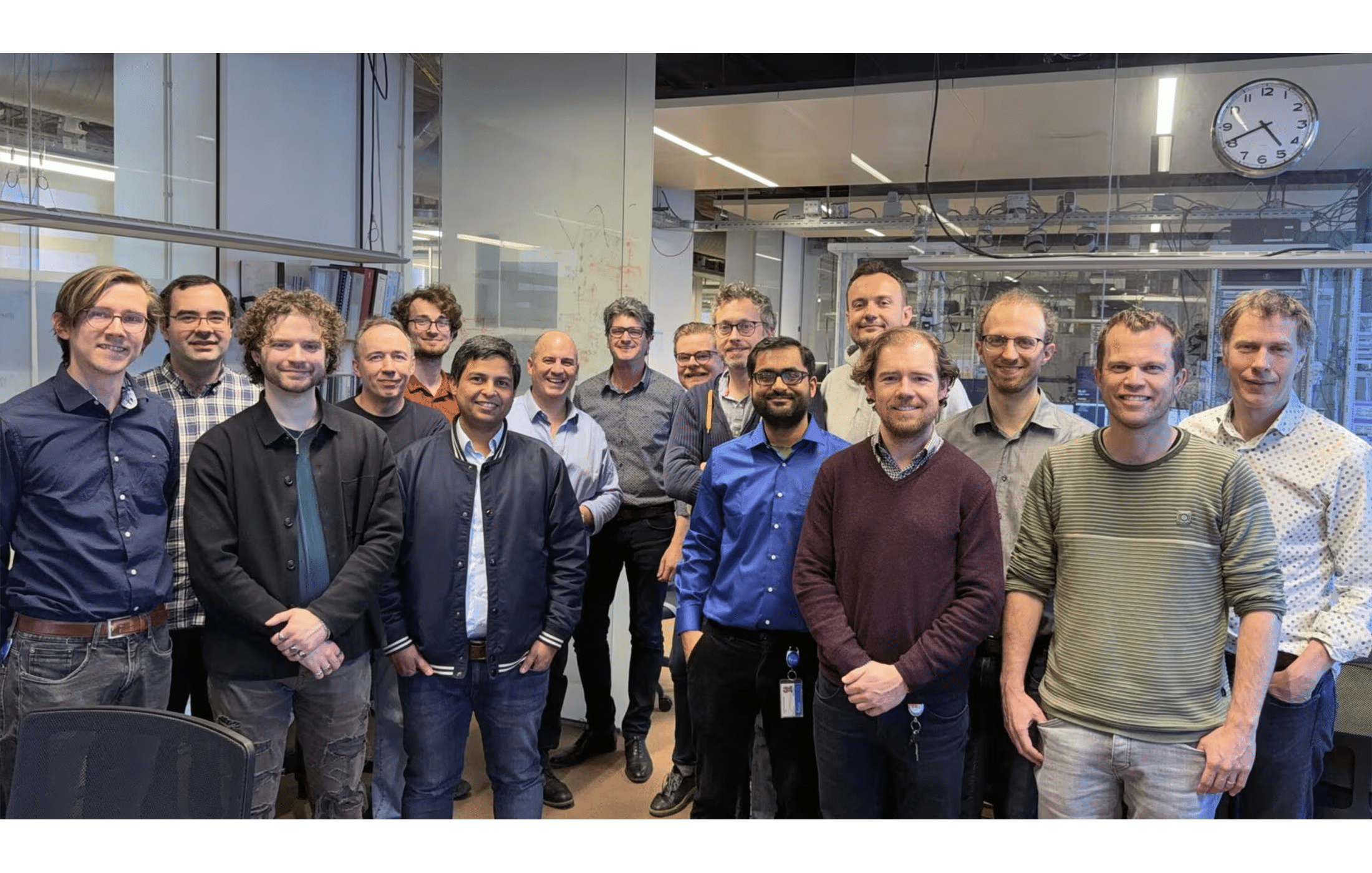
Table of Contents
22 May 2025 – The Dutch quantum computing community has reached a new milestone, revealing a homegrown quantum computer named Tuna-5. Announced in mid-May 2025, the Tuna-5 system is a 5-qubit superconducting quantum computer built using a modular “open-architecture” approach, and it’s now accessible to users worldwide via QuTech’s Quantum Inspire cloud platform.
This is not a typical industry quantum machine in a sealed box; rather, it’s a collaborative creation by local research institutes and startups, with each contributor providing a piece of the puzzle. The result is a small but fully functional quantum computer that showcases the Netherlands’ burgeoning quantum ecosystem and its commitment to openness and innovation.
An Open Quantum Leap in Delft
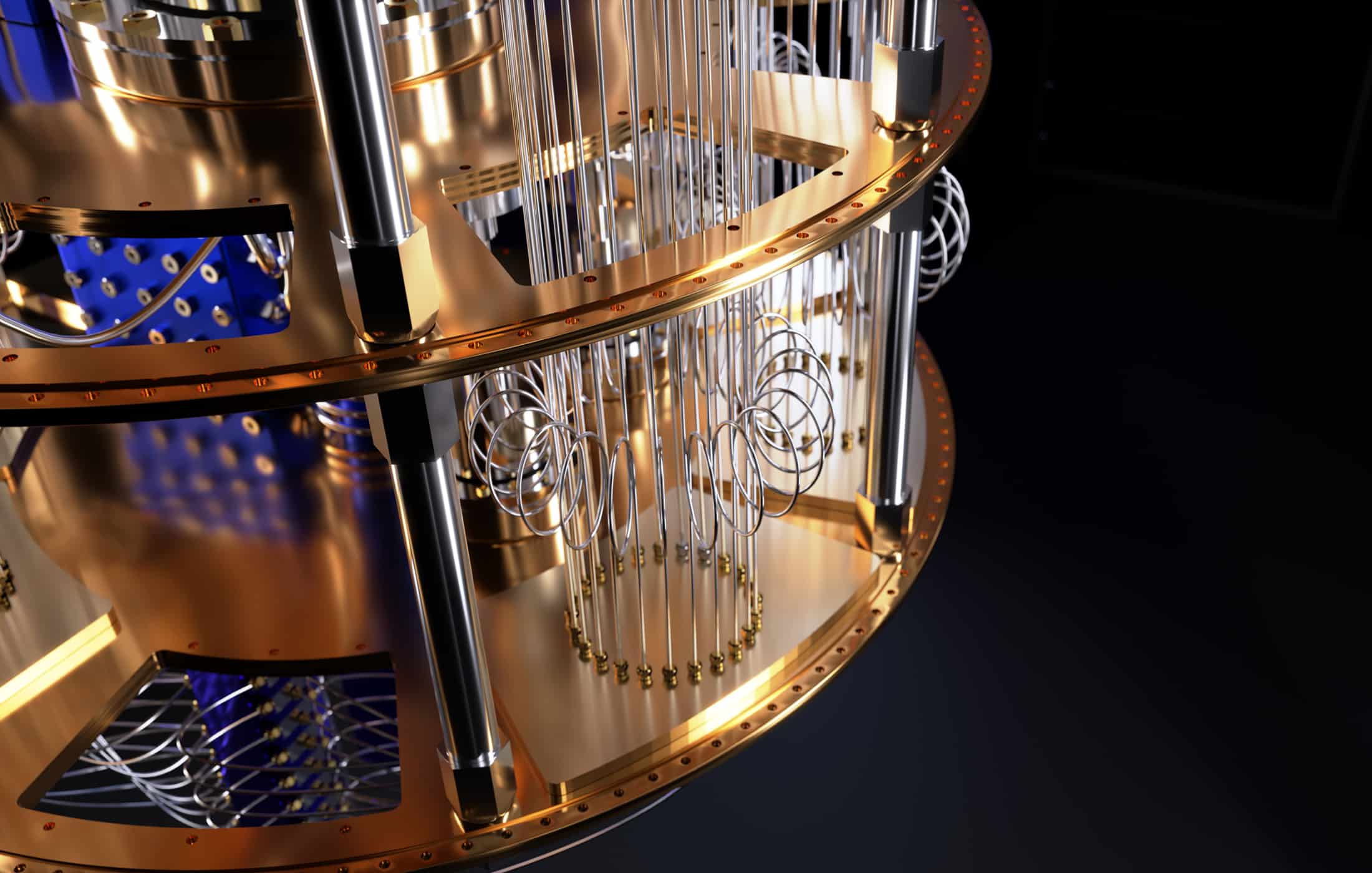
The Tuna-5 launch was orchestrated by a partnership between QuTech (the advanced quantum research center at TU Delft), the Dutch research organization TNO, and four Delft-based startups: QuantWare, Qblox, Orange Quantum Systems, and Delft Circuits. Each brought their specialized component to the table. QuantWare fabricated the quantum processor chip, Qblox supplied the control electronics that send and read signals from the qubits, Orange Quantum Systems contributed its “Orange Juice” quantum operating system and software toolkit, and Delft Circuits provided cutting-edge cryogenic wiring to link everything together. The Tuna-5 system is housed in QuTech’s DiCarlo Lab in Delft and is now one of three real hardware backends available on Quantum Inspire (alongside QuTech’s existing 7-qubit and 2-qubit processors).
What makes Tuna-5 especially noteworthy is its open-architecture design. Unlike the proprietary, vertically integrated quantum computers built by a single company (the typical approach of industry leaders like IBM or Google), Tuna-5 was built out of mix-and-match components from different providers, all designed to work together via standard interfaces. The system’s very name hints at one of its innovations: “Tuna” reflects the use of tunable couplers on the chip, which allow engineers to finely adjust the interaction strength between qubits. This tunability can improve gate fidelity and reduce crosstalk errors by only coupling qubits when needed, a feature beyond Tuna-5’s older “Starmon” predecessors that had fixed couplers. In essence, Tuna-5 is a proof-of-concept prototype – a testbed for new technology and modular integration, intended as a system-readiness benchmark rather than a commercial-scale machine . Its 5 qubits won’t break any performance records, but that isn’t the point. The significance lies in how it was built and who built it.
Built by Academia–Startup Collaboration
Tuna-5’s development illustrates the power of collaboration in the Dutch quantum ecosystem. It was delivered under the HectoQubit/2 (HQ/2) project, a program launched in 2023 with funding from Quantum Delta NL and the National Growth Fund to strengthen the Netherlands’ leadership in superconducting quantum computing. Under HQ/2, QuTech’s academic research directly flows into new startup products, and vice versa – a virtuous cycle. For example, QuTech researchers helped refine the tunable coupler technology now used on QuantWare’s chips, and in turn the startups’ components (chips, control systems, etc.) enhance QuTech’s lab experiments. The Tuna-5 project brought this full circle, as many of the scientists who worked on QuTech’s earlier Starmon-5 device (deployed back in 2020) have since become entrepreneurs at the very startups contributing to Tuna-5. This close academia–industry partnership shows how a regional cluster can innovate faster together, by sharing expertise and dividing the technical challenges.
“The open-architecture approach is more than just assembling parts from various vendors – the extensive testing, iterations, and integration of hardware and software into a fully functional system has helped strengthen the Dutch quantum supply chain of interoperable components,” QuTech noted in its announcement. In other words, building Tuna-5 wasn’t plug-and-play easy; it took months of co-design and troubleshooting to make sure the pieces fit seamlessly. But that effort has paid off by validating that the components work in unison – de-risking them for future, larger projects. Each startup’s product had to prove itself in a realistic system. Qblox’s electronics had to synchronize perfectly with QuantWare’s qubits, which had to be compatible with Orange QS’s control software, and so on. By ironing out those wrinkles, the team has increased confidence that bigger quantum processors (with more qubits) can be integrated down the road using a similar open model. This lays groundwork for scaling up.
Crucially, Tuna-5’s success also advances quantum sovereignty for the Netherlands and Europe. All the key pieces of this machine were developed by Dutch entities – meaning local talent and businesses retain control over the technology. Funding from Dutch and EU programs ensured that expertise and intellectual property stayed in-region. This aligns with a broader European push for technological sovereignty: the EU’s Quantum Flagship program (which includes OpenSuperQPlus, targeting a 100-qubit European quantum computer by 2026) explicitly emphasizes building a “resilient, sovereign quantum ecosystem”. The Tuna-5 system is a tangible step in that direction, showcasing that European labs can assemble a working quantum computer by leveraging domestic innovators. As Quantum Delta NL put it, Tuna-5 exemplifies “open design, supply chain co-development, and public access to quantum hardware” – a strategy to ensure Europe is not solely reliant on foreign tech for the quantum era .
Why Tuna-5’s Open Approach Matters (Analysis)
Beyond the news of this single machine, Tuna-5 represents a much larger trend in quantum computing. It’s one of the first real-world demonstrations of what we call Quantum Open Architecture (QOA) – the idea that quantum computers can be built from modular components, rather than wholly by one company. In the classical computing history, this is analogous to the shift from monolithic mainframes to personal computers with interchangeable parts. Likewise in quantum, QOA means you might get a processor from one source, control hardware from another, software from a third, and put them together like Lego bricks into a complete system. This approach contrasts with the traditional “full-stack” model where a big provider designs everything internally. An emerging consensus in the industry is that the open, modular approach is not only feasible but perhaps essential for quantum tech to mature. Even IBM’s head of quantum theory, Jay Gambetta, recently acknowledged: “I fundamentally don’t believe the future is a full-stack solution from one provider.” In other words, even the largest players foresee a multi-vendor ecosystem where different specialists contribute to the stack.
From my perspective, the impact of QOA is potentially game-changing. By allowing specialization, it boosts innovation and efficiency. A company like QuantWare can focus solely on making the best qubit chips, while another like Qblox perfects the control systems – each can achieve breakthroughs faster than if one team had to do everything. Such “deeper specialization” drives economies of scale and lowers costs, ultimately expanding the pool of people who can build or use quantum computers. In Tuna-5’s case, the open model likely cut down development time and cost; rather than QuTech trying to fabricate its own 5-qubit chip from scratch (a multi-year endeavor), they could buy a ready-made, tested chip from QuantWare and integrate it within months. That agility is huge for research progress.
Another advantage is interoperability. With more component providers in play, there’s strong motivation to develop standard interfaces so that everyone’s parts can talk to each other. We’re already seeing this: Quantum Inspire’s cloud API can run programs on Tuna-5 just as it does on QuTech’s other processors, because the team made sure the new hardware conforms to common software standards. Over time, efforts like this will make quantum hardware more “plug-and-play”, where swapping out a chip or upgrading a controller doesn’t require rebuilding the whole system. This is critical for keeping the field moving fast – no single vendor should hold the whole stack “hostage” with proprietary lock-in. In effect, QOA can democratize the technology. Small research groups or startups (or even countries with nascent programs) will be able to assemble top-tier systems without reinventing every wheel themselves . Indeed, we’re seeing similar open-architecture efforts in other places: for example, Israel’s Quantum Computing Center recently combined a Dutch-made processor with Israeli control electronics in an open framework, and an Italian university is using QuantWare’s 64-qubit chip to build Italy’s largest quantum computer – all following the QOA playbook of mix-and-match development.
For Europe, these open collaborations also directly bolster quantum sovereignty. Traditionally, if a nation wanted a state-of-the-art quantum computer, the only options were to buy a closed system from one of the few big providers (like importing an IBM machine) or to spend vast resources to develop an entire system in-country. Open architecture offers a pragmatic third path: leverage allied contributions for some parts while nurturing domestic capability in others. As we discuss in our deep-dive on Quantum Open Architecture, this strategy makes the technology more accessible and levels the playing field globally . A country doesn’t have to do everything alone, yet it isn’t beholden to a single foreign supplier either – it can swap in local alternatives for certain modules and thus retain control over critical pieces. QOA “bolsters” sovereignty by reducing the power of any one vendor to dictate terms or potentially cut off access . We see that ethos in Tuna-5: the Netherlands can improve or replace any layer of the system (say, upgrade to a new Dutch-made 50-qubit chip in a year or two) without needing permission or support from an outside corporation.
On a more personal note, I find the open-architecture approach incredibly exciting because it invites more people into the quantum innovation process. Tuna-5 itself is open for researchers and students to run experiments on, meaning knowledge isn’t confined to one corporate lab – it’s shared on a public platform. The design transparency (publishing how the system is built) means other groups can learn from it or reproduce it. In the long run, this openness reminds me of the early days of personal computing, when hobbyists could tinker with home-assembled machines and, in doing so, propelled the entire industry forward. There is a similar vibe here: by breaking down a quantum computer into modules and openly collaborating, Delft’s quantum community has lowered the barrier to entry a bit more. It’s now conceivable that many universities or startups around the world could build their own small quantum setups using the QOA model – much as assembling a custom PC – and that is a profound shift from just a decade ago.
In summary, the Tuna-5 debut is more than a local Delft news item; it’s a proof-of-concept for a new paradigm in quantum computing development. This modest 5-qubit machine symbolizes how far the quantum field has come in embracing openness and partnership. By leveraging a Quantum Open Architecture (QOA) approach , the Netherlands has demonstrated a path to innovate faster and more inclusively. As quantum technology races ahead, such open projects also ensure that progress isn’t limited to a few tech giants – it becomes a collaborative effort spanning academia, startups, and nations. Tuna-5 may be a small fish in terms of qubit count, but it’s a big catch for the principle of open innovation in quantum tech. And as Europe eyes larger goals (like a 100-qubit sovereign machine in the next year or two), the lessons learned from Tuna-5 will be invaluable in reeling in even bigger successes.
Quantum Upside & Quantum Risk - Handled
My company - Applied Quantum - helps governments, enterprises, and investors prepare for both the upside and the risk of quantum technologies. We deliver concise board and investor briefings; demystify quantum computing, sensing, and communications; craft national and corporate strategies to capture advantage; and turn plans into delivery. We help you mitigate the quantum risk by executing crypto‑inventory, crypto‑agility implementation, PQC migration, and broader defenses against the quantum threat. We run vendor due diligence, proof‑of‑value pilots, standards and policy alignment, workforce training, and procurement support, then oversee implementation across your organization. Contact me if you want help.
Related Content