NATO publishes first Quantum Technologies Strategy, pledging a “quantum-ready” Alliance and a shift to quantum-safe crypto

Table of Contents
18 Jan 2024 – NATO has released a public summary of its first Quantum Technologies Strategy, signalling that the Alliance now treats quantum as more than a long-term science project: it’s a near-term driver of military advantage, a cybersecurity risk, and a locus of strategic competition. The 5‑minute official text (dated 16 January 2024) frames quantum technologies as potentially transformative across sensing, imaging, positioning/navigation/timing (PNT), communications, and computing – while warning that the same breakthroughs could undermine NATO’s ability to deter and defend if adversaries get there first.
At the center is a clear political message: NATO wants to become “quantum-ready.” In NATO’s telling, that means building a secure and resilient transatlantic quantum ecosystem, aligning investments and information-sharing across Allies, and accelerating adoption so that quantum doesn’t create new capability gaps between NATO and “strategic competitors and potential adversaries.”
What’s in the strategy: desired outcomes, not just aspirations
The summary lays out a set of concrete “desired outcomes” that read like a procurement-and-standards checklist as much as a research agenda. NATO says Allies and the NATO enterprise should identify the most promising military and dual-use quantum applications and move quickly from experiments to integration that supports defence planning and capability development.
Interoperability is treated as a first-order requirement, not an afterthought. The strategy calls for NATO to develop, adopt, and implement frameworks, policies, and standards for both software and hardware to enhance interoperability – language that matters because quantum systems (sensors, timing, communications components) only deliver operational value at scale if they can plug into multinational missions and shared architectures.
The document also explicitly commits NATO to establishing a “Transatlantic Quantum Community” to engage government, industry, and academia across Allied innovation ecosystems – positioning NATO as the convening layer between research breakthroughs and deployable defence capability.
Ecosystem defence: talent, enabling tech, and investment screening
NATO’s strategy is unusually candid about the bottlenecks that decide who wins in quantum: not only algorithms and prototypes, but people and supply chains. The summary highlights quantum talent as a critical resource and notes that demand for highly trained experts will grow as the field gains traction.
It also emphasizes “enabling technologies” – the unglamorous but decisive foundations like metrology, specialized manufacturing, and cryogenics. The subtext is industrial resilience: if you can’t build, calibrate, and maintain the hardware stack securely, you don’t have a sovereign capability, you have a dependency.
In a passage that will resonate in policy circles shaped by supply-chain shocks and technology leakage concerns, NATO says Allies should, on a voluntary basis, act to prevent adversarial investments and interference in their quantum ecosystems, including examining relevant supply chains nationally.
“Learn-by-doing,” plus DIANA and the NATO Innovation Fund as delivery mechanisms
Rather than treating quantum as a distant horizon, NATO urges a “learn-by-doing” approach: integrating quantum considerations into operational concepts, defence planning cycles, capability development cycles, and standardisation efforts.
The strategy also situates quantum inside NATO’s broader innovation machinery. It points to DIANA (the Defence Innovation Accelerator for the North Atlantic) and the NATO Innovation Fund (NIF) as deep-tech engines that will inform NATO’s strategic approach and deepen engagement with Allied quantum ecosystems.
NATO’s accompanying news release adds a concrete signal of momentum: it says six of the 44 companies selected for DIANA’s programme are specialized in quantum, with work spanning next-generation cryptography, high-speed lasers for satellite connectivity, and quantum-enhanced 3D imaging sensors for undersea environments – use cases that map directly onto contested-domain operations.
The part PostQuantum.com will care about most: protecting the Alliance from the quantum threat
The most immediately actionable cybersecurity element is NATO’s explicit focus on quantum breaking today’s cryptography. The summary states plainly that a functional quantum computer could break current cryptographic protocols, and it positions post-quantum cryptography (PQC) as an important approach to secure communications against quantum-enabled attacks.
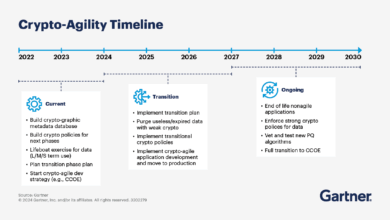
Critically, NATO elevates migration from “best practice” to strategic outcome: one of the listed desired end-states is that NATO has transitioned its cryptographic systems to quantum-safe cryptography. That is a major institutional signal to defence ministries, integrators, and suppliers: PQC planning is no longer optional future-proofing—it’s part of readiness.
NATO also leaves the door open to quantum key distribution (QKD) as an additional tool, noting that future improvements could allow QKD to contribute to secure communications. Through NATO committees and bodies, Allies are encouraged to support each other and the NATO enterprise in developing and implementing PQC and QKD, and NATO says it will continue to support research into transitioning to quantum-safe communications across air, space, cyber, land, and maritime domains.
Finally, there’s a subtle but important “information environment” line item: NATO warns that adversaries could exploit disinformation to generate public distrust around military uses of quantum technologies, and it flags strategic communications as part of the defence toolkit.
Why this is interesting: NATO is turning quantum into an alliance-management problem
What makes this strategy notable is not that it says quantum will matter – many national strategies already do – but that it translates quantum into NATO’s core organizational levers: standards, interoperability, capability planning, ecosystem protection, and coordinated engagement with industry.
For post-quantum security specifically, NATO’s language helps pull PQC migration forward into the defence mainstream. When NATO articulates a goal of transitioning its cryptographic systems to quantum-safe cryptography, it implicitly pressures a wide supply chain—secure radios, satellite links, tactical networks, cloud systems, identity infrastructure, and cross-domain gateways—to align roadmaps, testing regimes, and certification pathways.
Just as importantly, the strategy treats quantum as dual-use and contested: the Alliance wants the benefits (better sensing, better timing, better communications), while assuming that adversaries will pursue the same capabilities – and will also use quantum as an offensive cyber enabler. That “double-edged” framing is a practical foundation for risk management: deploy advantage where feasible, harden what’s exposed, and make ecosystem defence (talent, investment screening, supply chain integrity) part of national security.
Quantum Upside & Quantum Risk - Handled
My company - Applied Quantum - helps governments, enterprises, and investors prepare for both the upside and the risk of quantum technologies. We deliver concise board and investor briefings; demystify quantum computing, sensing, and communications; craft national and corporate strategies to capture advantage; and turn plans into delivery. We help you mitigate the quantum risk by executing crypto‑inventory, crypto‑agility implementation, PQC migration, and broader defenses against the quantum threat. We run vendor due diligence, proof‑of‑value pilots, standards and policy alignment, workforce training, and procurement support, then oversee implementation across your organization. Contact me if you want help.
Related Content