
Telecommunications - Quantum Technology, Quantum Computing, Quantum Security Articles

February 27, 2025
Quantum Use Cases in Telecom
Quantum computing’s impact on global telecommunications will be transformative. It holds the potential to revolutionize how we secure and operate networks, enabling levels of performance and protection previously unattainable. At the same time, it forces a reckoning with the vulnerabilities of our current systems. The journey to fully realize quantum-enhanced telecom will involve overcoming technical challenges and managing risks, but the destination – a world with fundamentally secure, high-capacity communications and perhaps even a quantum internet spanning continents – is one of extraordinary promise ...

The Open RAN Lexicon You Need
The telecoms and digital technologies sectors are notoriously jargonised. Eavesdrop on any conversation at an industry conference (remember those?) and you’d be treated to a parade of acronyms, initialisms and technical terms that would sound like ancient Greek to an outsider. However, with new technologies being developed and deployed at an accelerated rate, staying on top of terminology can be challenging for even seasoned professionals. This is nowhere as apparent as in the evolving debate around Open RAN and its applications. Open RAN and its variations became the next "big thing" in wireless and I thought I'd try and help clarify some of the related terms that often get confused ...

Open RAN May Be the Future of 5G, but Can We Keep It Secure?
It's been a year of contradictions for the telecommunications industry. Like most sectors, it has been heavily impacted by the consequences of the Covid-19 pandemic, with a slowdown in global 5G roll-outs being a notable result. Geopolitical conflicts have continued to muddy the market, with governments playing a more active role than ever in setting telecoms-centred policy. At the same time, however, the air is thick with promise and opportunity. Over the last nine months, entire organizations have transitioned to remote working and high-bandwidth video communication. Corporations have accelerated digital transformation initiatives. Online shopping has soared. The appetite for autonomous manufacturing and other aspects of Industry 4.0 has grown. The ...

5G in Manufacturing – 5G and Time Sensitive Networking (TSN) for Industrial Automation
In the recent report by IHS Markit - "The 5G Economy - How 5G will contribute to the global economy" - researchers claimed that manufacturing will garner almost $4.7 trillion in sales enablement by 2035. Or 36% of the $13.2 trillion total opportunity of 5G by 2035. Manufacturing will be by far the largest industry beyond mobile to be impacted by 5G. In the manufacturing sector the adoption will benefit in the short-to-medium term from enhanced indoor wireless broadband coverage. Other early use cases include asset tracking such as visibility over incoming and outgoing components and goods in the supply chain; remote access solutions that enable remote machine maintenance from ...

Cybersecurity and Safety in the 5G-Enabled Smart-Everything World
Neil Harbisson calls himself a cyborg. Without the antenna implanted in his skull, he would not be able to see colour of any kind. Born with achromatopsia, a condition of total colourblindness that affects 1 in every 30 000 people, Harbisson's physical faculties are augmented by cyber technology to grant him access to a life of greater meaning and satisfaction. As technological evolution leads to concomitant advances in medical science, we are seeing more and more examples of humans who are integrating devices and sensors into their biological makeup. For some, like those part of the growing "transhumanist" movement, this is a means of artistic expression or exploration of human ...
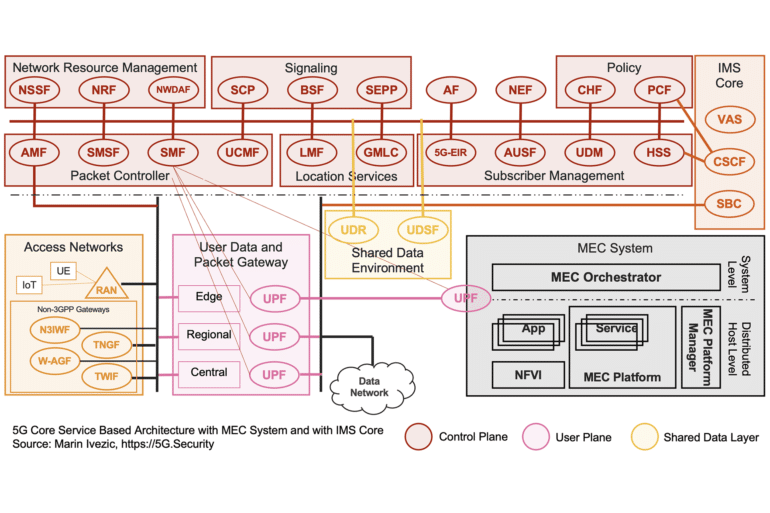
Introduction to 5G Core Service-Based Architecture (SBA) Components
The interest in 5G and mIoT is exploding. It's exciting to see so many IT and cybersecurity professionals in my network trying to learn more about 5G and related technologies. In addition to my usual articles about the societal impacts of these innovations, I'll start a series of articles introducing key 5G and mIoT technology concepts. Before we move on to technical aspects of 5G security. Let's get started with reviewing the 5G core service-based architecture and learning the first few dozen acronyms, out of approximately a gazillion. The cellular industry loves acronyms. Even more than the cybersecurity industry. 5G architecture is an evolution of current 4G architectures but based ...

Smart Home / Smart Building Connectivity Options and Their Cybersecurity
In a recent session on smart building cybersecurity, a student cheekily asked me "How did we ever connect anything before 5G?" At that moment I realized I might have been overdoing my 5G cheerleading recently. To atone, here are the key performance and cybersecurity attributes of the most commonly used connectivity technologies in smart home / smart building use cases... And 5G. If you thought that the "traditional" home life is under heavy attack from digitization of media and constant communication, wait until you learn about the Internet of Things (IoT) and Smart Homes. Our most personal spaces - our homes - are rapidly getting digitized and connected. Hundreds of ...
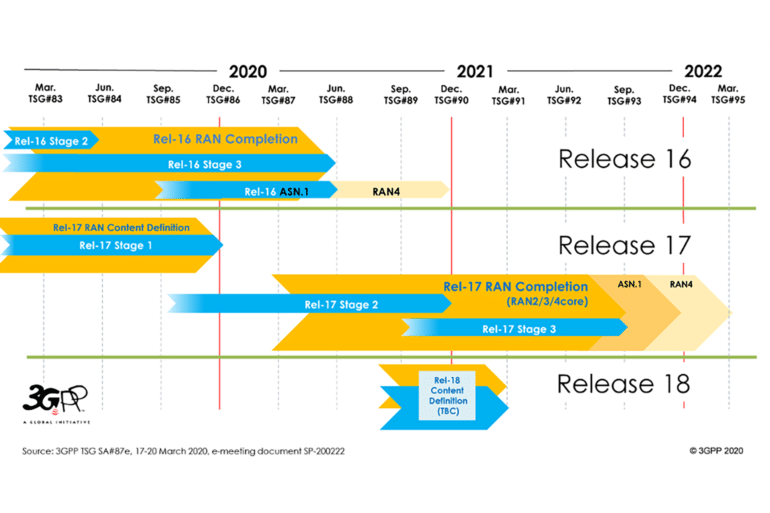
Introduction to 3GPP and 3GPP 5G Releases 15, 16 and 17
In a major milestone for 5G, 3GPP finalized the Release 16 in July - its second set of specifications for 5G New Radio (NR) technology. As a second article in my series of 5G 101 articles, this is a good opportunity to review the 3GPP process and major 5G-related technical specification releases. As well as to clarify some misconceptions about the 5G development process. This article provides an overview of what is 3GPP and its importance. It also explains the Releases related to 5G including Release 15, 16 and 17. The focus will be on 3GPP Release 16 and 17. Release 16 was completed on July 3, 2020 with the ...
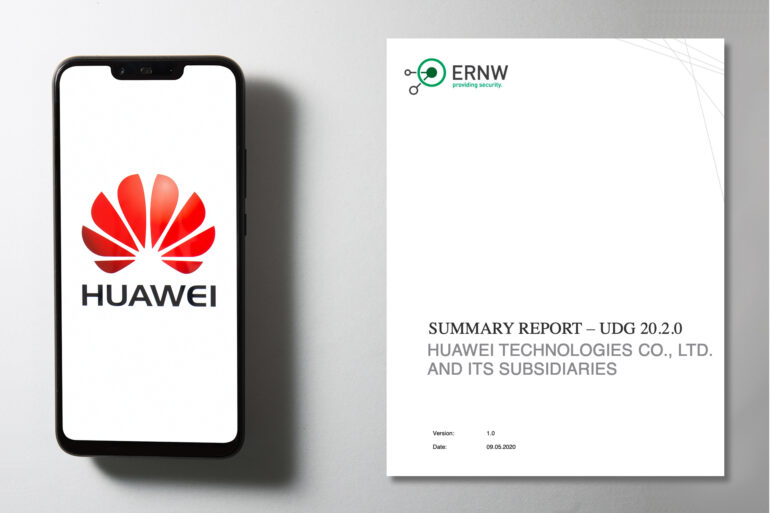
Does the positive review of Huawei UDG source code quality mean that Huawei 5G is secure and reliable?
No, no it doesn’t. Huawei's code might as well be extremely secure. Their code is certainly the most scrutinized. But the recent UDG source code review is not an evidence of security. ERNW, an independent IT security service provider in Germany, recently performed a technical review / audit of Huawei’s Unified Distributed Gateway (UDG) source code. Huawei made the summary report available here [PDF]. The review focused on the quality of the source code and the source code management practices. The report is overall positive and showed that Huawei has significantly improved its software engineering processes. At least for the UDG product. It’s a welcome improvement. Huawei deserves some recognition ...
Will Telcos Lose the Edge Computing Battle as Well?
For many end-users of today's communications technology, the cloud is a somewhat mystical concept, a digital equivalent of aether. Most think of it as a formless abstraction "up there" when, in fact, the cloud is rooted in the ground. Or the seabed. Despite rapid advances in satellite connection, almost all intercontinental data transfer that takes place every second of the day occurs via hundreds of thousands of miles of underwater cables. Reading a map of these submarine cables is like viewing a tapestry of international telecommunication. It is perhaps strange to think that the email you just sent to your colleague in Africa traveled below the Atlantic Ocean. It's an ...

What COVID-19 Taught Us About the Need for 5G
There are many adjectives that could be used to describe the global outbreak of COVID-19, but perhaps the simplest might be: fast. The disease has spread quicker than most people can mentally digest. By nature, humans process linearly. This pandemic has been a lesson in exponential thinking for the common man. Those who don’t spend their time contemplating Moore's Law or compound interest have felt overwhelmed by infection or mortality rates that double daily. In response, governments, businesses, monetary institutions, education systems and the many other players in corporate and civil life have acted at high speed. It is easy to argue that, in numerous cases, reactions should have been ...
